Zebra WS1013-0HC00040EWR Healthcare Wearable Bluetooth Communication Badge
Overview
The Zebra WS1013-0HC00040EWR is a sub-2-inch wearable Bluetooth communication badge built specifically for healthcare environments where clinicians and staff need hands-free, always-on connectivity without carrying a full handheld device. Weighing just 1 lb and measuring less than 2 inches square with a profile just over a half-inch thin, it clips to a badge holder or lanyard and disappears into a workflow — the form factor is the point. It pairs over Zebra's Bluetooth 5.4, which brings lower power consumption and more stable connections in RF-dense environments like hospital floors compared to older Bluetooth generations.
This is a purpose-built communication device, not a general-purpose mobile computer. If your deployment needs barcode scanning, RFID reads, or display output, that belongs on a companion device. The WS101-H is about keeping staff connected to voice and push-to-talk workflows while keeping their hands free for patient care.
Key Features
- Bluetooth 5.4: The latest Bluetooth specification delivers improved coexistence in crowded RF environments — meaningful in hospitals where dozens of devices compete for spectrum on every floor. Expect more consistent audio and fewer dropped connections compared to Bluetooth 4.x deployments.
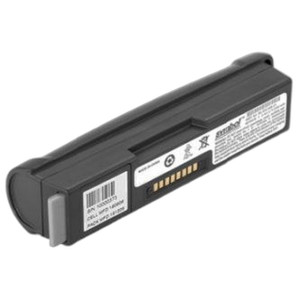
- 480mAh Removable Battery: The battery is user-swappable, which changes the operational calculus entirely for multi-shift healthcare facilities. Instead of pulling a device from service to charge, staff swap the battery in seconds and keep working. At 480mAh in a sub-2-inch device, capacity is matched to the form factor — pair with a spare battery program for 24/7 coverage.
- NFC: Near Field Communication enables tap-to-pair and tap-to-authenticate workflows — a clinician can tap the badge to a compatible reader to clock in, authenticate to a workstation, or trigger a workflow without typing. In infection-control environments where touch surfaces matter, NFC reduces the number of shared touchpoints.
- USB-C Connectivity: USB-C handles both charging and data transfer via a reversible connector that won't be damaged by repeated blind insertions — a real-world consideration when staff are docking and undocking in a hurry. No proprietary charging cradle required if you're already standardized on USB-C infrastructure.
- Sub-2-Inch Form Factor, Half-Inch Profile: The physical dimensions are a deliberate design constraint. At less than 2 inches square and just over half an inch thick, this device sits flat on a badge clip without snagging PPE or getting in the way during patient contact. It's thin enough that staff will actually wear it all shift.
- Clip Mount Badge Form Factor: Ships as a badge clip mount configuration, meaning it integrates directly into existing badge-reel and lanyard infrastructure. No separate holster or mount purchase required for standard badge deployment.
Integration and Compatibility
The WS1013-0HC00040EWR is designed to integrate with Zebra's broader enterprise mobility ecosystem. Bluetooth 5.4 ensures compatibility with current-generation Zebra mobile computers, workstations on wheels, and voice solutions. NFC interoperability depends on your specific reader infrastructure — verify your tap-to-authenticate or tap-to-pair use case against your existing NFC reader specifications before deploying at scale. USB-C connectivity is broadly compatible with standard charging infrastructure, though enterprise deployments typically leverage multi-bay charging cradles for high-density badge management.
For push-to-talk and unified communications deployments, consult your UC platform's certified device list to confirm WS101-H compatibility. The badge is positioned within Zebra's wearable computing line as a communication-focused device, distinct from the company's ring scanner and full wearable computer offerings.
Frequently Asked Questions
Q: What Bluetooth version does the WS1013-0HC00040EWR use, and why does it matter in a hospital environment?
A: The WS1013-0HC00040EWR uses Bluetooth 5.4, the current specification. In RF-dense environments like hospital floors — where hundreds of devices compete for 2.4GHz spectrum — Bluetooth 5.4 offers improved coexistence and lower power consumption compared to older Bluetooth 4.x hardware. This translates to more stable connections and longer battery runtime per charge cycle.
Q: Is the battery on the WS1013-0HC00040EWR replaceable in the field?
A: Yes. The 480mAh battery is removable and user-swappable. Staff can exchange a depleted battery for a charged spare in seconds without taking the device off service — a key operational advantage for multi-shift healthcare deployments where downtime for charging is not practical.
Q: What is the physical size of the WS1013-0HC00040EWR?
A: The device measures less than 2 inches square and is just over a half-inch thin. This compact profile allows it to sit flat on a standard badge clip or lanyard without interfering with PPE, patient contact, or normal clinical movement.
Q: What connectivity interfaces does the WS1013-0HC00040EWR support?
A: The device supports Bluetooth 5.4 (wireless), NFC (tap-to-pair and tap-to-authenticate), and USB-C (wired charging and data). There is no proprietary connector — USB-C is a standard reversible interface compatible with most current charging infrastructure.
Q: Is the WS1013-0HC00040EWR a barcode scanner or mobile computer?
A: No. The WS101-H is a communication badge — it handles Bluetooth voice, push-to-talk, NFC authentication, and wireless connectivity. It does not include a scan engine, display, or general-purpose compute capability. It is intended to complement, not replace, a mobile computer or scanner in a workflow.
Q: Does the WS1013-0HC00040EWR require a proprietary charging cradle?
A: No proprietary cradle is required for basic charging — the USB-C port accepts standard USB-C power. For high-density fleet deployments, multi-bay charging cradles are typically used; confirm cradle compatibility with Zebra's WS101-H accessory lineup for your specific fleet size.
The WS1013-0HC00040EWR is one of the more focused products in Zebra's wearable lineup — it doesn't try to be a mobile computer, and that restraint is what makes it deployable in clinical settings. The 480mAh removable battery combined with a sub-2-inch footprint is the entire value proposition: staff wear it all shift, swap the battery during a break, and the device never hits a charging dock mid-shift. That's the spec that matters most when you're evaluating this for a nursing floor deployment.
Technical Highlights:
- Bluetooth 5.4: Current-generation spec with improved coexistence in crowded 2.4GHz environments — hospital ICUs and procedure rooms are among the worst RF environments for stable wireless, and 5.4 handles them better than the 4.x hardware it replaces.
- Removable 480mAh Battery: Sized for a half-inch profile device, this battery supports a swap-not-charge model. Budget for a 1:1 spare battery ratio per device in your fleet — that's the operational unlock that justifies the form factor.
- NFC: Tap-to-authenticate scenarios reduce shared touchpoints on keyboards and PIN pads, which matters in infection-control protocols. Verify your workstation authentication solution's NFC reader compatibility before rolling out at scale.
Deployment Considerations:
- This device has no display and no scan engine — it must be paired with a mobile computer or workstation for any task that requires visual output or barcode capture. Deploy it as a communication layer on top of an existing mobile compute strategy, not as a standalone replacement.
- Operating temperature and IP rating are not specified in the published evidence for this SKU — do not assume water resistance or wide-temperature tolerance without confirming with Zebra's product documentation for environments like sterile processing or outdoor transport.
The WS1013-0HC00040EWR is the right fit for acute care facilities running Zebra-ecosystem push-to-talk or unified communications platforms where the goal is keeping clinical staff connected hands-free without adding bulk to their badge — not for environments that need ruggedized or scan-capable wearables.