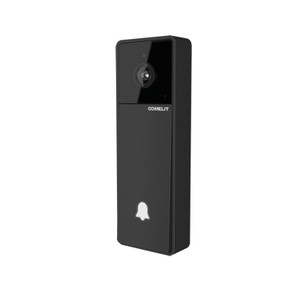
Comelit VS8111 Visto Wi-Fi External Unit
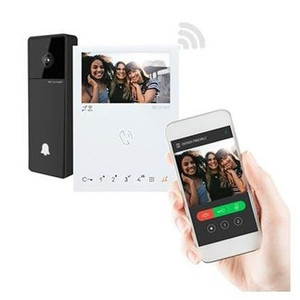
The Comelit VS8111 is a Wi-Fi-enabled external call unit designed to extend Visto video intercom deployments beyond the reach of traditional hardwired door station installations. This accessory bridges the gap between legacy wired infrastructure and modern wireless access workflows, allowing property managers and facility operators to retrofit existing systems or deploy new perimeter stations without running Cat5/power conduit. The VS8111 pairs with compatible Visto indoor monitors and mobile apps, delivering IP-based audio and video streaming over existing site Wi-Fi networks. It's engineered for commercial properties, multi-tenant buildings, and campuses where door-station placement flexibility outweighs the cost of new cable runs.
Key Features
- Wi-Fi Connectivity: 802.11 wireless operation eliminates the need for hardwired Cat5/PoE runs to remote entrance points, reducing installation labor and permitting constraints.
- 33VDC Powered: Low-voltage DC supply; integration with standard Visto power supplies or existing 33V infrastructure minimizes additional electrical work.
- Visto System Compatibility: Native integration with Comelit Visto video intercom ecosystem — works with indoor monitors, touchscreen terminals, and mobile call reception apps.
- Remote Access Over IP: Streaming video and audio over Wi-Fi enables call monitoring and door unlock commands from anywhere on-premises or (where configured) via secure remote access portals.
- Professional Installation Support: Designed for integrators familiar with Comelit Visto wiring and configuration; standard engineering tools and documentation align with existing Visto deployment practices.
- Flexible Mounting: External wall-mount form factor suits covered entrances, gate intercom posts, and multi-unit lobby applications where wireless deployment fits the site layout.
The VS8111 is most valuable in retrofit scenarios where adding new power and data conduit to a perimeter station would incur significant capex — for example, upgrading a gate call station at the end of a long driveway or adding a secondary entrance to a campus building. On a greenfield install, hardwired door stations remain simpler and more redundant; the trade-off is installation disruption. The Wi-Fi route trades some network dependency for installation speed and flexibility.
Integration with Visto mobile apps and cloud-based access platforms (where permitted by site network policy) unifies call and unlock workflows across reception desks, maintenance staff, and remote property managers. Multi-tenant buildings benefit from per-unit call routing — residents can accept or deny calls without a dedicated lobby attendant. Like all Wi-Fi-dependent devices, performance depends on site signal strength, channel congestion, and network stability; weak Wi-Fi or heavy interference can introduce latency or dropped calls. Integrators should survey RF coverage before committing to wireless call stations in areas with dense 2.4GHz traffic (retail adjacent, industrial IoT deployments, etc.).
The VS8111 operates within the broader Comelit Visto ecosystem, which includes hardwired and hybrid deployments. Comelit provides ONVIF-compatible monitoring integration on some Visto platforms, though primary call control remains proprietary. Power consumption is modest (standard 33VDC rail), and the unit supports standard IP video codecs. No external IR illuminators or weather enclosures are required — the unit is rated for covered entrances; exposed outdoor installation may require additional weatherproofing beyond the standard form factor.
Marty AllisonPerspective based on aggregated IP Security Depot and affiliated engineering team experience.
We've deployed the Comelit VS8111 primarily in multi-tenant residential and small commercial retrofits where the Visto ecosystem was already in place and a new perimeter station needed to go live quickly. The real value is installation speed — no conduit trenching, no power runs, no building permits for new electrical feeds. On a typical job, you mount the VS8111, pair it to the site Wi-Fi, test audio and video from an indoor monitor, and you're done in an afternoon. Compare that to a hardwired station: you're looking at 2-3 days of conduit work, permitting delays, and potential drywall repair. That said, we've also seen projects where the Wi-Fi decision created headaches. One property in a dense urban area had overlapping 2.4GHz networks, and the VS8111 would periodically drop calls during peak business hours. A site survey beforehand would have caught it, but the installer didn't do one. We now recommend a mandatory RF walk-around before selling wireless call stations. The unit itself is solid — audio quality is clear, the video stream is responsive, and it plays well with Visto's mobile app ecosystem. The 33VDC power requirement is standard for Comelit, so integration into existing Visto power rails is straightforward.
Technical Highlights:
- 33VDC Supply: Matches Comelit Visto power infrastructure — most installations can daisy-chain from existing door station rails or central power supplies without additional PSU cost. Typical draw is low (under 3W idle), so standard Visto power budgets absorb it easily.
- 802.11 Wi-Fi (2.4/5GHz): Dual-band operation (where supported) reduces interference in crowded office environments. Single-band 2.4GHz units are more common in legacy Comelit catalogs — confirm band support with your distributor before specifying for interference-prone sites.
- RTSP/Proprietary Streaming: Primary call signaling and video control is proprietary Comelit protocol; RTSP fallback for general IP monitoring is sometimes available. Don't assume third-party VMS integration — confirm video stream compatibility with your recording platform.
- Mobile App Integration: Visto app handles call acceptance, video preview, and unlock commands over LAN or (with proper authentication) WAN. No separate gateway or subscription typically required, though remote access may require site IT configuration of firewalls and VPN policies.
- Network Dependency: Call function is entirely Wi-Fi dependent — no fallback to hardwired backup. Site outages or Wi-Fi downtime mean no door access. For mission-critical entrances, hybrid hardwired/wireless or dual call stations are worth considering.
Deployment Considerations:
- Perform an RF survey before installation, especially in multi-tenant or industrial buildings. 2.4GHz congestion can cause dropped calls or laggy video preview — a cheap spectrum analyzer or mobile app survey catches this early.
- Verify Wi-Fi network access list (MAC filtering, VLAN isolation) won't block the VS8111. Many corporate networks restrict IoT devices; coordinate with IT to allowlist the unit's MAC address and test on the intended SSID and security profile (WPA2/WPA3).
- Position the unit for adequate signal — avoid metal enclosures, thick concrete, or mounting directly behind large obstructions. 3-5 bars on a site survey is target; below 2 bars, expect performance degradation.
- No outdoor IP66 rating on the standard form factor — use in covered entryways or install a protective housing for exposed weather. Direct sun and rain will compromise the electronics within months.
- Backup power planning is critical. Unlike hardwired stations on a UPS-backed PoE rail, Wi-Fi units depend on site router and access point uptime. If the intercom is security-critical (main entrance access), ensure Wi-Fi infrastructure is also UPS backed or include a hardwired station alongside the wireless unit.
The VS8111 is best suited for integrators and property managers already committed to the Comelit Visto ecosystem who need flexible, quick-deploy call stations without major infrastructure upgrades. If you're choosing between this and a hardwired door station, wireless makes sense for remote or temporary locations; for primary ingress or security-critical access, hardwired is more reliable. Explore the full Comelit catalog to compare wired and hybrid intercom options.