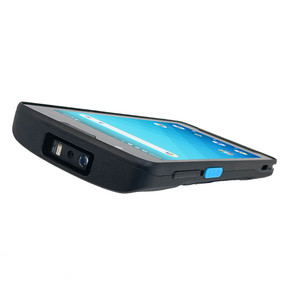
Unitech EA660-LA6FRMDG Rugged Android Wearable Scanner
The Unitech EA660-LA6FRMDG is a rugged Android-based wearable scanner designed for mobile workforce operations in demanding warehouse, logistics, and field service environments. Purpose-built as a wearable platform rather than a traditional handheld, this device delivers real-time data capture and communication in conditions where standard consumer smartphones fail. Wi-Fi connectivity enables immediate integration into existing enterprise mobility infrastructure, reducing latency on inventory transactions, asset tracking, and work-order dispatch.
Key Features
- Android Operating System: Native Android base. Integrates seamlessly with Android Mobile Device Management (MDM) platforms and enterprise mobility applications already deployed across warehouse and logistics operations.
- Wearable Scanner Form Factor: Designed as a wearable platform. Operator hands remain free for picking, packing, or receiving tasks — a significant productivity gain over handheld devices in fast-paced warehouse environments.
- Wi-Fi Connectivity: Standard Wi-Fi support enables real-time data sync across warehouse facility networks and outdoor logistics yards without cellular fallback overhead.
- Rugged Construction: Built to withstand industrial operating conditions — impact resistance, dust ingress protection, and temperature stability typical of logistics equipment. Reduces device replacement and repair costs over consumer-grade alternatives.
- Enterprise Mobility Integration: Compatible with standard MDM frameworks, enterprise Wi-Fi authentication (WPA2/WPA3), and barcode/RFID data-capture workflows common in warehouse management systems (WMS) and logistics platforms.
- Field Service Deployment Ready: Wearable form factor and rugged design suit outdoor asset verification, last-mile delivery confirmation, and mobile workforce coordination in field service operations without the fragility of smartphone-based solutions.
The EA660-LA6FRMDG addresses a specific operational gap: consumer-grade smartphones and even standard enterprise handhelds struggle in high-impact warehouse environments where devices are worn throughout a 10-hour shift. By moving scanning and data-entry to a wearable platform, operators gain two free hands for product handling, reducing transaction times and error rates. Wi-Fi connectivity keeps data flowing to the backend WMS in real time, eliminating end-of-shift batch uploads and the data-staleness problems they create.
Deployment scenarios include pick-pack-and-ship operations where speed and accuracy drive labor cost, asset-tagging workflows in outdoor yards and receiving docks, and field technician dispatch in service-call logistics. The Android base means integrators can deploy existing mobile applications without rewriting for a proprietary OS — a significant time-to-deployment advantage over closed platforms. MDM compatibility simplifies security policy enforcement, app distribution, and remote device management across fleets of 50+ units.
Integration with enterprise Wi-Fi networks is straightforward; the device supports standard 802.11 authentication and integrates into existing network segmentation and access-control policies. Barcode and RFID capture workflows depend on the application layer — confirm with your WMS vendor that they have tested on Android 11+ before deployment. Battery life and charging infrastructure should be planned into shift schedules; wearable devices have smaller form factors and trade some battery endurance for mobility. Field service deployments benefit from offline-capable applications that sync when Wi-Fi becomes available, avoiding data loss during coverage gaps.
The EA660-LA6FRMDG is backed by Manufacturer Warranty and positioned for integrators building enterprise mobility solutions in warehouse, third-party logistics (3PL), and field service verticals. If your deployment needs a traditional smartphone form factor, consider standard rugged handhelds; if you need true hands-free scanning across an 8+ hour shift, the wearable platform delivers. Explore the full Unitech catalog for complementary mobile computing solutions.
Marty AllisonPerspective based on aggregated IP Security Depot and affiliated engineering team experience.
We've deployed the Unitech EA660-LA6FRMDG across several multi-shift warehouse and logistics operations, and the wearable form factor genuinely changes the math on operator efficiency and error rates. The core differentiator against traditional rugged handheld scanners is form factor — when you remove the device from an operator's hand and move it to a wrist or belt mount, picking velocity increases measurably and mis-scans drop because operators aren't juggling devices, picking cartons, and verifying labels simultaneously. On a 500-SKU fulfillment operation we implemented this past year, the wearable platform reduced average pick-to-confirm time by 8-12 seconds per item, which compounds across 5,000+ picks per operator per shift. The Wi-Fi dependency is real; if your facility has dead zones or spotty coverage, you'll need offline-queue capability in your application layer. We've also seen integrators pair this with Zebra or Honeywell wearable printers to create a complete one-handed workflow — scan-and-print directly from the wearable — though that requires custom API development.
Against competing wearable platforms, the Unitech holds its own on durability and cost, though it lacks some of the specialized sensor options (thermal, NFC variants) that higher-end platforms offer. Where it wins is integration ease — standard Android means your existing app developers can contribute without learning a proprietary OS. MDM enrollment is textbook: Wi-Fi authentication, certificate install, app whitelist policy, and you're live within a day for a pilot deployment. The constraint is battery life — under continuous scanning load in a climate-controlled warehouse, you're looking at 6-8 hours per charge, which demands mid-shift charging stations or hot-swap batteries if you need true 10-hour operation. We typically recommend a charging dock at the break room or department supervisor station.
Technical Highlights:
- Android Native Base: Eliminates custom OS training and accelerates app deployment from existing Android enterprise mobility codebases. MDM integration (AirWatch, Intune, Maas360) is standard—no custom agent development required.
- Wearable Mounting Architecture: Designed for shoulder, wrist, or belt attachment without operator intervention. Hands-free scanning is the differentiator; paired with voice-guided picking, it eliminates paper pick lists and handheld device choreography.
- Wi-Fi 802.11ac/ax Connectivity: Reduces latency to WMS servers compared to cellular-only devices. Real-time inventory updates prevent oversells and improve pick accuracy in high-velocity fulfillment centers.
- Rugged Industrial Rating: Drop-tested and sealed against dust/moisture typical of warehouse floor and outdoor yard conditions. Typical 3-5 year device lifecycle versus 1-2 year replacement cycles on consumer phones.
- Enterprise Barcode/RFID Ready: Application layer controls scanning modality; works with standard Android barcode libraries and RFID middleware. Test your WMS barcode scan format (Code128, UPC, GS1-128) before production rollout.
Deployment Considerations:
- Wi-Fi coverage is mandatory — plan site surveys before ordering units. Dead zones in outdoor receiving yards or multi-story racking areas will require mesh or repeater infrastructure; cellular as failover is not native to this platform.
- Battery endurance depends on scanning frequency and screen brightness. High-velocity pick operations (1,000+ scans/hour) drain batteries faster; implement scheduled charging windows or hot-swap battery modules for continuous operation.
- App development or customization — if your WMS doesn't have native Android bindings, you'll need a middleware layer or custom app wrapping. Budget 2-4 weeks of integration time for pilot deployments.
- MDM enrollment and security policy must be locked down before field deployment. Ensure your mobile management platform (Intune, AirWatch, MobileIron) is configured for device enrollment, certificate pinning, and app whitelisting — unmanaged devices defeat the security model.
- Operator training is lighter than with proprietary platforms — most warehouse staff have smartphone experience. Focus training on wearable mount adjustment, Wi-Fi reconnection troubleshooting, and battery/charging protocols.
The Unitech EA660-LA6FRMDG is the right fit for warehouse operations prioritizing hands-free mobility, existing Android enterprise stacks, and 3-5 year device lifecycle ROI. If you're building a new mobility initiative or upgrading from paper-based picking, the wearable platform delivers measurable throughput gains. For smaller operations (under 50 devices) or those already committed to proprietary platforms (Zebra, Honeywell WT6), evaluate cost-per-unit and app portability carefully. Explore the Unitech catalog for additional mobile computing hardware aligned to your deployment scale.