Ubiquiti UNVR-PRO 2U Rack-Mount Network Video Recorder
Overview
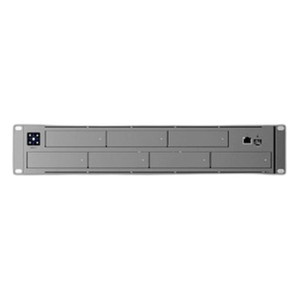
The Ubiquiti UNVR-PRO is a 2U rack-mount network video recorder engineered for mid-to-large network video recorder deployments within the UniFi Protect ecosystem. Built on a quad-core ARM Cortex-A57 processor running at 1.7 GHz with 8 GB of RAM, the UNVR-PRO handles sustained video ingest, storage management, and retrieval without requiring dedicated host compute resources. The critical differentiator is its 10G SFP+ port—this eliminates the network congestion that typically bottlenecks traditional gigabit NVR designs when recording from 20+ synchronized cameras. At 442 x 325 x 87 mm and 9.2 kg, the appliance fits standard 19-inch server racks, consuming only 160 W maximum, making it viable in facilities with constrained power budgets.
Key Features
- 10G SFP+ Connectivity: Dedicated 10-gigabit fiber or twinax connectivity means video traffic does not compete with production network traffic. This is essential when scaling beyond 15–20 simultaneous camera streams; gigabit links saturate quickly at 4K or high-frame-rate recording.
- Quad-Core Processor & 8 GB RAM: The Cortex-A57 processor and 8 GB memory pool provide deterministic performance during peak ingest. Unlike software NVRs running on general-purpose servers, the UNVR-PRO dedicates resources solely to recording, eliminating resource contention during failover or multi-tenant scenarios.
- 200W AC/DC Power Supply with Universal Input: Accepts 100–240V AC at 50/60 Hz, eliminating regional power-cord variations. Allocates up to 135W to attached storage drives—sufficient to power 4–6 large-capacity drives in a RAID configuration without external drive enclosures.
- Dual SGCC Steel Construction: Both the enclosure and mounting brackets use galvanized steel, resisting corrosion in edge locations or facilities with fluctuating humidity. Not a cosmetic choice; critical for long-term reliability in non-climate-controlled server closets.
- Operating Range -5°C to 40°C: Accommodates both climate-controlled data centers and edge deployments (equipment rooms, warehouse racks, retail back-of-house locations). Most software NVRs assume 20–25°C; this broader range removes thermal constraints.
- NDAA Section 889 Compliance & Multi-Jurisdictional Certifications: NDAA-compliant for U.S. federal and critical infrastructure contracts. CE, FCC, IC, and Anatel certifications (06697-21-08356) confirm conformance for EU, North America, and Brazil regulatory environments—no separate certification delays or re-engineering for international deployments.
Integration & Compatibility
The UNVR-PRO is a native appliance within the Ubiquiti UniFi Protect ecosystem. It does not require a separate controller VM or licensing seat; once powered and networked, it automatically discovers compatible Protect cameras and begins recording to locally attached NAS or SAN storage. Network integration is straightforward: connect the 10G SFP+ port to a managed switch supporting SFP+ interfaces, then isolate video traffic on a dedicated VLAN to prevent congestion on production networks. Administrative access occurs via standard Ethernet management ports, enabling remote configuration and monitoring alongside other UniFi products.
When scaling beyond the UNVR-PRO's local storage capacity, it integrates with external NAS appliances or SAN storage pools, allowing unlimited retention without internal drive constraints. This separation of recording appliance from storage is a critical design pattern in large deployments—storage can be upgraded or replaced without disrupting the NVR itself.
When to Choose a Different Model
If your deployment requires sub-gigabit bandwidth (fewer than 8–10 simultaneous camera streams) and racks are unavailable, consider a smaller form-factor UniFi Protect recorder in the same family. The UNVR-PRO's 10G SFP+ port and 2U footprint become over-provisioned in edge locations with 2–4 cameras and no existing server infrastructure. Similarly, if your security architecture mandates integration with non-Ubiquiti cameras or third-party VMS platforms, evaluate ONVIF-compatible recorders that support multi-vendor ecosystems.
Frequently Asked Questions
Q: Is the UNVR-PRO compliant with NDAA Section 889?
A: Yes. The UNVR-PRO carries NDAA compliance, making it suitable for U.S. federal agencies, critical infrastructure operators, and any organization with Section 889 procurement requirements.
Q: What storage capacity should I plan for the UNVR-PRO?
A: The unit allocates 135W to attached storage drives, supporting 4–6 large-capacity drives (8–16 TB each) in a RAID 5 or RAID 6 configuration. For deployments exceeding local capacity, connect external NAS or SAN appliances via standard Ethernet.
Q: Can the UNVR-PRO integrate with non-Ubiquiti cameras?
A: The UNVR-PRO is designed as a native UniFi Protect appliance. Third-party ONVIF-compatible cameras may work, but deep integration features (automatic discovery, firmware management, unified alerting) are optimized for Ubiquiti cameras. Verify compatibility with Ubiquiti support before deploying mixed-vendor setups.
Q: Does the UNVR-PRO require a dedicated network switch with SFP+ ports?
A: Yes. The 10G SFP+ port requires a managed switch supporting SFP+ interfaces. Standard gigabit switches will not support this interface. Plan your network infrastructure to include an SFP+-capable aggregation switch in your server closet or data center rack.
Q: What is the maximum number of cameras the UNVR-PRO can record simultaneously?
A: The UNVR-PRO's performance depends on stream resolution, frame rate, and codec. The 10G SFP+ port eliminates bandwidth as a bottleneck, but storage I/O and processor utilization are the limiting factors. Ubiquiti documentation or pre-sales engineering can provide sizing guidance for your specific camera mix.
Q: What power supply do I need for the UNVR-PRO?
A: The unit includes a 200W AC/DC power supply accepting universal input (100–240V AC, 50/60 Hz). Maximum current draw is 3A. Connect to a monitored PDU outlet or UPS circuit to ensure graceful shutdown during power loss.
Ted PerryPerspective based on aggregated and affiliated engineering team experience.
The Ubiquiti UNVR-PRO is a pragmatic appliance-layer choice for IT architects transitioning from hybrid software NVRs to dedicated recording infrastructure. Its 10G SFP+ port eliminates the single largest pain point in multi-camera deployments: network congestion during synchronized high-bitrate ingest. Unlike software solutions competing for host resources with authentication, firewall, or DNS services, the UNVR-PRO's quad-core Cortex-A57 processor and 8 GB RAM guarantee consistent throughput without oversizing your server cluster.
Technical Highlights:
- 10G SFP+ Port: Increases available bandwidth from 1 Gbps to 10 Gbps, removing the bottleneck that forces frame-rate reductions or codec compromises in 20+ camera deployments. Direct fiber or twinax connectivity isolates video from production traffic.
- 135W Drive Budget: Sufficient for 4–6 large-capacity drives in RAID 5/6 without requiring separate SAN infrastructure during initial deployment. This matters when you need 30–60 days of local retention; SAN complexity can delay go-live by weeks.
- -5°C to 40°C Operating Range: Unlike server-grade NVRs locked to 20–25°C specs, the UNVR-PRO handles unheated server closets or equipment rooms in warehouses and retail locations. Removes the need for supplemental cooling or relocation to climate-controlled data centers.
Deployment Considerations:
- SFP+ network infrastructure is non-negotiable—standard gigabit switches will not work. Budget for managed switch upgrades if your existing closet is gigabit-only.
- The appliance is UniFi Protect-native; mixing Ubiquiti and third-party ONVIF cameras is possible but reduces automated discovery and management. Standardize on Ubiquiti cameras unless your existing fleet is locked into another platform.
The UNVR-PRO is the right choice for enterprise campuses, retail chains, and critical infrastructure sites with 15+ simultaneous camera streams and existing rack infrastructure. If you're consolidating fragmented single-site NVRs into a centralized appliance-based recording layer, this model's 10G port and deterministic processor allocation justify the investment.