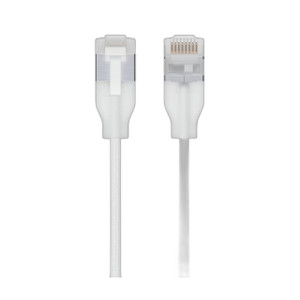
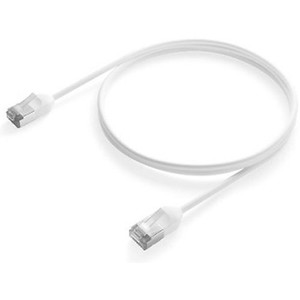
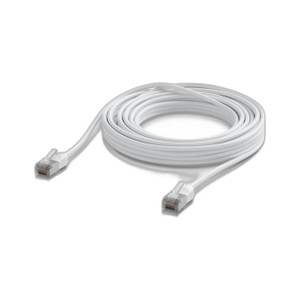
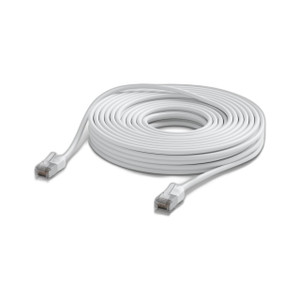
Ubiquiti UACC-CABLE-PATCH-OUTDOOR-C6A-1M-W Shielded Outdoor Patch Cable
The Ubiquiti UACC-CABLE-PATCH-OUTDOOR-C6A-1M-W is a 1-meter shielded Cat6A patch cable purpose-built for outdoor network deployments where environmental durability and full-bandwidth performance are non-negotiable. Its ultra-thin profile enables installation through conduit and tight cable runs without sacrificing the shielded construction that protects against electromagnetic interference in dense RF or high-voltage environments — a real advantage when deploying alongside broadcast equipment, wireless infrastructure, or industrial automation systems.
Key Features
- Cat6A Performance at 10 Gigabit: Rated for full 10GbE operation, meaning you get sustained throughput for high-bandwidth applications like 4K video streaming from UniFi cameras or bulk data transfers on outdoor access points without choking on legacy Cat5e bottlenecks.
- Shielded Construction (STP): Shielding reduces crosstalk and external noise ingress — essential when running cable near outdoor power distribution, LED lighting arrays, or RF transmitters that can degrade unshielded runs.
- Ultra-Thin Jacket: Smaller diameter than standard Cat6A cables makes this profile suitable for tight routing scenarios — conduit runs, under-eave channels, and equipment racks where bulk matters.
- 1-Meter Fixed Length: Pre-terminated RJ-45 to RJ-45 configuration saves field termination time; the 1-meter span works for inter-cabinet connections, switch-to-PoE-injector runs, or connecting outdoor access points to weatherproof junction boxes.
- 24 AWG Conductors: Smaller gauge than standard 23 AWG keeps jacket diameter minimal while maintaining impedance spec and crosstalk rejection needed for 10GbE certification.
- White Color for Outdoor Visibility: White jacket provides contrast against outdoor infrastructure and equipment fascias, simplifying cable identification and troubleshooting during field maintenance.
Integration & Compatibility
The UACC-CABLE-PATCH-OUTDOOR-C6A-1M-W integrates with any RJ-45 network port on Ubiquiti UniFi equipment — outdoor access points, PoE switches, aggregation nodes, and network appliances. Standard RJ-45 connectors mean it also works with third-party gear supporting Gigabit or 10GbE interfaces. Commonly deployed to connect outdoor UniFi PoE switches to remote camera clusters, linking outdoor gateways to fiber converter housings, or bridging weather-sealed junction boxes in multi-building campus networks.
When to Choose a Different Length or Type
If you need longer runs (5m, 10m, 25m), Ubiquiti offers extended outdoor Cat6A variants in the same shielded family. For indoor patch-cord requirements or shorter rack connections, standard unshielded Cat6A delivers equivalent performance at lower cost. If you require direct burial or fully armored cable, consult site-specific conduit requirements — this cable is designed for aerial, conduit, or above-ground outdoor routing only.
Frequently Asked Questions
Q: Is the UACC-CABLE-PATCH-OUTDOOR-C6A-1M-W weatherproof end-to-end?
A: The cable jacket is UV and moisture-resistant, but the RJ-45 connectors themselves are not sealed. For fully weatherproof connections at outdoor termination points, pair this cable with weatherproof RJ-45 couplers or IP67-rated junction boxes.
Q: Will this cable work with standard indoor PoE switches?
A: Yes. Standard RJ-45 connectors are compatible with any PoE or Gigabit Ethernet port. Performance is identical whether the switch is indoors or outdoors.
Q: Can I use this for PoE++ (802.3bt) applications?
A: Cat6A supports up to PoE++ Class 4 (90W). The cable will carry the power, but verify that the injector, switch, and powered device all support the higher power class — the cable itself is rated for it.
Q: How does the ultra-thin profile affect durability in high-wind environments?
A: The smaller jacket diameter reduces drag and surface area for wind loading, which can be an advantage in exposed aerial runs. The shielded construction maintains full integrity — thinner does not mean weaker in this case.
Q: Is the shielding grounded at both ends in a run?
A: Proper grounding of shield terminations depends on your system design. For EMI mitigation, coordinate with your network engineer on whether single-ended or both-ends grounding applies to your outdoor topology.
James EverettPerspective based on aggregated IP Security Depot and affiliated engineering team experience.
I deploy the UACC-CABLE-PATCH-OUTDOOR-C6A-1M-W into outdoor edge networks where bandwidth and noise immunity matter. The shielded construction is the differentiator here — you're not just buying a longer cord; you're buying EMI rejection that keeps 10GbE streams stable near RF sources and switching power supplies. The ultra-thin profile is practical too: most outdoor runs I install go through existing conduit or under eaves where bulk adds installation friction.
Technical Highlights:
- 10GbE Cat6A Certification: Full bandwidth support means you won't hit a cable bottleneck when aggregating streams from multiple outdoor cameras or pushing uncompressed video to a nearby switch. Real throughput headroom at distance.
- Shielded (STP) Jacket with 24 AWG: The smaller gauge keeps the overall diameter down without compromising impedance spec or crosstalk performance — both critical for sustained 10GbE over longer outdoor runs.
- 1-Meter Pre-Terminated Length: Saves field termination work and eliminates connector variability. Just plug in and move on — no field testing needed if you're integrating into a known-good infrastructure.
Deployment Considerations:
- Connector Sealing: RJ-45 ends are standard, not sealed. If your termination box doesn't have built-in weatherproofing (like a Ubiquiti PoE injector in a sealed enclosure), add a weatherproof coupler or cap the unused port. Moisture ingress into the connector barrel will degrade performance over months.
- Shield Grounding: Shielded benefits depend on proper ground at the injection point. If you're running this cable through a metal conduit or alongside grounded infrastructure, verify the shield is bonded to the same ground reference as your equipment. Floating shields can actually increase noise in some topologies.
Install this when you need sub-meter runs between outdoor PoE switches and high-density camera clusters, or when electromagnetic noise from nearby equipment is causing packet loss or jitter on longer unshielded runs. It's a tactical cable, not a general-purpose patch cord — use it where the shielding and 10GbE spec justify the cost versus standard Cat6A.