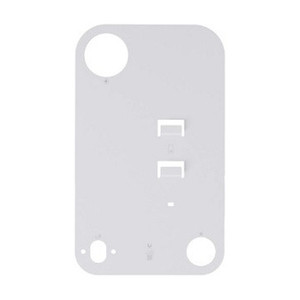
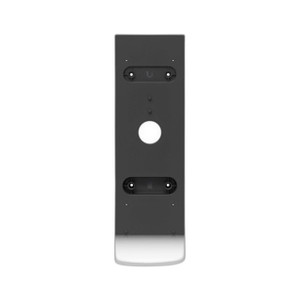
Ubiquiti UACC-AI-THETA-ANGLE MOUNT-CAMERA Angled Ceiling Mount
Overview
The Ubiquiti UACC-AI-THETA-ANGLE MOUNT-CAMERA is a purpose-built angled ceiling mount designed specifically for the Ubiquiti AI Theta camera line with standard lens configurations. This accessory addresses a common deployment reality: ceiling-mounted cameras pointed straight down waste coverage area and create suboptimal viewing angles for corridor, perimeter, and large-space surveillance. An angled mount tilts the camera toward the horizon, maximizing the field of view across the intended coverage zone while maintaining clean cable management and a finished appearance.
Key Features
- Angled positioning: Tilts the AI Theta camera away from straight-down orientation, directing the lens toward horizontal coverage patterns — critical for corridors, warehouse aisles, and entryways where floor-level detail matters more than ceiling coverage. Avoids wasted vertical view and improves detection range across the target area.
- Compatible with standard AI Theta lenses: This mount is engineered for AI Theta models equipped with Ubiquiti's standard lens options, ensuring a secure fit without adapters or workarounds. Verify your camera's lens variant before ordering — other lens types may require different mounts.
- Rigid construction: Mechanical stability is non-negotiable in surveillance — vibration or drift degrades focus and image quality over time. The mount uses solid construction to lock the camera angle in place, avoiding creep or sagging that could compromise your coverage geometry.
- Clean installation: Designed for standard ceiling mounting infrastructure. Cable routing and structural integration are optimized to avoid dangling wires or awkward bracket positioning that complicates maintenance and looks unprofessional in customer-visible spaces.
- Part of the AI Theta ecosystem: Ubiquiti designs this mount as an OEM accessory, meaning it integrates seamlessly with the camera's mounting footprint and mechanical tolerances — no jury-rigging required.
Integration & Compatibility
This UACC-AI-THETA-ANGLE MOUNT-CAMERA is compatible exclusively with Ubiquiti AI Theta cameras using standard lens packages. Before purchasing, confirm your camera model and lens configuration against the compatibility chart in the camera mounts and brackets category. If you are deploying multiple AI Theta units across a facility, you may need several angled mounts depending on your coverage layout — some zones may benefit from angled positioning while others suit straight-down or wall mounting better. This flexibility is why Ubiquiti offers mount variants for the same camera body.
Pairing this mount with a network video recorder or edge storage solution allows you to manage the camera's output systematically. The mount itself is passive — it simply positions the camera — so no additional configuration or power is required beyond what the AI Theta already draws.
Frequently Asked Questions
Q: Which AI Theta models work with the UACC-AI-THETA-ANGLE MOUNT-CAMERA?
A: This mount is designed for AI Theta cameras with standard lens options. Verify compatibility with your specific camera model before purchase — the Ubiquiti product family includes lens variants, and some may require different mounts.
Q: Can I use this mount on a wall instead of a ceiling?
A: No. This is an angled ceiling mount. Wall mounting requires a different bracket. Check the mounting options available for your AI Theta model.
Q: Will the angled positioning affect the camera's field of view?
A: The mount changes the direction the lens points, not the lens optics. A 120° lens remains 120°, but it now covers a different plane. This is the intended function — angle the camera to cover horizontal space instead of looking straight down.
Q: What hardware is included for installation?
A: Installation hardware is not documented in the available specifications. Contact the installer or OEM support to confirm bracket bolts, anchors, and any ceiling-type-specific requirements before ordering.
Q: Is this mount weatherproof for outdoor use?
A: This is a mount accessory. Weather resistance depends on the mount's material and finish. Verify with product documentation or OEM specifications before deploying in wet or corrosive environments.
Q: Can this mount be combined with other Ubiquiti camera accessories?
A: Mount stacking or chaining is not recommended. Use only one mount per camera. If you require additional positioning adjustment, consult with the system integrator or Ubiquiti support.
Ted PerryPerspective based on aggregated IP Security Depot and affiliated engineering team experience.
The UACC-AI-THETA-ANGLE MOUNT-CAMERA (often searched as UACC AI THETA ANGLE MOUNT CAMERA) solves a persistent integration problem: most ceiling mounts leave cameras looking straight down, wasting field of view on ceiling tile and HVAC ducting. An angled mount redirects the camera toward the horizon — the plane where actual human activity and asset movement happens. I've seen this detail overlooked in dozens of installations, only to discover post-deployment that coverage requires a remount and rewiring.
Deployment Considerations:
- Compatibility verification is non-negotiable: The UACC-AI-THETA-ANGLE is designed for standard AI Theta lenses. Ubiquiti's product family includes specialty lens variants (fisheye, telephoto, etc.), and using the wrong mount wastes the camera or creates a safety hazard if the bracket fails. Audit your camera model and lens part number before procurement.
- Angle positioning directly impacts coverage geometry: Once installed, the mount angle is fixed. Unlike PTZ or motorized mounts, this is a static positioning decision. On paper, 40° tilt looks reasonable; in the field, 35° or 45° might better suit your actual coverage zone. Prototype the angle in a test bay or mock-up the field of view before full rollout across a facility.
- Installation context matters: Angled ceiling mounts work well in corridors, warehouse aisles, and perimeter runs where you want horizontal sight lines. They perform poorly in open-plan spaces where you need omnidirectional coverage — a straight-down or dome-mounted approach is better there. Matching mount type to space geometry is a basic step, but it's easy to skip when purchasing in bulk.
This mount is most valuable in structured linear deployments — long corridors, shipping lanes, loading dock approaches — where a single angled viewpoint gives you the coverage footprint you need. For open areas or complex visibility requirements, evaluate whether a different camera form factor (turret, dome, or PTZ) might reduce the total number of units needed.