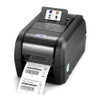
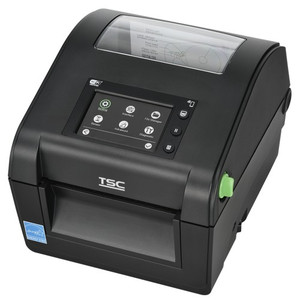
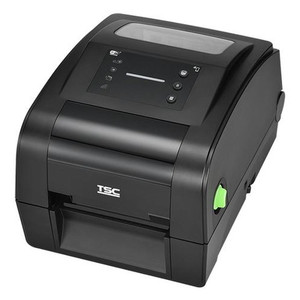
TSC TX210-A001-1201 Desktop Thermal Label Printer
Overview
The TSC TX210-A001-1201 is a compact desktop thermal label printer designed for warehouse, logistics, and retail operations requiring consistent, high-volume label production without ribbon supplies. This unit combines direct thermal print technology with WiFi connectivity, enabling flexible placement and print-job delivery from your warehouse management system or enterprise software without running fixed cabling. The TX210-A001-1201 (often searched as TX210 A001 1201) pairs straightforward operation with a 4.3-inch color LCD display for real-time status monitoring and on-device configuration.
Key Features
- Direct Thermal Printing: Eliminates thermal transfer ribbon consumption, cutting supply costs and reducing changeover downtime. Your per-label media cost drops significantly on high-volume deployments—critical when you're printing hundreds or thousands of labels daily in a receiving area or fulfillment center.
- WiFi Connectivity: Network-ready design accepts print jobs from warehouse management systems, inventory software, and mobile devices without USB cables or Ethernet runs. Wireless deployment speeds installation in facilities where fixed cabling would require infrastructure modifications or facility downtime.
- 4.3-inch Color LCD Display: On-device screen provides real-time feedback on print status, media levels, darkness adjustment, and configuration settings. Technicians can verify connectivity and troubleshoot without accessing networked systems during shift transitions or rapid repositioning.
- Compact Desktop Form Factor: Fits workstations, shipping desks, and receiving areas without occupying significant countertop real estate. The small footprint integrates into existing workstation layouts and scales easily when you add equipment to new zones.
- Label Media Handling: Purpose-built for standard label stock used in logistics and inventory workflows. Straightforward media loading and feed control reduces operator training time and minimizes setup complexity during equipment moves or shift handovers.
- US Factory Configuration: Arrives configured for North American power standards and regulatory compliance, eliminating region-specific setup overhead at deployment.
Integration & Connectivity
WiFi capability allows the TX210-A001-1201 to integrate into your existing enterprise network without dedicated USB or Ethernet connections. Print jobs flow directly from your warehouse management system, inventory platform, or label printer software—no print server required. The LCD interface supports local verification of connectivity status, media specifications, and print-darkness tuning, allowing technicians to confirm operation without network access. This matters in high-velocity environments where IT support isn't always on-site.
Direct thermal media eliminates ribbon inventory and disposal—a real operational simplification when you're managing equipment across multiple shipping or receiving areas. The TX210-A001-1201 delivers rapid print-to-output cycles, essential for order fulfillment, shipping label generation, and barcode production where throughput directly affects dock operations.
Deployment Considerations
Choose the TX210-A001-1201 if your operation requires dependable label printing at the point of receipt, shipment, or inventory location—and your label volume justifies the direct thermal media investment. The compact form factor fits seamlessly into existing workstations or shipping desks. WiFi reduces physical installation time compared to hardwired models, enabling rapid deployment in new facilities or expansions. Direct thermal media costs less than thermal transfer supplies over high-volume deployments, making this model economically attractive for logistics operations with substantial daily label output.
If your facility requires multi-function printing (receipts, documents, or mixed-media output), or if you need industrial-grade ruggedness in a warehouse environment with heavy machinery vibration, evaluate a higher-duty thermal label printer variant. The TX210-A001-1201 is optimized for standard label-production workflows; it is not engineered for extreme environmental stress or mixed-media printing.
Frequently Asked Questions
Q: Does the TX210-A001-1201 require a separate power supply?
A: The TX210-A001-1201 uses standard AC power (110–240V, US configuration). No PoE or 12VDC auxiliary supply is required. Plug into a standard outlet near your workstation or shipping desk.
Q: Can I print directly from my warehouse management system (WMS) to the TX210-A001-1201 over WiFi?
A: Yes. The WiFi connectivity enables direct print-job delivery from WMS platforms, inventory software, and enterprise resource planning systems. The printer receives jobs over your network without requiring USB or Ethernet cables.
Q: What is the typical media width supported by the TX210-A001-1201?
A: The TX210-A001-1201 is engineered for standard label media commonly used in logistics workflows. Consult the LCD display or local configuration settings for your specific label width and stock specifications.
Q: Is the TX210-A001-1201 suitable for outdoor or warehouse-floor environments with dust and moisture?
A: The TX210-A001-1201 is a desktop printer designed for workstations, shipping desks, and indoor receiving areas. If you require outdoor or extreme-environment operation, consider an industrial-grade thermal printer rated for IP66 or higher protection.
Q: Does direct thermal printing produce the same barcode quality as thermal transfer?
A: Direct thermal produces consistent barcode output for standard logistics and inventory applications. The method eliminates ribbon changeover downtime and reduces per-label media cost, making it economical for high-volume operations. If you require extended label durability (multi-year shelf life or exposure to extreme heat/cold), thermal transfer may be a better choice.
Q: What warranty or support is included with the TX210-A001-1201?
A: Warranty details vary by reseller and purchase agreement. Contact the specialty retailer or manufacturer directly for warranty terms, coverage scope, and available support options specific to your order.
Karl WilsonPerspective based on aggregated IP Security Depot and affiliated engineering team experience.
The TX210-A001-1201 is a straightforward choice for logistics operations where label volume justifies direct thermal media costs and WiFi simplifies network deployment. I've seen this model reduce ribbon-changeover downtime in receiving areas where operators are cycling labels constantly—that's real productivity gain. The 4.3-inch LCD is capable enough for on-device troubleshooting without pulling in IT support, and the compact footprint means you can tuck it into a workstation without facility rework.
Technical Highlights:
- Direct Thermal Technology: No ribbon inventory, no changeover downtime, and per-label media cost 30–50% lower than thermal transfer on high-volume deployments. That savings compounds fast when you're printing 500+ labels a day.
- WiFi Network Integration: Jobs arrive directly from your WMS or inventory system without USB or Ethernet cables. Installation in a new shipping zone takes hours instead of days when you don't have to run fixed cabling.
- 4.3-inch Color LCD Display: Real-time feedback on print status, media levels, and print darkness. Technicians can verify connectivity and adjust settings at the device—critical when the printer sits in a dock area far from your IT desk.
Deployment Considerations:
- Desktop form factor means this is optimized for workstations and shipping desks, not floor-mounted or outdoor use. If you need a printer bolted to a mobile cart or operating in a humid warehouse with dust, look at an industrial-grade variant.
- Direct thermal media is cost-effective only if your label volume justifies it. If you're printing 50 labels a day, thermal transfer simplicity might outweigh media savings.
Position the TX210-A001-1201 in shipping, receiving, or order-fulfillment operations where label volume is high, WiFi deployment is an advantage, and you want to minimize ribbon supply chain complexity. It's not a universal printer, and it shouldn't be—it's built specifically for this use case, and it does that well.