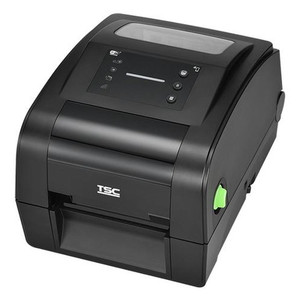
TSC TH340R-A001-0131 UHF RFID Thermal Label Printer
The TSC TH340R-A001-0131 is a professional-grade thermal label printer engineered for warehouse, logistics, and asset tracking applications that demand RFID encoding capability. This model combines 300 DPI print resolution with integrated UHF RFID functionality, enabling users to print and encode labels in a single pass—reducing workflow steps and improving operational efficiency in high-volume environments.
Overview
Designed for facilities managing inventory, supply chain tracking, and asset management, the TH340R-A001-0131 integrates thermal printing with UHF RFID encoding. The built-in LCD display provides real-time status monitoring and simplified navigation, while Wi-Fi connectivity enables network-based printing across warehouse floors and distribution centers. This configuration supports both label printing and RFID tag encoding, making it suitable for organizations transitioning to or already operating RFID-enabled supply chain systems.
Key Features
- 300 DPI Print Resolution: Delivers crisp, scannable barcodes and text on label stock, meeting retail, pharmaceutical, and logistics labeling standards.
- UHF RFID Encoding: Integrates RFID write/read capability for simultaneous label printing and tag encoding without secondary equipment.
- Wi-Fi Connectivity: Connects directly to network infrastructure for centralized print job management and remote status monitoring.
- LCD Display: Provides intuitive operator feedback, job status, and system diagnostics without requiring external PC interaction.
- Thermal Print Method: Operates as a direct thermal printer, eliminating ribbon consumption for standard label applications while reducing consumable costs.
- Label Media Support: Engineered to process label stock, supporting typical warehouse label formats and dimensions common to supply chain operations.
Technical Specifications
The TH340R-A001-0131 (often searched as TH340R A001 0131) delivers 300 DPI resolution, enabling compliance with barcode print quality standards required by major retailers and logistics partners. Wi-Fi interface eliminates wired network dependencies, allowing flexible placement within warehouse layouts. The LCD display reduces operator training overhead by providing clear, real-time feedback on print jobs, media status, and network connectivity. RFID encoding capability is particularly valuable in environments where asset tracking, anti-counterfeiting measures, or supply chain visibility improvements are operational priorities.
Ideal Applications
This printer excels in warehouse and distribution environments where label printing and RFID encoding occur simultaneously. Common deployments include receiving departments applying product identification and RFID tags to incoming shipments, inventory management operations tracking stock movement, and shipping departments preparing parcels with both barcode and RFID identification. Organizations operating in regulated industries such as pharmaceuticals, food and beverage, or high-value asset management benefit from the integrated encoding capability, which ensures consistency between printed and encoded data.
Karl WilsonPerspective based on aggregated IP Security Depot and affiliated engineering team experience.
During supply chain modernization projects, I've evaluated the TSC TH340R-A001-0131 for organizations moving toward RFID-enabled inventory systems. The integrated approach—printing and encoding in a single device—eliminates workflow bottlenecks that arise when barcode and RFID encoding are handled separately. For warehouse operations managing SKU-level tracking, this consolidation directly reduces labor and equipment costs.
Technical Highlights:
- 300 DPI Resolution: Meets industry barcode print quality standards (ISO/IEC 15416), ensuring scanner compatibility across supply chain partners and retail networks.
- UHF RFID Integration: Encodes and verifies RFID tags without secondary equipment, streamlining label production workflows in receiving and shipping.
- Wi-Fi Connectivity: Enables network-based printing architecture, reducing infrastructure complexity compared to serial or parallel port solutions.
Deployment Considerations:
- Plan RFID antenna placement and read-range validation during pilot phases—environmental factors (metal shelving, humidity) affect encoding reliability.
- Implement print template management centrally; leverage Wi-Fi connectivity to push firmware updates and configuration changes across multiple units without manual intervention.
- Verify label stock compatibility (thermal and RFID-suitable media) with your existing supplier to avoid delays during rollout.
For organizations operating warehouses where RFID visibility is becoming a competitive requirement or customer mandate, the TH340R-A001-0131 offers straightforward hardware consolidation. The 300 DPI output maintains barcode clarity, while native RFID capability eliminates the need for downstream encoding stations. This is a practical fit for mid-to-large distribution operations seeking to scale RFID adoption without significant infrastructure redesign.