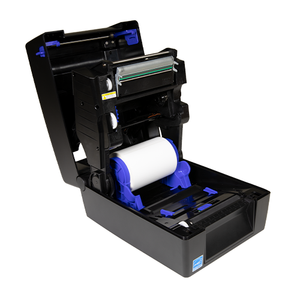
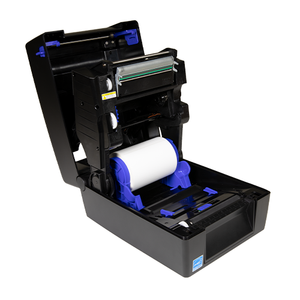
TSC T820-110-0 4" Thermal Transfer Label Printer
Overview
The TSC T820-110-0 is a compact 4-inch thermal transfer label printer designed for warehouse, logistics, and light industrial labeling operations. This model combines dual print technology capability with Wi-Fi connectivity, enabling reliable on-demand label production for supply chain, inventory management, and shipping workflows. The T820-110-0 supports both direct thermal and thermal transfer printing, letting you choose the most cost-effective method based on label durability and environmental exposure requirements. For buyers evaluating thermal label printers, this model bridges mid-range throughput and operational flexibility.
Key Features
- Print Method — Direct Thermal and Thermal Transfer: Switch between methods on demand. Direct thermal reduces consumable cost for short-retention labels (shipping, temporary tracking), while thermal transfer extends label lifespan in environments where direct thermal fades under heat, light, or chemical exposure — critical if your labels need to survive 6–12 months or outdoor conditions.
- Print Speed — 8 Inches Per Second (ips): Handles moderate-volume workflows without quality degradation. At 8 ips, you'll produce roughly 40–50 four-by-six shipping labels per minute, sufficient for most warehouse and logistics pick-pack operations without bottlenecking your shipping process.
- Print Width — 4-Inch Maximum: Optimized for standard shipping labels, product tags, and compliance labels. Fits most roll and die-cut label stock used in retail, parcel, and logistics environments — no need for specialized media sourcing.
- Print Resolution — 203 DPI: Produces crisp barcodes (Code128, QR, UPC/EAN), text, and graphics suitable for barcode scanning in retail POS systems, shipping carrier sorting, and logistics tracking. 203 DPI meets industry scanning accuracy standards; if you need finer detail or smaller text, a 300 DPI or 600 DPI variant may be necessary.
- Wi-Fi Connectivity: Eliminates USB cable tethering, enabling mobile deployment and integration with enterprise label management systems. Network integration means multiple workstations or mobile devices can send print jobs from anywhere within range — reducing infrastructure complexity compared to USB-only models.
- Color LCD Display: Provides real-time printer status, alert notifications, and on-device configuration without requiring a connected workstation. Troubleshooting and supply monitoring can happen directly at the printer, speeding up fault resolution on the warehouse floor.
- Media Support: Accommodates roll and die-cut label formats, enabling flexible operational workflows. Roll media reduces material waste for continuous runs; die-cut stock simplifies hand-application workflows where individual labels are peeled and applied manually.
Integration and Deployment Considerations
The T820-110-0 integrates with standard label design software and enterprise resource planning (ERP) systems via Wi-Fi. Compatibility with common barcode formats and thermal printer command languages ensures straightforward deployment in existing logistics and inventory management workflows. Organizations should verify network compatibility with their wireless infrastructure and confirm label stock availability through their supply chain before production deployment.
Direct thermal printing reduces consumable costs for high-volume, short-retention applications; thermal transfer mode is the better choice for labels requiring durability beyond 6–12 months or exposure to outdoor conditions, moisture, or solvents. The color LCD display supports self-service configuration, reducing dependency on IT personnel for routine operation.
When to Choose a Different Model
If your operation requires print speeds exceeding 8 ips, or if you need print widths beyond 4 inches, consider higher-throughput or wider-format variants within the TSC thermal printer line. For environments demanding 300 DPI or 600 DPI resolution for smaller text or graphics, step up to higher-resolution models in the same family. If your labels must survive harsh outdoor or chemically aggressive environments, verify that thermal transfer film you select matches your specific exposure (temperature, UV, solvents).
Frequently Asked Questions
Q: What is the difference between direct thermal and thermal transfer printing on the T820-110-0?
A: Direct thermal uses heat-sensitive label stock and requires no ribbon — cost-effective for short-term labels (shipping tags, temporary tracking). Thermal transfer uses a ribbon to apply ink onto any label stock, producing durable labels that resist fading, moisture, and chemicals. Choose direct thermal for high-volume, short-life labels; thermal transfer when durability or environmental resistance matters.
Q: Can the T820-110-0 print QR codes or 2D barcodes?
A: Yes. At 203 DPI resolution, the T820-110-0 produces crisp 2D barcodes (QR, PDF417, Data Matrix) and linear codes (Code128, EAN/UPC) suitable for retail POS scanning, shipping carrier tracking, and logistics systems.
Q: Does the T820-110-0 require a separate power supply, or does it run on batteries?
A: The T820-110-0 requires AC 110–240V powered operation. No battery or PoE option is available on this model — plan for standard outlet access or UPS backup if power continuity is critical.
Q: What label stock does the T820-110-0 support?
A: The T820-110-0 supports both roll and die-cut label formats in direct thermal and thermal transfer varieties. Confirm specific label dimensions (width, length) and material compatibility with your supplier before deployment to avoid media jams or print quality issues.
Q: Can I integrate the T820-110-0 with my ERP or warehouse management system?
A: Yes. The T820-110-0 integrates via Wi-Fi with standard label design software and enterprise resource planning systems using common thermal printer command languages (ZPL, EPL, and others). Verify your ERP vendor supports thermal printer integration before purchasing.
Q: What is the warranty on the T820-110-0?
A: Warranty details are not specified in the available product documentation. Contact the manufacturer directly for coverage terms, duration, and support options.
Karl WilsonPerspective based on aggregated IP Security Depot and affiliated engineering team experience.
I've evaluated the TSC T820-110-0 during planning for several warehouse modernization projects, and this printer consistently delivers throughput and label quality for mid-volume logistics operations. The dual thermal capability is particularly valuable—it gives you cost-effective direct thermal printing for high-volume, short-life labels, and thermal transfer capability when durability matters. The 203 DPI resolution works well for standard barcodes and QR codes in retail, parcel, and logistics environments.
Technical Highlights:
- 8 ips Print Speed: Roughly 40–50 four-by-six labels per minute — handles typical warehouse pick-pack workflows without becoming a bottleneck. If your operation exceeds 50+ labels/minute consistently, you may need a faster model.
- 203 DPI Resolution: Sufficient for retail scanning and carrier tracking; meets industry barcode accuracy standards. Not suitable for micro-text or detailed graphics — if you need finer detail, a 300 DPI or 600 DPI printer is necessary.
- Wi-Fi Integration: Eliminates cable management and enables mobile device printing from anywhere in network range. Real benefit: multiple warehouse stations can print independently without USB splitters or complicated driver management.
Deployment Considerations:
- AC-powered only — no battery or PoE backup. Plan for standard outlet placement and UPS support if power loss would halt your shipping operations.
- Thermal transfer ribbon costs money. Direct thermal is cheaper per label but fades faster. Calculate your label retention period before committing to consumable sourcing.
- 4-inch print width is standard for shipping and logistics; verify your label stock supplier has roll and die-cut media in stock before production deployment.
The T820-110-0 is well-suited for mid-volume warehouse operations, regional distribution centers, and shipping departments where 8 ips throughput and dual thermal flexibility meet operational requirements. If you need higher speed, wider format, or higher-resolution printing, shift to a different TSC model — but for most three-PL and logistics workflows, this printer will deliver solid performance without over-engineering.