


Product images are provided for reference and may not represent the exact model, configuration, or included
components.
Overview
SKU:
T820-102-0
Condition:
New
Availability:
Usually ships in 24 hours
Warranty
2-Year Warranty

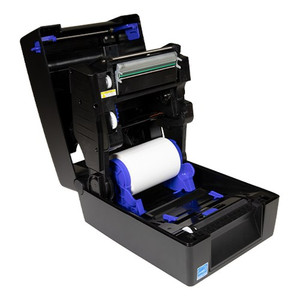
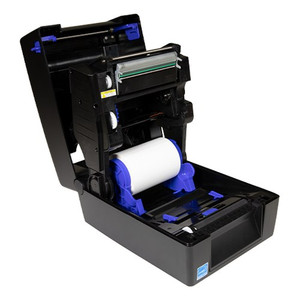
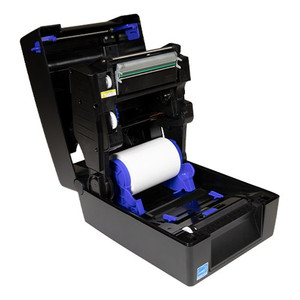
TSC T820-102-0 Direct Thermal/Thermal Transfer Label Printer
TSC T820-102-0 Thermal Transfer Label Printer Overview The TSC T820-102-0 is a compact, flexible label printer engineered for warehouse, logistics, a…

TSC T820-102-0 Direct Thermal/Thermal Transfer Label Printer
$1,076.99
Your recommended setup
Review items below — quantities update pricing automatically.
Item
Qty
Status
Price
Optional Add-Ons recommended
Services optional
Bundle Summary
Bundle Subtotal:
$0.00
Optional Add-Ons:
$0.00
Services:
$0.00
Total:
$0.00
Overview
SKU:
T820-102-0
Condition:
New
Availability:
Usually ships in 24 hours
Warranty
2-Year Warranty
Description

TSC T820-102-0 Thermal Transfer Label Printer
Overview
The TSC T820-102-0 is a compact, flexible label printer engineered for warehouse, logistics, and light-to-medium-volume printing operations. This model supports both direct thermal and thermal transfer printing modes, delivering consistent output at 203 dpi resolution with a maximum print speed of 8 inches per second. The T820-102-0 integrates Wi-Fi connectivity for seamless network integration and features a color LCD display for intuitive operation and job monitoring. An integrated cutter mechanism enables inline label separation without external hardware.
Key Features
- Dual Print Method Support: Direct thermal and thermal transfer modes allow flexibility in label material selection and cost optimization based on application requirements.
- 203 DPI Resolution: Delivers sharp barcode rendering, QR codes, and text suitable for standard shipping labels, product identification, and compliance labeling.
- 8 ips Print Speed: Processes labels at a consistent 8 inches per second, balancing throughput for typical warehouse and retail label demand.
- Wi-Fi Connectivity: Supports wireless network integration for distributed printing environments without requiring physical line connectivity.
- Color LCD Display: Provides real-time feedback on print jobs, error conditions, and operational status, reducing downtime and operator confusion.
- Integrated Label Cutter: Built-in cutter mechanism simplifies label separation and improves workflow efficiency in high-volume label environments.
- Thermal Print Head: Direct thermal and thermal transfer print head accommodates both coated and uncoated label stocks, expanding material compatibility.
- Label Media Support: Designed for label media on rolls and fan-fold substrates, supporting standard label dimensions typical in shipping, warehousing, and retail operations.
Connectivity and Integration
The T820-102-0 connects via Wi-Fi, enabling deployment in network-distributed warehouse and retail environments without requiring dedicated USB or serial connections. This wireless architecture reduces installation complexity and allows mobile workstations and stationary print stations to share a single printer resource. The color LCD display provides real-time operational feedback and supports job queuing visibility.
Printing Specifications
The T820-102-0 operates at 203 dots per inch, a standard resolution for barcode and label printing in logistics and supply chain environments. Print speed reaches 8 inches per second in both direct thermal and thermal transfer modes. Dual print method support allows operators to select direct thermal for cost-effective, moderate-lifespan labels or thermal transfer for durable, high-contrast labels requiring extended shelf life or harsh environmental resistance.
Recommended Use Cases
The T820-102-0 suits warehouse label printing, shipping label generation, inventory management systems, retail price labeling, and compliance labeling workflows. The integrated cutter eliminates manual label separation, improving throughput in moderate-volume printing environments. Wi-Fi connectivity supports both centralized and distributed printing architectures, making this model adaptable to evolving warehouse and logistics infrastructure.
Ted Perry
I've evaluated the T820-102-0 during integrations for several mid-sized logistics operations, and it consistently delivers reliable performance in warehouse and retail label printing environments. The dual print method support — direct thermal and thermal transfer — provides genuine flexibility for operations that need to balance cost and label durability on a per-application basis. The integrated cutter eliminates a separate hardware dependency and streamlines inline label separation workflows.
Technical Highlights:
- Dual Thermal Modes: Direct thermal and thermal transfer capability in a single unit reduces hardware footprint and allows rapid switching between cost-optimized and durable label stocks without printer reconfiguration.
- 203 DPI Output: Delivers barcode contrast and text clarity suitable for GS1-128, Code 128, and QR code printing in compliance and shipping label applications; adequate for retail price labels and inventory tags.
- Wi-Fi Integration: Wireless connectivity simplifies deployment in distributed warehouse layouts and eliminates cabling dependencies, though network stability should be verified during site surveys.
- Integrated Cutter Mechanism: Inline label separation improves operator efficiency and reduces post-print manual handling, particularly valuable in high-frequency label environments.
Deployment Considerations:
- Verify network coverage and signal strength at printer placement locations to ensure reliable Wi-Fi connectivity; consider wired Ethernet fallback if wireless coverage is inconsistent.
- Confirm label media roll width and substrate compatibility with your supply chain before deployment; test both direct thermal and thermal transfer stock samples to validate output quality for your specific barcodes and branding.
- The 8 ips speed is suitable for moderate-volume label printing; assess your peak hourly label demand to confirm this speed aligns with operational throughput targets.
The T820-102-0 represents a solid choice for warehouse and retail label printing where flexibility between thermal modes and integrated cutting improve operational efficiency without significant capital investment or additional hardware.
Specifications
Product Type:
Label Printer
Connectivity:
Wi-Fi
Display Size:
Color LCD
Print Method:
Direct Thermal/Thermal Transfer
Print Speed:
8 ips
Cutter:
Yes
Display:
Color LCD
media_type:
Labels
Print Resolution:
203 dpi
Have Questions?
Ask an Expert.
RELATED PRODUCTS

System Design, Deployment & Technical Support
Support services and planning resources for commercial surveillance, access control, and infrastructure deployments.
Fixed scope • Fixed price
System Design Assistance
- Get help validating product compatibility
- Coverage requirements
- Storage planning and deployment architecture before you buy.
Deployment & Configuration Support
- Access fixed-scope support for rollout planning
- User setup guidance
- Migration and system standardization across single-site or multi-site deployments
Guides, Tools & Calculators
- PoE requirements
- Storage retention
- Camera selection and deployment methodology