


Product images are provided for reference and may not represent the exact model, configuration, or included
components.
Overview
SKU:
T6E6X4-1105-00
Condition:
New
Availability:
Usually ships in 24 hours
Warranty
2-Year Warranty

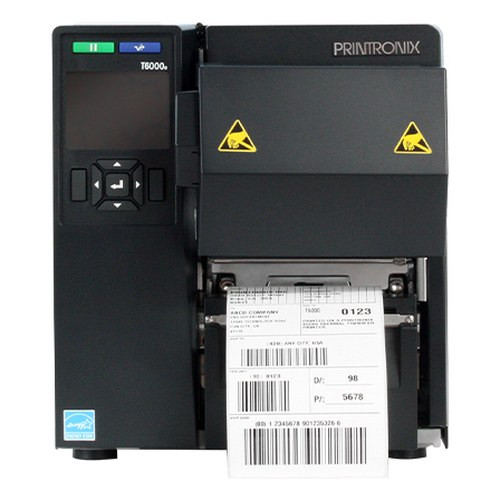
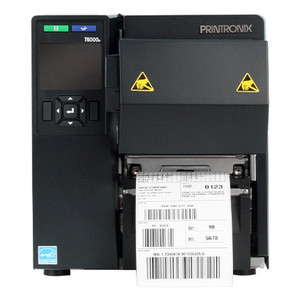
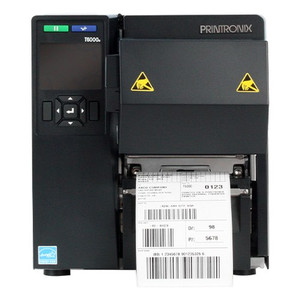
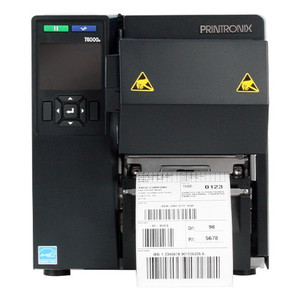
TSC T6E6X4-1105-00 Thermal Transfer Industrial Printer
TSC T6E6X4-1105-00 Thermal Transfer Industrial Printer Overview The TSC T6E6X4-1105-00 is a dual-mode thermal transfer and direct thermal printer desi…
TSC T6E6X4-1105-00 Thermal Transfer Industrial Printer
$3,994.99
Your recommended setup
Review items below — quantities update pricing automatically.
Item
Qty
Status
Price
Optional Add-Ons recommended
Services optional
Bundle Summary
Bundle Subtotal:
$0.00
Optional Add-Ons:
$0.00
Services:
$0.00
Total:
$0.00
Overview
SKU:
T6E6X4-1105-00
Condition:
New
Availability:
Usually ships in 24 hours
Warranty
2-Year Warranty
Description

TSC T6E6X4-1105-00 Thermal Transfer Industrial Printer
Overview
The TSC T6E6X4-1105-00 is a dual-mode thermal transfer and direct thermal printer designed for warehouse, logistics, and retail label production environments. This model combines fast print speeds with high-resolution output and Wi-Fi connectivity, making it suitable for on-demand label printing, ticket generation, and barcode applications. The T6E6X4-1105-00 (often searched as T6E6X4 1105 00) integrates a color LCD display for operator control and supports both thermal transfer ribbon and direct thermal media for flexible printing workflows.
Key Features
- Print Speed: 14 inches per second (ips) enables rapid label and ticket production without sacrificing throughput in high-volume environments.
- Print Resolution: 600 dpi delivers crisp barcode clarity, legible text, and detailed graphics for retail, logistics, and compliance labeling.
- Dual Print Method: Supports both direct thermal and thermal transfer printing, allowing operators to select the appropriate media for durability and cost requirements.
- Color LCD Display: Integrated color display provides real-time job monitoring, status feedback, and configuration access without requiring external control interfaces.
- Wi-Fi Connectivity: Wireless network integration eliminates hardwired connections, supporting mobile workstations and distributed printing across facilities.
- Media Support: Compatible with labels and tickets, accommodating variable label sizes and formats typical in distribution and retail operations.
- Built-in Cutter: Integrated cutting mechanism for automated label separation, reducing manual post-processing and increasing throughput.
- Network-Ready Architecture: Wi-Fi interface supports seamless integration with warehouse management systems (WMS), enterprise resource planning (ERP) platforms, and label design software.
Integration & Compatibility
The TSC T6E6X4-1105-00 connects to networked environments via Wi-Fi, enabling centralized print job queuing and remote monitoring. The color LCD interface simplifies media loading, ribbon installation, and diagnostic troubleshooting in multi-user facilities. Thermal transfer operation requires compatible ribbon spools and label stock, while direct thermal mode uses chemically treated label media for cost-optimized, short-shelf-life labels. The printer's dual-mode capability allows IT and operations teams to standardize on a single platform while supporting variable label durability requirements across different departments.
Specifications Summary
Print speed reaches 14 ips with 600 dpi resolution, providing a balance between production velocity and output quality. The printer handles both labels and tickets with thermal transfer and direct thermal methods. Color LCD display delivers real-time operational feedback. Wi-Fi connectivity enables network-based job distribution and remote status queries. Built-in cutter supports automated label separation.
Jerry Tildsen
I've evaluated the TSC T6E6X4-1105-00 during deployments in warehouse and retail label operations, and this printer delivers solid performance for mid-to-high-volume environments. The 14 ips speed with 600 dpi resolution is a practical combination that maintains barcode scannability while keeping cycle times reasonable. The model's dual thermal transfer/direct thermal capability is particularly valuable when your operation needs both durable labels for shipping and cost-effective direct thermal tickets for internal workflows.
Technical Highlights:
- Print Speed & Resolution Balance: 14 ips at 600 dpi ensures readable barcodes (GS1-128, Code 128, QR) without extended print cycles per label.
- Dual Print Method Flexibility: Thermal transfer mode extends label life in high-friction environments (dock, inventory). Direct thermal reduces per-label cost for short-term tickets and internal routing labels.
- Wi-Fi Network Integration: Wireless printing eliminates cable runs to labeling stations and simplifies multi-workstation deployments across warehouse floors.
- Integrated Cutter: Reduces manual label separation labor and ensures consistent cut positioning for stacked label applications.
Deployment Considerations:
- Wi-Fi signal strength should be validated in warehouse environments with metal racking and RF interference; consider placement near access points or use of range extenders if signal drops below -67 dBm.
- Thermal transfer operation requires ribbon spools matched to label width and material; stock compatible ribbon inventory to prevent production delays.
- Color LCD interface reduces training overhead compared to LED-only displays; operators can navigate menus and clear paper jams without external tools.
- Integrated cutter is suitable for cut-to-length label stock; verify your label roll specifications (core size, width) are compatible before deployment.
The T6E6X4-1105-00 is well-suited for distribution centers, retail receiving areas, and fulfillment operations where print speed and barcode quality are equally important. If your facility requires both thermal transfer durability and direct thermal economy in a single platform, this model justifies the investment. Validate Wi-Fi coverage during site surveys and establish preventive maintenance schedules for cutter blade inspection to maximize uptime.
Specifications
Product Type:
Printer
Connectivity:
Wi-Fi
Display Size:
Color LCD
Print Method:
Direct Thermal/Thermal Transfer
Print Speed:
14 ips
Cutter:
Yes
Display:
Color LCD
media_type:
Labels; Tickets
Print Resolution:
600 dpi
Have Questions?
Ask an Expert.
RELATED PRODUCTS


System Design, Deployment & Technical Support
Support services and planning resources for commercial surveillance, access control, and infrastructure deployments.
Fixed scope • Fixed price
System Design Assistance
- Get help validating product compatibility
- Coverage requirements
- Storage planning and deployment architecture before you buy.
Deployment & Configuration Support
- Access fixed-scope support for rollout planning
- User setup guidance
- Migration and system standardization across single-site or multi-site deployments
Guides, Tools & Calculators
- PoE requirements
- Storage retention
- Camera selection and deployment methodology