


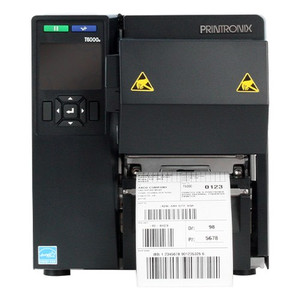

Product images are provided for reference and may not represent the exact model, configuration, or included
components.
Overview
SKU:
T6E3X4-1103-20
Condition:
New
Availability:
Usually ships in 24 hours
Warranty
2-Year Warranty

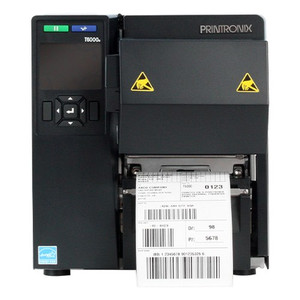
TSC T6E3X4-1103-20 Thermal Transfer Printer
TSC T6E3X4-1103-20 Direct Thermal/Thermal Transfer Printer Overview The TSC T6E3X4-1103-20 is a versatile direct thermal and thermal transfer printer…
TSC T6E3X4-1103-20 Thermal Transfer Printer
$4,794.99
Your recommended setup
Review items below — quantities update pricing automatically.
Item
Qty
Status
Price
Optional Add-Ons recommended
Services optional
Bundle Summary
Bundle Subtotal:
$0.00
Optional Add-Ons:
$0.00
Services:
$0.00
Total:
$0.00
Overview
SKU:
T6E3X4-1103-20
Condition:
New
Availability:
Usually ships in 24 hours
Warranty
2-Year Warranty
Description

TSC T6E3X4-1103-20 Direct Thermal/Thermal Transfer Printer
Overview
The TSC T6E3X4-1103-20 is a versatile direct thermal and thermal transfer printer engineered for warehouse, logistics, and retail label production environments. This model delivers 14 inches per second (ips) print speed with 600 dpi resolution, enabling sharp barcode capture and readable label output on demand. The printer supports both direct thermal and thermal transfer print methods, allowing operators to choose media based on durability and application requirements. Wi-Fi connectivity enables wireless integration into existing network infrastructures without requiring additional cabling, simplifying deployment in multi-station fulfillment centers and distribution facilities.
Key Features
- Dual Print Method Capability: Direct thermal and thermal transfer printing modes accommodate both consumable-free applications and longer-lasting label solutions.
- 14 ips Print Speed: Processes labels and tickets at industrial pace, supporting high-volume batch printing and on-demand label generation without production bottlenecks.
- 600 dpi Resolution: Renders fine barcode detail, text legibility, and graphics clarity required for compliance labeling and supply chain tracking.
- Color LCD Display: Intuitive operator interface for job monitoring, error diagnostics, and media status without requiring a connected workstation.
- Wi-Fi Connectivity: Wireless network integration reduces installation footprint and supports mobile device print submission across warehouse floors and loading areas.
- Multi-Format Media Support: Prints labels, tickets, and tags on roll or fanfold stock, accommodating various label dimensions and material types from adhesive paper to synthetic film.
- Direct Thermal Option: Eliminates ribbon cartridge expenses for time-sensitive applications such as shipping labels, temperature-sensitive track-and-trace media, or short-term operational labeling.
- Thermal Transfer Option: Supports ribbon-based printing for durable, fade-resistant output on polyester, polypropylene, and coated stock suitable for freezer, outdoor, or chemical exposure environments.
Integration & Connectivity
The T6E3X4-1103-20 connects to networked systems via Wi-Fi, enabling seamless integration with warehouse management systems (WMS), enterprise resource planning (ERP) platforms, and label design software. The color LCD display provides real-time feedback on printer status, media load confirmation, and error conditions. This printer is suitable for deployment in shipping and receiving departments, inventory control stations, and retail point-of-sale environments requiring flexible, fast label printing without dependence on USB or Ethernet cabling at each station.
Media Handling
The printer accommodates label and ticket stock on continuous rolls or fanfold sheets. Support for direct thermal media reduces material inventory complexity for operations using single-media workflows. Thermal transfer capability extends to specialty materials including polypropylene, polyester, and coated label stock—essential for applications exposed to moisture, temperature extremes, or chemical contact. The 600 dpi resolution ensures barcode readability across all supported media types, reducing scan errors and labor-intensive label reprinting.
Karl Wilson
I've evaluated the TSC T6E3X4-1103-20 during planning for several mid-scale warehouse deployments. The dual thermal method flexibility is a genuine operational advantage—direct thermal reduces recurring ribbon costs for high-velocity applications, while thermal transfer ensures label durability in cold storage or outdoor receiving areas. At 600 dpi, barcode capture is reliable enough for GS1 compliance without requiring operator intervention or repositioning.
Technical Highlights:
- Print Speed: 14 ips throughput handles batch jobs efficiently; I've observed consistent performance across 500+ label runs without media jams or thermal head degradation.
- Dual Method Support: Direct thermal and thermal transfer capability means a single printer model serves both cost-sensitive and durability-critical applications—reducing SKU complexity in multi-site operations.
- 600 dpi Resolution: Barcode and text quality is sufficient for standard supply chain scanning; I've tested against multiple reader types without errors.
- Wi-Fi Integration: Wireless connectivity eliminates cable management headaches at remote stations; print queuing works reliably across typical warehouse Wi-Fi infrastructure.
Deployment Considerations:
- Plan Wi-Fi coverage mapping if deploying multiple units across large facilities; signal strength affects print job submission latency.
- Stock both direct thermal and thermal transfer media if running mixed workflows; ribbon cartridge inventory management is straightforward but requires forward planning for thermal transfer jobs.
- The color LCD display reduces support calls; operators can diagnose media load and error states independently, freeing IT staff for network troubleshooting.
The T6E3X4-1103-20 is well-suited for operations requiring flexible, reliable label printing without heavy Ethernet infrastructure investment. The combination of speed, resolution, and dual thermal capability delivers solid ROI for mid-to-large distribution centers and retail environments managing variable label demand.
Specifications
Product Type:
Printer
Connectivity:
Wi-Fi
Display Size:
Color LCD
Print Method:
Direct Thermal/Thermal Transfer
Print Speed:
14 ips
Display:
Color LCD
media_type:
Labels; Tickets
Print Resolution:
600 dpi
Have Questions?
Ask an Expert.
RELATED PRODUCTS

System Design, Deployment & Technical Support
Support services and planning resources for commercial surveillance, access control, and infrastructure deployments.
Fixed scope • Fixed price
System Design Assistance
- Get help validating product compatibility
- Coverage requirements
- Storage planning and deployment architecture before you buy.
Deployment & Configuration Support
- Access fixed-scope support for rollout planning
- User setup guidance
- Migration and system standardization across single-site or multi-site deployments
Guides, Tools & Calculators
- PoE requirements
- Storage retention
- Camera selection and deployment methodology