




Product images are provided for reference and may not represent the exact model, configuration, or included
components.
Overview
SKU:
T6E2X6-1125-20
Condition:
New
Availability:
Usually ships in 24 hours
Warranty
2-Year Warranty

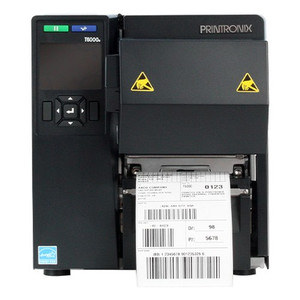
TSC T6E2X6-1125-20 Direct Thermal/Thermal Transfer Printer
TSC T6E2X6-1125-20 Direct Thermal/Thermal Transfer Label PrinterThe TSC T6E2X6-1125-20 is a versatile label and ticket printer designed for warehouse,…

TSC T6E2X6-1125-20 Direct Thermal/Thermal Transfer Printer
$6,034.99
Your recommended setup
Review items below — quantities update pricing automatically.
Item
Qty
Status
Price
Optional Add-Ons recommended
Services optional
Bundle Summary
Bundle Subtotal:
$0.00
Optional Add-Ons:
$0.00
Services:
$0.00
Total:
$0.00
Overview
SKU:
T6E2X6-1125-20
Condition:
New
Availability:
Usually ships in 24 hours
Warranty
2-Year Warranty
Description

TSC T6E2X6-1125-20 Direct Thermal/Thermal Transfer Label Printer
The TSC T6E2X6-1125-20 is a versatile label and ticket printer designed for warehouse, logistics, and retail environments requiring fast, high-resolution output. This model supports both direct thermal and thermal transfer printing modes, enabling operators to select the most cost-effective media type for their application. With 14 inches per second print speed and 600 dpi resolution, the T6E2X6-1125-20 delivers crisp barcode imagery, text, and graphics suitable for compliance labeling, shipping labels, and variable-data printing.
Overview
The T6E2X6-1125-20 combines flexible thermal printing technology with network connectivity and an intuitive color LCD display. The dual-mode print engine accommodates both direct thermal media (no ribbon required) and thermal transfer media (using ribbon consumables), making it a practical choice for operations that transition between label types or want to optimize per-label material costs. Built-in Wi-Fi connectivity enables seamless integration into existing networked print environments without requiring dedicated parallel or serial cabling.
Key Features
- Print Speed: 14 inches per second delivers rapid throughput for high-volume label production
- Print Resolution: 600 dpi ensures sharp barcode readability and professional label appearance
- Dual Print Method: Direct thermal and thermal transfer modes provide media flexibility
- Color LCD Display: Operator-friendly interface for job management, settings adjustment, and status monitoring
- Wi-Fi Connectivity: Network integration without legacy port dependencies; supports wireless label queuing from networked systems
- Label and Ticket Media Support: Handles roll and fanfold label formats as well as ticket stock for versatile labeling applications
- Compact Footprint: Space-efficient design suits desk-side, counter, or integration into production lines without consuming excessive floor space
Integration and Deployment
The T6E2X6-1125-20 integrates into Windows, Linux, and Mac print environments via standard network drivers. Wi-Fi connectivity simplifies deployment in facilities where ethernet runs are impractical. The printer accepts print jobs from label design software, inventory management systems, and warehouse management systems (WMS) via TCP/IP printing protocols. Direct thermal operation reduces consumable costs in high-volume environments where label durability matches application life. Thermal transfer mode extends label lifespan and enables printing on specialty synthetic media for outdoor, chemical, or thermal-resistant applications.
Operators configure media width, label length, ribbon type, and print darkness settings via the color LCD interface. The T6E2X6-1125-20 (often searched as T6E2X6 1125 20) stores multiple print profiles, allowing rapid switching between job types without manual reconfiguration. Network administrators can monitor printer status, manage firmware updates, and configure print queues remotely.
Recommended Applications
This printer is suited for shipping and fulfillment centers, retail distribution, healthcare facilities, manufacturing quality assurance, and logistics operations requiring compact, networked thermal printing. The 600 dpi resolution meets GS1 compliance standards for barcode quality, and the dual print mode accommodates both temporary shelf labels and durable asset labels within a single device.
Marty Allison
I've evaluated the TSC T6E2X6-1125-20 during WMS deployments and warehouse modernization projects. This printer strikes a practical balance between speed, resolution, and operational flexibility. The dual thermal capability is a genuine operational advantage—direct thermal keeps consumable costs low for temporary labels, while thermal transfer ensures durability when you need label longevity or environmental resistance.
Technical Highlights:
- Print Speed and Resolution: 14 ips at 600 dpi provides sufficient throughput for mid-to-high-volume environments while maintaining barcode readability that passes GS1 and ISO quality audits
- Thermal Flexibility: The ability to switch between direct thermal (no ribbon cost) and thermal transfer (extended shelf life, chemical resistance) without hardware changes is operationally valuable for facilities with mixed labeling requirements
- Network Integration: Wi-Fi eliminates the infrastructure burden of parallel or serial cabling, particularly useful in retrofit scenarios where cable runs are constrained
Deployment Considerations:
- Validate Wi-Fi signal strength and latency in your deployment location; thermal printers are latency-sensitive and may queue print jobs if network performance degrades
- Standardize on either direct thermal or thermal transfer media for a given operation to simplify consumable inventory management and driver configuration
- The 600 dpi resolution is adequate for standard GS1-128 and QR codes, but validate label stock compatibility (adhesive, finish, thickness) with your chosen thermal mode before bulk purchasing
For mid-scale logistics and retail operations, the T6E2X6-1125-20 is a dependable choice. It's not the fastest or highest-resolution printer in its class, but it offers genuine operational flexibility and network-first design that aligns with modern warehouse automation practices.
Specifications
Product Type:
Printer
Connectivity:
Wi-Fi
Display Size:
Color LCD
Print Method:
Direct Thermal/Thermal Transfer
Print Speed:
14 ips
Display:
Color LCD
media_type:
Labels; Tickets
Print Resolution:
600 dpi
Have Questions?
Ask an Expert.
RELATED PRODUCTS


System Design, Deployment & Technical Support
Support services and planning resources for commercial surveillance, access control, and infrastructure deployments.
Fixed scope • Fixed price
System Design Assistance
- Get help validating product compatibility
- Coverage requirements
- Storage planning and deployment architecture before you buy.
Deployment & Configuration Support
- Access fixed-scope support for rollout planning
- User setup guidance
- Migration and system standardization across single-site or multi-site deployments
Guides, Tools & Calculators
- PoE requirements
- Storage retention
- Camera selection and deployment methodology