


Product images are provided for reference and may not represent the exact model, configuration, or included
components.
Overview
SKU:
T6E2X4-1113-00
Condition:
New
Availability:
Usually ships in 24 hours
Warranty
2-Year Warranty

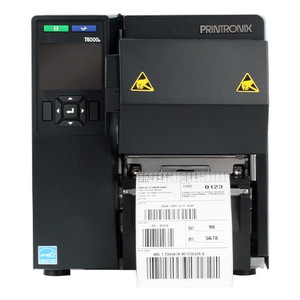
TSC T6E2X4-1113-00 Thermal Transfer Printer
TSC T6E2X4-1113-00 Direct Thermal/Thermal Transfer Printer Overview The TSC T6E2X4-1113-00 is a compact direct thermal and thermal transfer printer d…

TSC T6E2X4-1113-00 Thermal Transfer Printer
$2,962.99
Your recommended setup
Review items below — quantities update pricing automatically.
Item
Qty
Status
Price
Optional Add-Ons recommended
Services optional
Bundle Summary
Bundle Subtotal:
$0.00
Optional Add-Ons:
$0.00
Services:
$0.00
Total:
$0.00
Overview
SKU:
T6E2X4-1113-00
Condition:
New
Availability:
Usually ships in 24 hours
Warranty
2-Year Warranty
Description

TSC T6E2X4-1113-00 Direct Thermal/Thermal Transfer Printer
Overview
The TSC T6E2X4-1113-00 is a compact direct thermal and thermal transfer printer designed for warehouse, logistics, and retail labeling applications. This model combines flexible print technology with reliable connectivity, making it suitable for environments requiring both batch processing and networked deployment. The T6E2X4-1113-00 operates at 14 inches per second (ips), delivering throughput sufficient for moderate-volume label production while maintaining print quality across label and ticket media.
Key Features
- Dual Print Method Support: Operates in both direct thermal and thermal transfer modes, eliminating the need for separate equipment when switching between ribbon-based and ribbon-free label production
- Print Speed: 14 ips enables efficient batch processing and real-time labeling workflows without bottlenecks in pick-and-pack or shipping operations
- High Resolution Output: 600 dpi print resolution ensures barcode readability and professional label appearance for retail and warehouse applications
- Wi-Fi Connectivity: Built-in Wi-Fi capability supports wireless network integration, reducing installation complexity and enabling flexible printer placement within facility layouts
- Color LCD Display: User-friendly interface for job status monitoring, settings adjustment, and error diagnostics without requiring external software
- Media Flexibility: Handles labels and tickets across various widths and lengths, accommodating diverse labeling requirements from small product labels to shipping documents
Technical Specifications
The T6E2X4-1113-00 delivers 600 dpi resolution at 14 ips across direct thermal and thermal transfer print modes. The color LCD display provides real-time feedback during print operations. Wi-Fi connectivity enables network-based job submission from multiple workstations, streamlining integration into existing warehouse management systems (WMS) and enterprise resource planning (ERP) environments.
Media support encompasses labels and tickets, with flexible loading to accommodate different label formats commonly used in shipping, inventory management, and retail point-of-sale applications. The printer's compact footprint and wireless capability make it suitable for deployment at multiple stations within a facility without requiring extensive cabling infrastructure.
Connectivity and Integration
Wi-Fi connectivity on the T6E2X4-1113-00 enables direct network integration without USB or serial cabling, simplifying deployment in dynamic warehouse environments. The printer communicates with standard label design software and WMS platforms that support thermal printer communication protocols. This flexibility reduces dependency on dedicated printer connections and allows centralized print job management across multiple workstations.
Operational Benefits for Logistics and Warehouse Use
The 14 ips print speed strikes a balance between throughput and quality, preventing processing delays during peak shipping periods while maintaining barcode clarity essential for supply chain tracking. Dual thermal capability allows operators to choose direct thermal printing for cost-sensitive high-volume runs or thermal transfer for durable labels requiring extended shelf life or exposure to harsh conditions. The color LCD display reduces training requirements by providing intuitive status indication and error messaging without reliance on a connected computer.
James Everett
I evaluated the TSC T6E2X4-1113-00 during a warehouse modernization project where we needed flexible thermal printing without major infrastructure changes. The combination of direct thermal and thermal transfer capability in a single unit simplified our procurement and training, and the Wi-Fi connectivity eliminated the cable runs we anticipated.
Technical Highlights:
- Print Speed: 14 ips is sufficient for moderate-volume shipping operations; does not create downstream bottlenecks in typical pick-pack-ship workflows
- Dual Thermal Method: Eliminates need to maintain separate printers for ribbon-based and ribbon-free label production; streamlines supply chain for consumables
- Resolution: 600 dpi ensures reliable barcode scanning and professional label appearance on both labels and tickets
- Wireless Deployment: Wi-Fi integration reduces physical space requirements and enables flexible printer positioning within warehouse zones
Deployment Considerations:
- Verify Wi-Fi signal strength and interference levels at intended installation sites; consider access point placement to ensure stable connectivity during sustained print jobs
- Confirm media width and length compatibility with existing label stock and WMS system specifications before deployment to avoid format mismatches
- Plan for thermal transfer ribbon supply chain if operating in thermal transfer mode; maintain inventory of compatible ribbon sizes to prevent production interruptions
The T6E2X4-1113-00 is a practical choice for organizations seeking to consolidate thermal print equipment while maintaining compatibility with existing label formats and network infrastructure. The 14 ips speed and 600 dpi resolution deliver reliable barcode quality, and the color LCD interface reduces IT support overhead. For logistics and warehouse teams, this printer reduces capital expense by eliminating the need for multiple single-mode devices.
Specifications
Product Type:
Printer
Connectivity:
Wi-Fi
Display Size:
Color LCD
Print Method:
Direct Thermal/Thermal Transfer
Print Speed:
14 ips
Display:
Color LCD
media_type:
Labels; Tickets
Print Resolution:
600 dpi
Have Questions?
Ask an Expert.
RELATED PRODUCTS



System Design, Deployment & Technical Support
Support services and planning resources for commercial surveillance, access control, and infrastructure deployments.
Fixed scope • Fixed price
System Design Assistance
- Get help validating product compatibility
- Coverage requirements
- Storage planning and deployment architecture before you buy.
Deployment & Configuration Support
- Access fixed-scope support for rollout planning
- User setup guidance
- Migration and system standardization across single-site or multi-site deployments
Guides, Tools & Calculators
- PoE requirements
- Storage retention
- Camera selection and deployment methodology