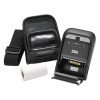
TSC S20-ANLB Wi-Fi 6E Mobile Device
Overview
The S20-ANLB is a mobile computing device engineered for field operations, logistics, and remote warehouse automation environments where persistent, high-performance wireless connectivity is non-negotiable. Built on TSC's BlueBird platform, this device integrates Wi-Fi 6E (802.11a/b/g/n/ac/ax) to deliver both immediate throughput gains and forward compatibility with next-generation enterprise wireless infrastructure. The multi-band architecture means you deploy once and operate across legacy 802.11n/ac networks today while maintaining support for Wi-Fi 6E rollouts without device replacement.
Key Features
- Wi-Fi 6E Connectivity (802.11ax): Delivers roughly 3x the throughput of Wi-Fi 5 under ideal conditions—significant when your field team uploads asset photos, barcode scans, or real-time location data over the air. The S20-ANLB supports full 802.11a/b/g/n/ac/ax standard range, so it works on every Wi-Fi generation you encounter in the field.
- Multi-Band Support (Dual/Tri-Band Architecture): Eliminates single-band bottlenecks. Your logistics warehouse can use 2.4 GHz for range and 5 GHz (or 6 GHz via Wi-Fi 6E) for capacity—device switches automatically. Reduces dead zones and handoff latency during delivery vehicle routing or cross-dock operations.
- Enterprise-Grade Design: Built to survive field conditions—construction sites, warehouses, delivery trucks—without babying the hardware. Engineered for integration with mobile device management (MDM) platforms and enterprise backend systems.
- BlueBird Product Line: Part of TSC's established mobile computing platform with known driver support, enterprise ROM stability, and multi-year OS update commitments—important if you're standardizing a fleet of 50+ devices across multiple locations.
- Wireless Performance Optimization: Wi-Fi 6E standard includes OFDMA (orthogonal frequency-division multiple access) and MU-MIMO, which means multiple devices on the same AP don't step on each other—critical in a high-density warehouse where 30+ mobile devices operate simultaneously.
- B2B Integration Ready: Out-of-the-box compatibility with enterprise wireless networks, cloud connectivity (AWS, Azure, on-premises VPN tunnels), and field operations software. No exotic drivers or firmware patches needed for standard ONVIF, REST APIs, or SSH access.
Integration & Compatibility
The S20-ANLB (often searched as S20 ANLB) is compatible with any enterprise Wi-Fi 6E access point from major vendors—Cisco, Arista, Ruckus, Ubiquiti—and maintains backward compatibility with existing 802.11ac and 802.11n deployments. This matters if you're rolling out devices in phases: some locations get Wi-Fi 6E APs this quarter, others get them in Q3. The device works on both without reconfiguration.
Organizations running warehouse automation, delivery logistics, or field service operations should assess three deployment factors: (1) your AP coverage footprint—dense concrete warehouses may need more APs than open yards; (2) MDM readiness—ensure your endpoint management platform supports BlueBird devices (most do, but verify); (3) backend connectivity—confirm your VPN termination points or cloud API endpoints can handle the concurrent connection spike when 50+ devices authenticate simultaneously at shift start.
Deployment Context
Field teams benefit most when wireless is the primary operational requirement—think delivery drivers scanning packages, technicians capturing job-site photos, or warehouse staff tracking fast-moving inventory. The multi-band architecture reduces the need for separate devices per building or frequency zone. Wi-Fi 6E support future-proofs your fleet against network upgrades for roughly 3–5 years, depending on your vendor's AP refresh cycle.
Technical integrators should verify AP capacity planning when deploying 20+ S20-ANLB units on a single site. Wi-Fi 6E APs can handle more simultaneous devices than Wi-Fi 5, but overloading a single AP still degrades performance. Plan for one AP per 20–30 devices in high-density areas, fewer in open environments. Network diagrams and RF surveys are cheap insurance before going live.
When to Choose a Different Model
If your field operations require cellular fallback (LTE/5G bridging), consider a variant from the BlueBird lineup that integrates cellular radio alongside Wi-Fi. If barcode scanning, GPS, or heavy on-device processing is critical, verify the S20-ANLB's CPU and RAM specs against your application's system requirements—Wi-Fi alone won't solve a slow processor problem. For indoor-only deployments in mature Wi-Fi 5 infrastructure with no near-term upgrade plans, an older Wi-Fi 5 variant may reduce your per-unit cost with minimal real-world throughput trade-off.
Frequently Asked Questions
Q: Is the S20-ANLB compatible with my existing Wi-Fi 5 network?
A: Yes. The S20-ANLB supports 802.11ac (Wi-Fi 5) alongside Wi-Fi 6E. It connects to any 802.11ac access point without issues, though you won't get Wi-Fi 6E throughput benefits until you upgrade APs.
Q: What MDM platforms work with the S20-ANLB?
A: Standard enterprise platforms (Microsoft Intune, MobileIron, AirWatch, Jamf) support BlueBird devices via Android or the native management agent. Verify your specific platform version supports the S20-ANLB before large-scale deployment.
Q: Does the S20-ANLB work in cold storage or outdoor-only environments?
A: Operating temperature range and environmental IP rating are not detailed in available specifications. Consult the manufacturer datasheet or your integrator before deploying in extreme-temperature or high-moisture warehouses.
Q: How many devices can a single Wi-Fi 6E access point handle?
A: A modern Wi-Fi 6E AP typically manages 50–80 concurrent devices depending on load and AP model. For dense deployments, plan one AP per 20–30 S20-ANLB units to maintain sub-100ms latency for real-time operations.
Q: Can the S20-ANLB connect to my on-premises VPN?
A: Yes, via standard VPN clients (OpenVPN, IKEv2, L2TP). Most enterprise MDM platforms pre-provision VPN credentials during device enrollment, so technicians don't manually configure it.
Q: What's the warranty on the S20-ANLB?
A: Warranty details are not provided in available specifications. Contact the manufacturer or your specialty distributor for coverage terms, accidental damage, and battery replacement policies.
Ted PerryPerspective based on aggregated IP Security Depot and affiliated engineering team experience.
From a systems engineering perspective, the TSC S20-ANLB represents a solid foundation for organizations modernizing their mobile workforce infrastructure. The Wi-Fi 6E standard is the real differentiator here—it's not just faster throughput (which matters, but benchmarks fade), it's the architectural shift to OFDMA and MU-MIMO that makes dense deployments actually work. When you've got 40 warehouse workers scanning pallets simultaneously on a single network, single-stream Wi-Fi 5 collapses. The S20-ANLB with Wi-Fi 6E doesn't.
Technical Highlights:
- Wi-Fi 6E Multi-Band Architecture: Eliminates the false choice between range and capacity. The device negotiates 2.4 GHz for warehouse perimeter coverage and 5/6 GHz for dense zones automatically—no manual band steering, no dead zones that force technicians to rewalk aisles. Real operational time savings.
- Backward Compatibility (802.11a/b/g/n/ac/ax): Deploy without ripping out existing Wi-Fi 5 infrastructure. The S20-ANLB runs on your current APs today and upgrades to Wi-Fi 6E APs next year without device replacement. That's a 3–5 year device lifecycle with no stranded capital.
- Enterprise MDM Integration: BlueBird platform means your Intune or AirWatch enrollment flows work out of the box. No custom agents, no firmware wrestling. Provisioning and lifecycle management scale linearly, not exponentially, as fleet size grows.
Deployment Considerations:
- AP capacity planning is non-negotiable. A single Wi-Fi 6E AP can handle more concurrent devices than Wi-Fi 5, but dense warehouses (50+ devices per floor) still need one AP per 20–30 units. RF surveys are cheap; rework is expensive.
- MDM readiness often gets overlooked. Verify your platform's BlueBird device support before you order 100 units. Support gaps (missing OTA updates, broken geolocation APIs) cause frustration weeks after go-live when you can't unwind the decision.
Best fit: logistics operations rolling out 30+ devices across multiple locations, where network latency directly impacts delivery speed and inventory accuracy. Less ideal for single-site deployments or IoT sensor networks where you need cellular fallback or long-range LoRaWAN alongside Wi-Fi.