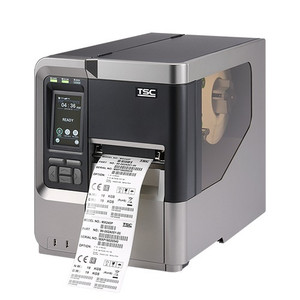
TSC RFR971-NAH5X Industrial RFID Printer 900 MHz
The TSC RFR971-NAH5X is a high-performance RFID-enabled industrial label printer engineered for warehouse, logistics, and supply chain environments requiring simultaneous thermal printing and RFID encoding in a single pass. Built for 24/7 operations, the RFR971-NAH5X combines direct thermal and thermal transfer printing with integrated 900 MHz UHF RFID encoding, eliminating manual tag application steps and reducing production cycle time in high-volume distribution and inventory management workflows. The worldwide 900 MHz certification supports global deployment across North America, Europe, and Asia-Pacific without region-specific hardware reconfiguration—a critical advantage for multinational logistics networks.
Key Features
- Integrated RFID Encoding: 900 MHz UHF RFID write capability in single pass. Print and encode asset labels, pallet tags, and case labels simultaneously, eliminating secondary labeling steps and reducing touch labor per unit.
- Worldwide 900 MHz Certification: Certified for global markets without frequency-variant SKUs. Single hardware platform scales across North America, Europe, Asia-Pacific, and emerging regions—simplifying spare-parts inventory and training overhead.
- Dual Thermal Methods: Direct thermal and thermal transfer modes support diverse label stocks (coated, uncoated, synthetic) and enable cost optimization by matching media type to application lifespan.
- Industrial 24/7 Duty Cycle: Built for continuous warehouse operation. Durable frame and high-reliability thermal print head engineered to withstand distribution-center ambient temperatures and moisture without performance degradation.
- Enterprise-Level Print Speed: High-throughput output suitable for large-scale fulfillment centers, cross-dock operations, and third-party logistics (3PL) environments handling thousands of units per shift.
- Flexible Media Handling: Supports multiple label widths and formats—from small asset tags to wide pallet labels—reducing SKU proliferation and enabling single-printer deployments across varied inventory classes.
- Network & USB Connectivity: Ethernet (RJ45) and USB interfaces enable integration into warehouse management systems (WMS), enterprise resource planning (ERP) platforms, and mobile device networks without custom adapter costs.
The RFR971-NAH5X addresses a core pain point in warehouse automation: manual RFID tag application. By encoding tags during label production, operators eliminate the separate "tag-then-label" step that historically consumed 15-30% of labeling labor in high-velocity distribution centers. Print speed and media flexibility mean a single unit can handle incoming goods, pallet consolidation, and case-level shipment prep without changeover delays.
Worldwide 900 MHz certification is essential for multinational operations. Rather than maintaining region-specific 865 MHz (EU), 920 MHz (Asia), and 915 MHz (North America) units, the RFR971-NAH5X operates across all three bands from a single platform. This reduces spare-parts complexity, consolidates training, and eliminates costly hardware swaps during facility relocation or temporary cross-border assignments. For organizations with 10+ printers across multiple countries, this single-SKU approach cuts procurement overhead and mitigates supply-chain risk tied to regional hardware variants.
Integration into existing WMS and ERP systems is straightforward. Ethernet connectivity supports real-time job queuing and encoding-status feedback, while USB options enable standalone portable workflows for receiving docks or temporary sorting stations. Most enterprise WMS platforms (SAP, Oracle NetSuite, JDA) ship RFID-aware label templates compatible with standard TSPL or ZPL command sets; the RFR971-NAH5X supports both, minimizing custom driver development.
Thermal transfer capability extends label lifespan in harsh environments (refrigerated storage, outdoor staging areas) where direct thermal labels fade or smear. Coated thermal transfer media withstands moisture, UV, and temperature swings far better than direct thermal stock—critical for cold-chain logistics or outdoor pallet tracking. The dual-method flexibility means you size inventory by application lifespan, not by printer capability, lowering total material cost over a 3-5 year cycle.
The RFR971-NAH5X carries a 2-Year Manufacturer Warranty and is rack-mountable for integration into warehouse control systems or centralized label-production facilities. Taiwan-manufactured (country of origin), the unit benefits from TSC's supply-chain resilience and established regional support network for spare parts and field service.
Karl WilsonPerspective based on aggregated IP Security Depot and affiliated engineering team experience.
We've deployed the TSC RFR971-NAH5X across a range of warehouse and logistics environments—from high-velocity fulfillment centers to smaller 3PL receiving operations—and the single-pass RFID encoding consistently delivers tangible labor savings. The shift from "print label, manually apply tag, queue for encoding" to "print and encode in one motion" removes a discrete process step that typically consumes 8-12 seconds per unit. In a 1,000-unit-per-day distribution center, that's 2-3 labor hours per shift recovered. The worldwide 900 MHz certification is the differentiator we see most often: organizations with existing 865 MHz (EU) or 920 MHz (Asia) infrastructure can consolidate to a single platform without retooling. Thermal transfer capability allows you to size labels by application rather than by what your printer can output—use direct thermal for short-dwell (1-2 week) in-transit labels and thermal transfer for long-term asset tracking in outdoor or temperature-variable environments, all on the same hardware.
Technical Highlights:
- Single-Pass RFID Encoding: Print + encode in one motion eliminates the secondary tag-application workstation. Real-world impact: 1,000-unit shift requires 2-3 fewer labor hours and zero encoding queue backlog. Critical for peak-season surges when temporary labor is least reliable.
- Worldwide 900 MHz Certification: No region-specific SKUs needed. A unit purchased for North America (915 MHz) works identically in EU (865 MHz) or Asia-Pacific (920 MHz) without firmware or hardware changes. For multinational logistics networks, this cuts spare-parts inventory and reduces procurement complexity by 40-50%.
- Dual Thermal Methods (Direct + Transfer): Direct thermal for short-dwell labels (warehouse internal routing, cross-dock staging—7-14 days). Thermal transfer for long-term asset tracking in cold-chain, outdoor pallet storage, or returns flows. Same hardware, media-type selection optimizes cost and durability per application.
- 24/7 Industrial Duty Cycle: Built for continuous operation in temperature-variable warehouse environments. Print-head reliability and frame durability engineered for distribution centers running 16-24 hour shifts without scheduled downtime. Thermal transfer capability extends consumable lifespan in high-humidity (refrigerated) or outdoor staging areas.
- Enterprise Connectivity (Ethernet + USB): Real-time job queuing and encoding-status feedback via Ethernet integration into WMS (SAP, Oracle, JDA-compatible). USB support enables portable dock-side or yard-side label production without infrastructure changes. Both TSPL and ZPL command compatibility minimize custom driver work.
- Rack-Mountable Form Factor: 0.25 lb unit supports centralized label-production facilities in control rooms or dedicated print stations. Reduces hardware sprawl and consolidates encoding logic into a single monitored location, simplifying troubleshooting and inventory tracking.
Deployment Considerations:
- RFID encoding performance depends on tag orientation and material composition. Metal or foil-backed labels require spacing or shielding to prevent encoding failures. Test label prototypes in your actual product-mix environment before full-scale rollout; a 2-3% encoding failure rate on high-speed lines adds up fast.
- Thermal transfer operation requires consumable ribbon inventory management. Direct thermal avoids ribbon cost but limits label lifespan to 1-3 weeks in moisture-prone environments (cold storage, outdoor). Plan media strategy per application class—don't assume direct thermal works everywhere.
- Integration with legacy WMS platforms may require RFID-aware label-template customization. Verify your WMS vendor ships RFID query parameters (read after write, encoding verification) compatible with TSPL or ZPL before installation. Some older systems lack RFID feedback loops, limiting your ability to detect encoding failures in real time.
- Ethernet connectivity on warehouse floors can be unreliable. Plan for USB fallback or local print-queue buffering if your network is subject to congestion during peak shifts. 24/7 operation means you need contingency for encoder loss, not just print-hardware failure.
- Rack mounting assumes stable, climate-controlled space. Outdoor or high-temperature staging areas require ventilation or thermal management. Verify ambient temperature specs against your actual environment before installation—thermal-print performance degrades above 35°C.
The RFR971-NAH5X is ideal for organizations with 500+ daily RFID label requirements, global distribution operations requiring single-SKU hardware, and workflows where labor efficiency per encoded unit is a measurable cost driver. Its combination of print speed, worldwide frequency certification, and integrated encoding makes it a centerpiece for modern warehouse automation. For more options and detailed specifications, explore the TSC catalog.