



Product images are provided for reference and may not represent the exact model, configuration, or included
components.
Overview
SKU:
99-040A033-30LF
Condition:
New
Availability:
Usually ships in 24 hours
Warranty
2-Year Warranty

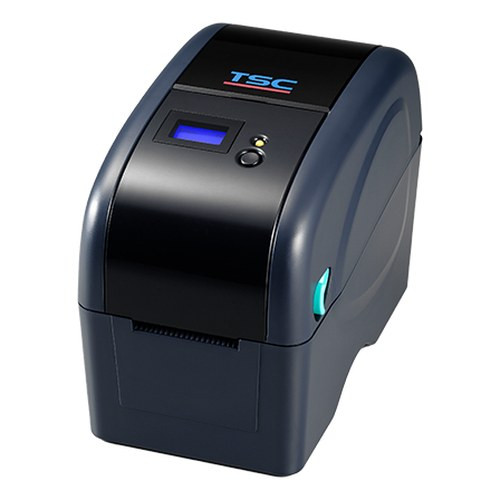
TSC 99-040A033-30LF TTP323 Direct Thermal Label Printer
TSC 99-040A033-30LF Compact Direct Thermal Label Printer Overview The TSC 99-040A033-30LF is a dedicated direct thermal and thermal transfer label pr…

TSC 99-040A033-30LF TTP323 Direct Thermal Label Printer
$575.99
Your recommended setup
Review items below — quantities update pricing automatically.
Item
Qty
Status
Price
Optional Add-Ons recommended
Services optional
Bundle Summary
Bundle Subtotal:
$0.00
Optional Add-Ons:
$0.00
Services:
$0.00
Total:
$0.00
Overview
SKU:
99-040A033-30LF
Condition:
New
Availability:
Usually ships in 24 hours
Warranty
2-Year Warranty
Description

TSC 99-040A033-30LF Compact Direct Thermal Label Printer
Overview
The TSC 99-040A033-30LF is a dedicated direct thermal and thermal transfer label printer engineered for high-volume labeling operations in warehouse, logistics, healthcare, and retail environments. This compact, wired-connectivity model delivers consistent output quality at 203 DPI resolution with a 5 ips print speed, making it suitable for on-demand label production without ribbon overhead. The 2.13-inch maximum print width accommodates standard label stock and specialized media including wristbands, supporting flexible media handling for diverse labeling scenarios.
Key Features
- Print Method: Direct Thermal and Thermal Transfer capable—switch between ribbon-free direct thermal for cost-sensitive applications and thermal transfer for extended shelf life or specialty label materials
- Print Speed: 5 inches per second delivers rapid throughput for high-volume label production without compromising print quality
- Print Resolution: 203 DPI ensures crisp, readable output for barcodes, QR codes, and text-based labeling on compact label formats
- Maximum Print Width: 2.13 inches supports standard label widths common in healthcare wristbanding, small parcel labeling, and inventory management
- Media Support: Accepts labels and wristbands with flexible media handling for healthcare, logistics, and retail applications
- Wired Connectivity: Ethernet connection for seamless integration into warehouse management systems, point-of-sale networks, and label-on-demand environments
- LCD Display: Integrated display provides real-time status, error messaging, and operational feedback without external monitoring software
- Compact Form Factor: Space-efficient design suitable for counter-top deployment in shipping departments, healthcare facilities, and distribution centers
Integration & Compatibility
The 99-040A033-30LF connects via wired Ethernet, enabling direct integration with warehouse management systems (WMS), label design software, and networked printing queues. Direct thermal printing capability eliminates ribbon purchasing for cost-sensitive operations, while thermal transfer support provides flexibility for specialty label stocks requiring longer shelf life or enhanced durability. The printer's straightforward connectivity and output formatting make it compatible with standard label design workflows used across logistics, healthcare, and retail sectors.
Deployment Context: This model is optimized for environments requiring rapid label output in a confined footprint—shipping departments, patient wristband stations, and multi-location retail or warehouse operations where individual label printers reduce queuing and improve turnaround times. The combination of direct thermal efficiency and thermal transfer versatility provides operational flexibility as label material requirements evolve.
Karl Wilson
I've evaluated the TSC 99-040A033-30LF in logistics and healthcare labeling deployments. This printer delivers straightforward, reliable on-demand label production at a footprint and price point that makes distributed printing feasible across multi-location operations. The dual thermal capability—direct thermal and thermal transfer—is a practical advantage for teams managing both cost-sensitive high-volume runs and specialty label requirements without swapping hardware.
Technical Highlights:
- Print Speed & Resolution Trade-off: At 5 ips and 203 DPI, the 99-040A033-30LF targets the balance point between output quality and throughput. Barcode readability is solid, and text remains legible for wristband and small-label applications where scanning or quick visual reference is the primary use case.
- Direct Thermal Advantage: Eliminates ribbon costs for high-volume direct thermal runs, reducing per-label operating expense in applications like parcel labeling or temporary wristband printing where shelf life isn't a constraint.
- Wired Network Integration: Ethernet connectivity simplifies integration into WMS and batch-label workflows. No USB tethering required, which is critical for stationary deployments in shipping departments or healthcare label stations.
Deployment Considerations:
- Confirm media width compatibility with your label stock before deployment. The 2.13-inch maximum width is standard for wristbands and small labels but may not suit wider label formats common in full-size shipping labels.
- Direct thermal media is sensitive to heat and light; ensure labeling output is used or stored in appropriate conditions if extended shelf life is required. For labels intended for archival or outdoor exposure, thermal transfer with wax or resin ribbon is the safer choice.
- Network configuration should follow your facility's IP addressing and print queue management protocols. Coordinate with IT or network administration to assign a static IP if this printer will serve as a shared resource across multiple workstations.
For warehouse, logistics, and healthcare teams managing frequent label demand across multiple locations, the 99-040A033-30LF offers a cost-effective, compact solution that bridges direct thermal efficiency and thermal transfer flexibility. The wired network interface and straightforward operation make it well-suited for non-IT-intensive environments where simplicity and reliability are paramount.
Specifications
Product Type:
Printer
Connectivity:
Wired (Ethernet)
Form Factor:
Compact Printer
Display Size:
LCD
Print Method:
Direct Thermal/Thermal Transfer
Print Speed:
5 ips
Max Print Width:
2.13
Display:
LCD
media_type:
Labels; Wristbands
Print_Width:
2.13 inches
Print Resolution:
203 dpi
Have Questions?
Ask an Expert.
RELATED PRODUCTS

System Design, Deployment & Technical Support
Support services and planning resources for commercial surveillance, access control, and infrastructure deployments.
Fixed scope • Fixed price
System Design Assistance
- Get help validating product compatibility
- Coverage requirements
- Storage planning and deployment architecture before you buy.
Deployment & Configuration Support
- Access fixed-scope support for rollout planning
- User setup guidance
- Migration and system standardization across single-site or multi-site deployments
Guides, Tools & Calculators
- PoE requirements
- Storage retention
- Camera selection and deployment methodology