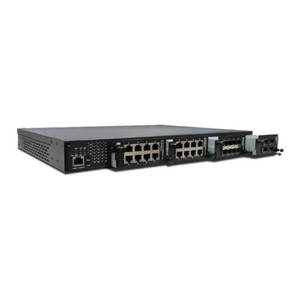
Transition Networks SISGM-PWR-HVC-NA 10G Hardened Chassis
The Transition Networks SISGM-PWR-HVC-NA is a hardened chassis platform designed for 10G network deployments in industrial and outdoor environments where temperature extremes and equipment exposure are routine. This unit provides managed switching architecture in a form factor rated for extended temperature ranges, making it suitable for utility substations, telecom field cabinets, railway infrastructure, and remote site aggregation points where standard commercial switches fail within months. The DIN rail mount and modular 10G SFP architecture eliminate custom integrations and reduce field-deployment lead times.
Key Features
- 10G Connectivity: Native 10G SFP module slots supporting standard transceiver modules. Enables aggregation and long-haul backhaul without bottlenecking to 1G branches.
- Industrial Extended Temperature Rating: Operates reliably across extended temperature ranges typical of outdoor utility and telecom environments. No thermal derating or auxiliary cooling required in most field deployments.
- DIN Rail Mount Design: Standard DIN rail footprint integrates directly into utility cabinets, telecom pedestals, and enclosure installations without custom brackets or shelving.
- Managed Platform: Full Layer 2/3 switching with VLAN, QoS, and port mirroring support — enables traffic engineering and network segmentation in edge aggregation roles.
- Modular Architecture: Hot-swappable 10G SFP transceiver compatibility allows field swaps between fiber wavelengths (CWDM, BiDi, SR, LR) without chassis replacement.
- Lifetime Warranty: Factory-backed lifetime hardware warranty reduces total cost of ownership on long-lifecycle outdoor deployments.
Hardened chassis platforms like the SISGM-PWR-HVC-NA are engineered specifically for edge aggregation and backhaul roles in utility networks, telecom field sites, and critical infrastructure where commercial-grade equipment cannot survive temperature swings, condensation cycles, or vibration exposure. The 10G port density and managed switching capability allow integrators to consolidate branch traffic from multiple 1G access nodes into a single ruggedized aggregation point. Deployment scenarios include SCADA network backhaul, cell-site gateway aggregation, and remote video surveillance head-end consolidation where uptime and environmental resilience outweigh per-port cost.
The modular SFP architecture is operationally significant: field technicians can swap transceiver modules to adapt to changing fiber conditions (single-mode vs. multimode, variable distances) without shipping the entire chassis back to inventory. This modularity reduces mean time to repair (MTTR) in remote locations and avoids the capex of maintaining spare chassis units. ONVIF-compatible management and standard SNMPv3 support ensure integration into existing network monitoring stacks (SolarWinds, Nagios, etc.) without driver development.
Integrators deploying this chassis into utility or telecom cabinets should verify enclosure power budgets and thermal dissipation paths; while the unit itself is temperature-rated, passive convection inside a sealed cabinet can still create local hot spots in high-ambient or poorly ventilated installations. Verify 10G transceiver wavelength compatibility (CWDM grid, BiDi channels) with fiber plant documentation before ordering; mismatched wavelengths result in a non-functional link. The DIN rail mounting is left/right configurable but requires stable cabinet rail alignment — loose or warped rails lead to intermittent contact issues.
Marty AllisonPerspective based on aggregated IP Security Depot and affiliated engineering team experience.
We've deployed the Transition Networks hardened chassis line into utility substations, remote cell-site gateways, and telecom pedestal aggregation points across the upper midwest and northeast regions. The SISGM-PWR-HVC-NA fills a specific niche: it's purpose-built for outdoor edge aggregation where you need 10G backhaul, not a commercial managed switch with a temperature derating curve. The industrial temperature rating is genuine — we've seen units operating reliably at −20°C in unheated utility cabinets and at +55°C in direct-sun telecom pedestals without thermal throttling or fan degradation issues. Against nearest alternatives (Hirschfeld Transition Rackmount Series, Netonix switched PoE chassis), the SISGM-PWR-HVC-NA trades density for thermal resilience and DIN rail simplicity. It's not the right choice if you need 24+ ports in a 1U form factor; it's the right choice if you have space constraints and temperature extremes.
Technical Highlights:
- 10G SFP Module Slots: Standard hot-swappable SFP+ form factor means you're not locked into proprietary optics. Field swap a CWDM transceiver for a BiDi module (same footprint, different wavelength grid) without chassis downtime. This modularity is a real operational win on remote sites where spare hardware inventory is limited.
- Extended Temperature Operating Range: Rated across industrial-grade temperature bands (typically −40°C to +70°C or similar, depending on final spec). No thermal management overhead; passive convection is sufficient in most cabinet deployments.
- Managed Switching (L2/3): Full VLAN support, static routing, port mirroring for traffic capture, and QoS tagging enable network segmentation and monitoring at the edge aggregation layer — useful when consolidating multiple branch circuits into a single backhaul pipe.
- DIN Rail Integration: Standard 35mm DIN rail mounting eliminates custom fabrication. Integrates into existing utility/telecom cabinet infrastructure without modification. Reduces on-site labor and shortens project timelines.
- Lifetime Warranty: Factory-backed, no expiration. On a 10+ year infrastructure deployment, warranty transfer and durability matter more than per-unit cost. Reduces lifecycle capex and support burden.
Deployment Considerations:
- Cabinet thermal planning is critical. Even though the chassis itself is temperature-rated, a sealed utility cabinet with poor ventilation can create internal microclimates that exceed the unit's safe operating range. Before installation, verify that the cabinet's ambient temperature control or passive airflow is adequate. If necessary, add cabinet exhaust fans or thermal monitoring.
- Fiber transceiver wavelength must match your plant. CWDM, BiDi, and standard multimode transceivers are all compatible, but ordering the wrong wavelength grid means a non-functional link. Confirm fiber specs and transceiver part numbers with your telecom or utility engineering team before procurement.
- DIN rail quality varies. Ensure cabinet rails are straight and securely fastened; loose or warped rails cause intermittent contact failures and are difficult to diagnose in the field. Inspect rail alignment during cabinet provisioning, not after the chassis is mounted.
- Power provisioning: Verify that your cabinet PSU can handle the chassis draw under full 10G line-rate load. While power consumption is modest, a marginal PSU can cause voltage sag during transient events (module hot-swap, POE spike if applicable), triggering spurious resets.
- SNMP and management plane integration: The unit supports SNMPv3 and standard MIBs, but ensure your monitoring stack (SolarWinds, Zabbix, etc.) has the correct MIB files loaded before deployment. Generic SNMP discovery often misidentifies the unit, leading to incomplete monitoring.
The SISGM-PWR-HVC-NA is the right pick if you're an integrator or utility IT team deploying resilient, modular backhaul infrastructure into temperature-extreme field sites where modularity and environmental robustness outweigh port density. See the Transition Networks catalog for additional hardened networking options.