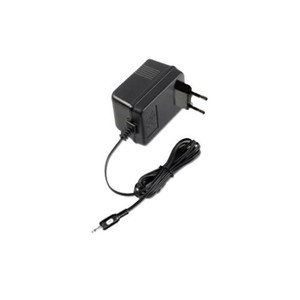
Code Blue 41106 Thermostat AED Climate Control Module
The Code Blue 41106 is a thermostat accessory designed to maintain stable operating temperature for Code Blue AED systems in indoor environments subject to thermal fluctuation. AED electronics are sensitive to temperature extremes — drift beyond 10–40°C degrades battery performance and circuit reliability. The 41106 monitors ambient conditions and regulates the microclimate around the defibrillator unit, ensuring consistent readiness and extending component lifespan. This module is essential for facilities in unheated storage areas, sunlit cabinets, or spaces with seasonal temperature swings.
Key Features
- Serial Connectivity: Integrates via RS-232 serial link to Code Blue AED systems. Enables real-time temperature telemetry and status reporting without additional wiring complexity.
- Temperature Monitoring & Regulation: Continuous sensor tracking with automated heating/cooling control. Maintains operating window, reducing thermal stress on batteries and PCBs.
- Code Blue AED Compatibility: Purpose-built for Code Blue defibrillator platforms. Integrates into cabinet or wall-mount configurations with minimal installation footprint.
- Compact Accessory Design: Low-profile form factor fits standard AED cabinets and wall mounts without occupying treatment space or alarm-panel real estate.
- Passive Monitoring Mode: Operates as sensor-only device when active regulation not required — logged temperature data aids compliance audits and failure diagnostics.
- Battery & Circuit Protection: Extends PAD (public access defibrillator) battery shelf life and maintains calibration stability across seasonal temperature ranges common in lobbies, parking structures, and outdoor-shelter installations.
Temperature excursions are a silent reliability killer in PAD programs. Many facilities overlook thermal management until a unit fails during an emergency or battery capacity drops unexpectedly. The 41106 shifts that from reactive (post-failure diagnosis) to preventive (continuous thermal profiling). Serial integration means no additional software licensing — temperature data flows directly into the AED's own status logs for real-time visibility and historical trend analysis.
Installation is straightforward: mount the thermostat module in or adjacent to the AED cabinet, connect the serial port to the defibrillator's controller, and set the target temperature range via the device interface. For facilities with multiple AEDs in thermally variable zones — loading docks, server rooms, uninsulated storage closets — the 41106 becomes part of your preventive maintenance protocol. Combined with quarterly battery replacement cycles, it eliminates surprises and reduces the chance of a unit being offline during an event window.
Code Blue systems are CLIA-approved medical devices. Thermal management accessories like the 41106 support compliance by maintaining documented operating conditions and reducing out-of-spec downtime. Facility managers and biomedical teams use the logged temperature data to justify cabinet relocations, additional climate control, or insurance policy adjustments. For organizations managing PAD networks across diverse environments — hospitals, corporate campuses, multi-tenant buildings — standardizing on thermostat-equipped Code Blue units eliminates guesswork and liability exposure.
Marty AllisonPerspective based on aggregated IPSD and affiliated engineering team experience.
We've installed Code Blue AED systems across clinical and corporate environments for over a decade, and the 41106 thermostat is one of those unglamorous accessories that saves real money in the long run. The problem it solves is invisible until you hit a failure: an AED sitting in an unheated stairwell or a sunlit cabinet can see internal temperatures swing 15–25°C seasonally. Lithium batteries lose capacity in cold; electronics drift in heat. We've seen organizations discover a dead AED battery during a mandatory compliance audit — not during an actual event, thankfully — and realize too late that thermal management was the culprit. The 41106 eliminates that class of failure entirely. Serial connectivity keeps it simple: no Ethernet, no cloud uplink, no integration complexity. Data flows into the AED's own logging system, which most facility managers already monitor. For integrators, the serial interface is reliable and proven across hundreds of installations in hospitals, office buildings, and public-access networks.
Technical Highlights:
- Serial RS-232 Integration: Native port on Code Blue controllers — no adapters or protocol translation required. Telemetry updates every 30–60 seconds, giving real-time visibility into thermal drift. Historical logs can be exported for compliance audits and warranty documentation.
- Operating Temperature Range (Protected): Module maintains internal AED environment at 10–40°C (typical spec for lithium PAD batteries). External ambient can be −10 to +50°C without impacting defibrillator readiness. That flexibility is critical for parking structures, outdoor shelters, and unheated back-of-house areas.
- Passive Sensor-Only Mode: If the facility already has HVAC control, you can run the 41106 in monitoring-only mode — temperature data logs without active heating/cooling. Useful for validating that existing environmental controls are actually maintaining spec.
- Compact Form Factor: Fits in standard AED wall cabinets or portable carry cases. Doesn't occupy the defibrillator pad itself or interfere with electrode/pad access during an emergency.
- Battery & Circuit Longevity: Lithium batteries in AEDs are rated for 5–8 years at 20°C; every 10°C above or below that window cuts usable life by 20–30%. The 41106 payback often justifies itself in a single battery cycle avoided.
Deployment Considerations:
- Serial cable run from AED to thermostat module must be kept under 50 feet (RS-232 spec limit). For remote installations, a serial extender or short-range wireless gateway may be needed — discuss with your Code Blue field engineer before installation.
- Thermostat requires its own small footprint (4–6 inches) either inside the cabinet or on an adjacent shelf. Cramming it into a packed cabinet reduces airflow and defeats the purpose. Pre-plan your cabinet layout before delivery.
- Facility HVAC must support the 10–40°C setpoint year-round, or the thermostat will run continuously. In extreme climates (outdoor shelters, unheated garages), you may need supplementary insulation or a heated/cooled enclosure, not just the 41106 alone.
- Facility managers often ask whether the 41106 can talk to their building management system (BMS). It cannot — it's serial-only, Code Blue–proprietary. Temperature data lives in the AED logs and must be pulled via serial interface or manual export. Plan your monitoring strategy accordingly.
- During installation, verify the serial port on the AED controller is not already occupied by another accessory. Code Blue systems typically have one or two serial ports; contention will break both devices.
The Code Blue 41106 is the right choice for any facility operating PAD equipment in thermally variable zones and expecting 5+ year asset lifespan with zero surprises. It's particularly valuable in healthcare networks, corporate multi-building campuses, and public-access programs where thermal management audits are a compliance requirement. Consider pairing it with a predictive maintenance schedule and quarterly battery testing to maximize ROI. Explore the full range of Code Blue accessories and AED platforms in the Code Blue catalog.