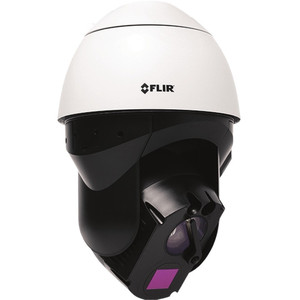
FLIR 427-0300-50-00 Thermal & Visual PT IP VGA 30 FPS Ball Down Camera, 50° HFOV, IP66
When you need to detect threats in complete darkness, adverse weather, or across long perimeter distances where visible light cameras fail, thermal imaging becomes non-negotiable. The FLIR 427-0300-50-00 combines thermal and visual sensors in a rugged pan-tilt platform, delivering VGA resolution thermal detection at 30 FPS through a 50-degree horizontal field of view. This dual-sensor design lets you verify thermal alerts with optical detail, reducing false positives from wildlife, reflections, or environmental conditions that plague thermal-only deployments.
Key Features
- Dual thermal and visual imaging sensors for comprehensive surveillance in all lighting conditions
- VGA resolution thermal imaging at 30 frames per second for smooth motion tracking
- 50-degree horizontal field of view balances wide-area coverage with detection range
- Pan-tilt mechanism enables flexible deployment across large zones without multiple fixed cameras
- IP66-rated environmental protection against dust ingress and high-pressure water jets
- Network IP connectivity for integration into existing surveillance infrastructure
- Ball-down form factor provides compact installation profile and vandal-resistant design
The thermal channel operates independently of visible light, cutting through fog, smoke, and complete darkness to detect heat signatures from intruders, vehicles, or equipment failures. Pairing this with the optical camera gives operators context—thermal alerts get verified visually before dispatch, and recorded footage captures both detection evidence and prosecutable visual detail. The pan-tilt capability extends your effective coverage area significantly compared to fixed thermal cameras, letting you monitor wider perimeters or track subjects across zones with a single device.
IP66 environmental sealing makes this suitable for exposed exterior installations where moisture, dust, and temperature extremes are constant factors. The ball-down housing protects the mechanism while maintaining a low profile that's harder to tamper with than traditional PT units. Standard IP connectivity means it drops into existing network video architectures—no proprietary recording systems or specialized cabling required for most deployments.