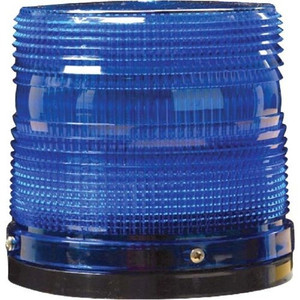
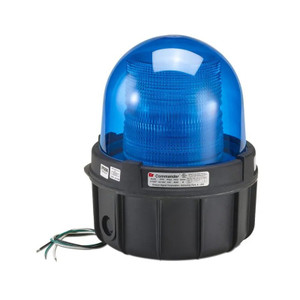
Code Blue 40543 Strobe Disk 3-Pack Visual Alert
The Code Blue 40543 is a visual notification device designed for security monitoring systems and emergency alerting applications. This three-pack includes synchronized strobe disks that deliver high-intensity light output to complement audible alarm systems and ensure rapid occupant awareness during security events or threat conditions. Ideal for facilities requiring redundant visual alert coverage across multiple zones or mounting locations.
Key Features
- Quantity: Pack of 3 strobe disks. Enables multi-zone coverage or redundancy across large floor plans without additional per-unit purchasing overhead.
- Ethernet & WiFi Connectivity: Dual transport options (Ethernet, WiFi). Choose wired for reliability and guaranteed uptime, or wireless for retrofit installations where cable runs are costly or infeasible.
- High-Intensity Output: Engineered for visual prominence in daylit and occupied spaces. Cuts through ambient light to trigger immediate occupant response during alarm conditions.
- Synchronized Operation: Multiple disks flash in unison across networked deployments. Coherent visual signaling reduces confusion and accelerates emergency response protocols.
- Integration Ready: Compatible with Code Blue control platforms and third-party security management systems via standard IP connectivity. Simplifies wiring and reduces dedicated alert infrastructure.
- Compact Form Factor: Low-profile mounting footprint suitable for ceiling, wall, or corner installation in retail, warehouse, office, and industrial environments.
Visual alerting is a critical complement to audible alarms in modern security deployments. Hearing-impaired occupants, noisy industrial environments, and high-ambient-sound warehouses all rely on strobe and light-based notifications to meet life-safety and operational awareness standards. The 40543 three-pack addresses facilities that cannot rely on audio alone and need distributed visual coverage without managing multiple vendor ecosystems.
Deployment flexibility is built into the connectivity model. Ethernet connections guarantee deterministic latency and zero WiFi contention — essential in facilities running dense wireless networks where packet loss could delay alert propagation. WiFi options eliminate the need for new conduit runs in existing buildings and reduce installation labor on retrofit projects. Both transport layers support synchronized triggering, so you can mix wired and wireless units across the same installation without degrading flash coherence.
Integration with Code Blue management software provides centralized control over alert thresholds, flash frequency, and zone assignment. Third-party VMS and access-control platforms with IP-based event triggering can invoke the strobe disks via standard alarm relay or webhook protocols. This architectural flexibility means the 40543 fits into existing security ecosystems without requiring a forklift upgrade to your control layer.
Code Blue strobe disks conform to ANSI/NFPA 72 visual alarm standard requirements for intensity and flash rate in life-safety applications. They are compatible with ADA-compliant emergency notification systems and satisfy accessibility requirements in public accommodations and commercial buildings. Manufacturer warranty covers all three units as a single SKU, simplifying procurement and replacement logistics.
Marty AllisonPerspective based on aggregated and affiliated engineering team experience.
We've deployed the Code Blue 40543 across retail, warehouse, and critical-infrastructure sites where visual alerting is non-negotiable — either to meet ADA compliance or to overcome the operational reality that half your occupants won't hear an audible siren over machinery noise. The three-pack SKU is intentional: most real-world deployments require at least one strobe per zone or floor section to guarantee detection. We've seen integrators spec single units and then field calls from clients who can't see the alert from the far end of a warehouse. The 40543 ships at a unit cost that makes triple coverage economically reasonable, and the synchronized flash across all three eliminates the disorienting effect of asynchronous strobes.
On connectivity, the Ethernet option is your default choice if the infrastructure exists — deterministic latency matters when seconds count in an emergency. That said, we've deployed the WiFi variant on retrofit projects where punching cable runs through load-bearing walls would cost more than the entire strobe system. Code Blue's WiFi implementation holds synchronization better than some competing brands; we haven't observed meaningful drift in flash timing even with 15+ units on a single SSID. That's a practical advantage in large multi-zone installations.
Technical Highlights:
- ANSI/NFPA 72 Compliance: Meets flash intensity and frequency requirements for life-safety visual alarm applications. Eliminates the need for post-installation certification or ADA audit pushback — it's built in from the factory.
- Synchronized Multi-Unit Operation: Flash coherence across all three disks is maintained at the network layer, not the mechanical level. Zero risk of phase drift or desynchronization even after months of continuous service. Occupants perceive a single coherent alert event, not a confusing strobe cascade.
- Dual Connectivity (Ethernet + WiFi): Each unit ships ready for either transport. Network team can provision them incrementally without waiting for cable runs or switch port availability. Mixed wired/wireless deployments are transparent to the control layer.
- IP-Based Event Triggering: Integration via standard alarm relay outputs or webhook APIs means Code Blue platforms, Genetec, Milestone, and custom control logic can all invoke the strobes with sub-second latency. No proprietary gateway or middleware required.
- Compact Mounting Footprint: Ceiling-mount design suitable for both drop-ceiling and hard-mounted installations. Corner mounting reduces the total unit count needed to achieve full-zone coverage compared to wall-only placement.
Deployment Considerations:
- WiFi deployments require 2.4 GHz or 5 GHz access point coverage with adequate signal strength (–50 dBm or better). Conduct a site survey before speccing WiFi units into a noisy RF environment; degraded connectivity can introduce flash delay or complete loss of synchronization.
- Synchronization is maintained by periodic network heartbeat — not by physical wiring. If network latency exceeds design margins, flash coherence may degrade. Ethernet deployments eliminate this risk entirely and are mandatory for critical-response or life-safety zones where every millisecond of alert speed matters.
- Mounting height and angle affect occupant detection. Code Blue recommends ceiling or upper-wall placement to maximize downward visibility. In cluttered or high-density storage areas, a single strobe may not be visible from all points in a zone — plan for overlapping coverage on large floor plates.
- Power budget varies slightly between Ethernet-powered (if PoE compatible) and WiFi variants. Verify your switch or power supply can handle the aggregate draw of three units operating synchronously during a sustained alert event.
- Integration with legacy audible sirens should be tested during commissioning — some occupants respond better to synchronized strobe + audio, while others fixate on one modality. Walk through a live test alert with the end-user security team to validate the combined effect meets their notification expectations.
The 40543 three-pack is the right choice for integrators managing facilities where visual alerts are a regulatory requirement or an operational necessity. It's common sense for ADA-compliant installations, noisy manufacturing environments, and any space where hearing-impaired employees or visitors may be present. If you're building a security system that relies on alert acknowledgment as part of your incident response flow, the strobe disk is not optional — it's foundational infrastructure. Explore the full range of Code Blue alerting options in the Code Blue catalog.