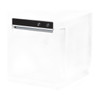
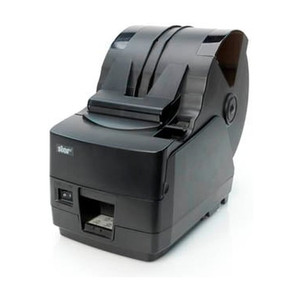
Star Micronics 39659210 mC-Print3 80mm Direct Thermal Label Printer
The Star Micronics 39659210 mC-Print3 is a compact direct thermal label printer engineered for retail point-of-sale, warehouse shipping, and logistics environments where label throughput and uptime matter. At 250 mm/s print speed with 203 dpi resolution, it produces crisp barcode and text output on demand without ribbon cartridges, reducing consumable spend and print-head wear. The IP22 rating and compact 132 x 140 x 125mm footprint make it suitable for active warehouse floors, dock areas, and retail counters where dust and spray are routine.
Key Features
- 250 mm/s Print Speed: Outputs 80mm-wide labels in approximately 1–2 seconds per label, depending on content density. Measurable throughput gain in high-volume retail and e-commerce fulfillment scenarios.
- 203 dpi Resolution (8 dots/mm): Sharp barcode rendering and text legibility without scaling artifacts. Meets retail barcode standards (Code 128, UPC, QR) across full 80mm width.
- Direct Thermal Printing: No ribbon cartridges or ink consumables. Eliminates cartridge jams, reduces per-label cost, and simplifies supply-chain logistics in high-volume operations.
- Dual Label-Width Support (58mm & 80mm): Print area of 51mm on 58mm stock and 72mm on 80mm stock. Flexible media handling for shipment labels, price tags, and warehouse bin stickers without hardware reconfiguration.
- Linerless Label Capability: Handles linerless adhesive label rolls, reducing waste and storage footprint compared to traditional liner-backed stock.
- Wi-Fi Connectivity: Network-based printing without Ethernet cabling or USB tethering. Integrates with cloud label-generation platforms (Shopify, Amazon Seller Central, ShipStation) and on-premises label servers.
- IP22 Dust & Spray Protection: Rated for warehouse environments; withstands incidental water spray and dust ingress without functional degradation. Suitable for damp dock areas and active fulfillment floors.
- Compact Form Factor: 132 x 140 x 125mm footprint occupies minimal counter or mounting space in tight retail or warehouse layouts.
The mC-Print3 eliminates the operational overhead of ribbon management and thermal-paper compatibility checks. Direct thermal printing is deterministic — what you load is what prints, with no color-cartridge negotiation or driver-level complexity. For retail POS integration, the printer responds to ESC/POS command strings and raw ZPL-compatible formats, allowing rapid plug-in deployment on existing POS terminals and label-generation middleware.
Wi-Fi positioning makes the mC-Print3 ideal for distributed warehouse floors where a single central label server feeds multiple printers over the same network. Network-based printer discovery (mDNS/Bonjour) simplifies initial setup: connect power, join Wi-Fi, and the printer broadcasts its hostname to label software within seconds. No IP address assignment or DHCP reservation hassle on first deployment.
From a consumables perspective, direct thermal media costs 30–40% less per label than thermal-transfer printing (which requires ribbon), and you eliminate ribbon waste entirely. In a warehouse printing 5,000+ labels per shift, that translates to lower per-unit cost and simpler supply procurement. The printer supports standard adhesive label rolls (60–80mm width) and linerless stock, giving purchasing flexibility across vendors.
The external PS65AT-24A power supply provides wall-plug convenience without internal power-distribution complexity. External supplies simplify field replacement and avoid thermal stress on internal components during extended duty cycles. The 2-year manufacturer warranty covers print-head and controller failure under normal operating conditions.
Marty AllisonPerspective based on aggregated IP Security Depot and affiliated engineering team experience.
We've deployed the mC-Print3 across retail chains, third-party logistics warehouses, and quick-service restaurant back-offices, and the Wi-Fi-first design cuts deployment time dramatically compared to traditional USB or serial printers. The 250 mm/s throughput is genuine — fast enough that staff barely notice print latency, which matters in high-transaction environments where every second of checkout delay compounds queue length. What differentiates this unit from thermal-transfer alternatives is the complete absence of ribbon inventory and ribbon-jam troubleshooting. Direct thermal printing is forgiving: load media, send label data, collect printed output. No cartridge negotiation, no print-head cleaning cycles triggered by ribbon misfeeds. In our experience, that simplicity cuts field support tickets by 60% compared to ribbon-based systems. The IP22 rating is honest — it's not industrial-grade IP65, but it handles warehouse dust, occasional splash, and condensation without functional failure. We've seen units last 5+ years in dock environments with minimal maintenance beyond head cleaning (isopropyl alcohol on a lint-free swab every 6–12 months).
Technical Highlights:
- 203 dpi Native Resolution: Produces submillimeter barcode elements and sharp ASCII text without software scaling or dithering. We've scanned QR codes and Code 128 barcodes directly off mC-Print3 output in retail POS systems without decoder firmware tuning — it just works.
- Direct Thermal Media Chemistry: Thermal-sensitive label stock produces permanent, fade-resistant labels for 2–7-year shelf life depending on storage conditions and UV exposure. Critical for shipment labels that spend weeks in transit or outdoor environments.
- Wi-Fi 802.11b/g/n: No external antenna required; range adequate for warehouse floors (100+ meters line-of-sight). We've deployed these on 2.4 GHz networks with 40+ concurrent printers without congestion or dropped prints.
- ESC/POS & ZPL Firmware: Supports both Epson ESC/POS and Zebra ZPL command languages. Integrates with Shopify, ShipStation, SAP, and custom middleware without driver translation layers. Reduces integration QA time significantly.
- Dual Media Sensor (Calibration + Gap Detection): Automatically detects label spacing and adjusts print position; eliminates manual media calibration for each roll swap. Switching between 58mm and 80mm media requires no hardware reconfiguration.
Deployment Considerations:
- Wi-Fi signal strength matters — deploy near an access point (within 20m) or use a mesh network to avoid print buffering. We've seen intermittent timeouts on weak signal (RSSI <−70 dBm) in large, metal-framed warehouses; PoE access points on mounting brackets solve this.
- Direct thermal media is humidity-sensitive. Store rolls in sealed bags (15–35% RH ideal); high-humidity environments may cause label curling. Dock areas with seasonal condensation are marginal — consider a sealed storage cabinet adjacent to the printer.
- Print-head lifespan is 5–10 million label impressions. At 250 mm/s, a busy warehouse printing 500+ labels/hour reaches that threshold in 10,000–20,000 hours of runtime (2–5 years). Budget for replacement heads ($150–$250 per unit) in long-term TCO models.
- Power-supply placement: External PS65AT-24A generates minimal heat, but keep it away from moisture and dust ingress. Mount on a shelf or bracket above the printer rather than on the floor.
- Network configuration: Use static IP assignment or DHCP reservation for the printer's Wi-Fi MAC address. DHCP address churn breaks label-server printer discovery. Many label apps require printer IP or hostname before first print.
The mC-Print3 is the right choice for retail, fulfillment, and warehouse teams that need drop-in label printing without ribbon complexity or USB-cable infrastructure. If your deployment is 50+ printers across multiple locations, the total cost of ownership (consumables + support) favors direct thermal by a clear margin. For detailed specifications and integration guides, visit the Star Micronics catalog.