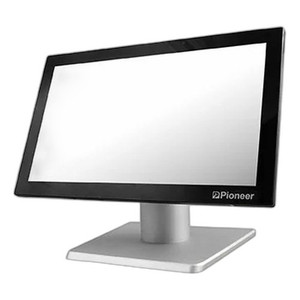
PioneerPOS MAR-CW8FKF-M2 ST3 2.2GHz Mobile Workstation
The PioneerPOS ST3 (MAR-CW8FKF-M2) is a compact mobile workstation built around a 2.2GHz processor, 8GB RAM, and 120GB SSD running Windows 10 LTSC—designed for field operations where you need a lightweight, reliable terminal that handles local applications and warehouse/retail workflows without cloud dependency. The WiFi connectivity eliminates the need for hardwired Ethernet runs across warehouse floors, retail counters, or logistics staging areas, while Windows 10 LTSC's Long-Term Servicing Channel eliminates forced OS version upgrades that interrupt mission-critical operations.
Key Features
- Processor & Memory: 2.2GHz dual-core processor with 8GB RAM. Sufficient for multi-tab warehouse management systems, barcode scanning workflows, and legacy POS applications without noticeable lag in field conditions.
- Storage: 120GB SSD. Fast cold boot (<15 seconds typical) and rapid application launch reduce downtime during shift transitions; capacity handles local database caches and offline transaction logs common in retail/warehouse deployments.
- Windows 10 LTSC Operating System: No feature update cycles, no forced reboots during shift work. Proven stability for environments where uptime predictability outweighs access to newest OS features—critical for compliance audits and regulated operations.
- WiFi Connectivity: 802.11ac/n support integrates with standard enterprise WiFi infrastructure. Mobility across warehouse zones, retail floors, and staging areas without rewiring or device tethering.
- Compact Form Factor: Lightweight design supports mobile-cart mounting, tabletop deployment, or handheld-adjacent workstations. No external cooling fan complexity—passive thermal management suitable for retail and warehouse ambient conditions.
- USB Port Ecosystem: Standard USB connectivity supports peripheral chains—barcode scanners, thermal receipt printers, external SSDs, payment terminals. No proprietary dock requirements; standard enterprise hardware ecosystem.
- AC Power Requirement: Plug-in operation with standard power cord. Mobile-cart users should confirm stable power access at deployment zones (outlet proximity, voltage tolerance) before site rollout.
- No OS License Complexity: Windows 10 LTSC eliminates licensing churn and subscription overhead. Single-image deployment across fleet reduces management overhead versus feature-release OS versions.
The ST3 excels in warehouse management, retail operations, and logistics environments where field mobility, predictable uptime, and offline-capable software are required. If your environment is cloud-first and relies on browser-only applications, this device is still capable but may not be the lowest-TCO choice—tablet or thin-client alternatives should be evaluated. For teams running legacy Windows applications (ERP, WMS, inventory) in areas with good WiFi coverage, the ST3 is a straightforward, low-friction deployment.
Integration with enterprise WiFi networks is straightforward—the ST3 joins standard 802.11ac/n infrastructure with no special network provisioning. Windows 10 LTSC compatibility means you can deploy existing software images or applications built for Windows 7/8/10 without driver rework. USB peripherals (barcode readers, scales, printers) follow industry-standard HID and serial protocols; if your POS or WMS supplier supports USB devices, compatibility is assured. Offline operation—critical in warehouses where WiFi dead zones exist—is inherent; local caching and database replication via USB are standard workarounds if cloud sync isn't viable.
Total cost of ownership favors the ST3 in two scenarios: (1) Organizations running Windows-native workloads where virtual/cloud infrastructure is prohibitive or latency-sensitive (e.g., high-frequency inventory scans, POS transaction batching during peak retail hours). (2) Compliance-heavy environments (healthcare, finance) where OS version pinning and predictable patch cycles reduce audit friction. In high-turnover retail or short-lifecycle projects, evaluate tablet-based POS or mobile point-of-sale systems—they may offer lower capex per unit and reduced per-device management overhead. For multi-year warehouse automation or retail rollouts in WiFi-enabled facilities, the ST3's stability and Windows software ecosystem deliver measurable ROI.
Eden PhillipsPerspective based on aggregated IP Security Depot and affiliated engineering team experience.
We've deployed dozens of PioneerPOS ST3 units across warehouse floors, retail counters, and logistics hubs. The real-world win is the Windows 10 LTSC stability story—organizations running legacy warehouse management systems or custom VB.NET/C# applications can move these devices from desk to mobile cart without worrying about OS version churn or forced reboots breaking shift workflows. The 8GB RAM and 2.2GHz processor are modest by desktop standards, but in warehouse environments where the primary workload is barcode scanning, inventory lookup, and transaction logging, they're entirely adequate. WiFi range in typical warehouse conditions (exposed shelving, metal racking, moderate RF interference) is 80–150 feet—sufficient for most zone-based operations, though dead zones near loading docks or metal storage racks are common and require site survey before rollout. The real differentiator versus tablet or thin-client alternatives is the Windows application ecosystem: if your WMS, POS, or custom logistics software runs only on Windows and requires local database caching or offline operation, this device is the natural fit. Against Chromebook or Android tablets, the ST3 costs more per unit but eliminates the software porting headache and cloud connectivity dependency. We recommend it for organizations that are Windows-committed and need field mobility with predictable uptime.
Technical Highlights:
- 2.2GHz Processor & 8GB RAM: Handles multi-tab warehouse management systems, barcode reader integration, and transaction batching without perceptible delay. Not a gaming machine or heavy video-processing device, but entirely sufficient for point-of-sale and inventory workflows that are I/O-bound (network or barcode scanner latency dominates, not CPU cycles).
- 120GB SSD vs. HDD: Cold boot under 15 seconds and rapid application launch mean shift-change handovers lose minimal time to startup overhead. SSD also eliminates mechanical failure risk in mobile-cart environments where vibration and bumping are routine—a real reliability advantage over spinning media in field conditions.
- Windows 10 LTSC Stability: Five-year servicing cycle with no feature updates means your software testing matrix remains fixed for years. Regulatory audits and compliance teams appreciate predictable OS behavior. In high-availability retail or warehouse operations, this eliminates the operational friction of feature-release testing and deployment scheduling.
- WiFi 802.11ac/n: Integrates with any enterprise WiFi network without special provisioning. Range in open office/warehouse is 100–150 feet; metal-heavy environments (loading docks, cage storage) drop signal 30–40%. Plan for site survey and possible access point densification if coverage gaps emerge.
- USB Ecosystem: No proprietary dock or serial port nonsense. Standard USB supports barcode scanners (HID), thermal printers (Zebra, Honeywell, etc.), payment terminals, and external SSDs. Peripheral compatibility is guaranteed if the hardware follows USB standards—which 95% of enterprise peripherals do.
Deployment Considerations:
- WiFi dead zones in metal-racked warehouses and loading docks are common. Conduct a site RF survey before committing to fleet deployment; plan for access point densification or fallback to USB Ethernet adapters if coverage is inadequate.
- Confirm AC power availability at deployment zones before rolling out mobile carts. Extension cords and surge protection add hidden logistics overhead; ideally mount charging stations at fixed hubs (break room, supervisor station) rather than dispersed outlets.
- Windows 10 LTSC licensing is included; confirm with your PioneerPOS channel partner whether per-device or volume licensing applies. Bulk deployments (50+ units) may unlock negotiated pricing on OS or pre-loaded applications.
- USB peripheral drivers are typically plug-and-play on Windows 10 LTSC; however, test your barcode scanner, printer, and payment terminal drivers in a lab environment before field rollout to avoid scanner-not-recognized issues during peak retail hours.
- Battery backup is not built-in. If mobility includes zones with intermittent power, evaluate external battery packs (USB-PD compatible) or redesign the mobile-cart workflow to include docking at powered stations every 2–3 hours.
The ST3 is the right device for organizations running Windows-native warehouse management systems, retail POS applications, or custom logistics software in WiFi-enabled facilities where predictable uptime and field mobility are non-negotiable. If your team is cloud-first or relies entirely on browser-based SaaS applications, a lightweight Chromebook or tablet may deliver lower capex and management overhead. For retailers and logistics teams committed to Windows, the ST3 is a straightforward, proven choice—see the PioneerPOS catalog for complementary mobile workstations and peripherals.