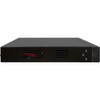
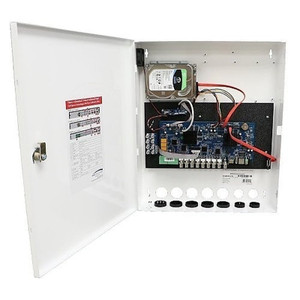
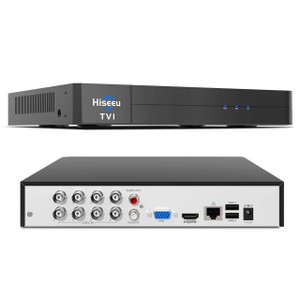
Speco Technologies H24WHRLN4TB 24-Channel Hybrid Recorder
Overview
The Speco Technologies H24WHRLN4TB is a wall-mounted hybrid recorder built for surveillance environments running mixed protocols—TVI (analog HD over coax), IP, or both simultaneously. It consolidates three input types into a single 24-channel unit: 8 dedicated TVI channels, 8 hybrid channels (switchable between TVI and IP per channel), and 8 native IP channels. With 4TB onboard storage and network video recorder architecture, the H24WHRLN4TB eliminates the need to replace infrastructure when transitioning from analog to IP or when managing legacy and modern cameras side-by-side. NDAA compliance means sourcing through authorized channels meets federal procurement and critical infrastructure standards without special certification overhead.
Key Features
- Mixed-protocol input architecture: 8 dedicated TVI channels + 8 switchable hybrid channels + 8 IP channels = 24 total recording inputs. Eliminates forced replacement of TVI plants during IP migration, reducing capital spend and downtime during system upgrades.
- 4TB onboard storage: Provides baseline retention for 24 simultaneous channels at standard compression; exact retention depends on resolution, frame rate, and codec (H.264 vs. H.265). Budget approximately 7–14 days of 24/7 recording at typical enterprise settings (1080p, 15 fps, H.264).
- Wall-mount form factor: Compact enough for NOC walls, equipment rooms, or smaller installations where rack space or standalone tower footprint is constrained. Verify mounting surface can support the recorder's weight and that thermal venting is unobstructed (check datasheet for exact weight).
- TVI input (HD-over-coax): Accepts existing analog HD cameras on RG59/RG6 runs without rewiring. Coax-based HD preserves copper infrastructure already in walls, a cost factor in retrofit or mixed-age deployments.
- IP input via standard Ethernet: Integrates standard IP cameras across any ONVIF-compliant or proprietary vendor protocol. Network bandwidth and storage sizing must account for concurrent IP camera streams; typically 2–6 Mbps per 1080p IP camera at 15–30 fps depending on motion and scene complexity.
- Hybrid channel flexibility: Each of the 8 hybrid channels can be configured per input source at provisioning. Allows a single recorder to manage heterogeneous camera estates without protocol conflicts.
- NDAA Section 889 compliance: Equipment and subcomponents verified to exclude restricted vendors (Huawei, ZTE, Kaspertech, etc.), required for federal contracts, Department of Defense integrations, and critical infrastructure projects. Procurement through specialty reseller validates chain-of-custody documentation.
Integration & Compatibility
The H24WHRLN4TB integrates with mixed-generation surveillance ecosystems. Existing TVI cameras on coax stay in service; new IP cameras can be added to spare channels without recorder replacement. Network integration requires standard Ethernet connectivity and adequate bandwidth planning—high-bitrate IP streams (6 Mbps+ per camera) can saturate gigabit links if not segmented. Storage expansion may require external attached storage or cloud archival depending on retention policy; verify recorder's support for network-attached storage or USB expansion before specifying.
For large-scale deployments or mission-critical sites, pair the H24WHRLN4TB with a storage and retention calculator to forecast hard drive lifespan and replacement cadence. TVI cameras perform best with short cable runs (under 300 feet); longer distances degrade signal—budget for intermediate distribution amplifiers on legacy coax runs if camera distances exceed 400 feet.
When to Choose a Different Model
If your site is all-IP with no legacy TVI cameras, a dedicated IP NVR without analog input cards may reduce cost and simplify configuration. If you require more than 24 simultaneous channels, consider stacking multiple recorders with failover or migrating to a larger Speco Technologies appliance in the same family. If NDAA compliance is not a procurement requirement and cost is the primary driver, non-compliant models may offer feature parity at lower price points—but verify through legal/compliance before committing to non-compliant hardware in regulated environments.
Frequently Asked Questions
Q: Is the H24WHRLN4TB NDAA compliant?
A: Yes. The H24WHRLN4TB carries NDAA Section 889 compliance certification, verifying that equipment and subcomponents exclude restricted foreign vendors. This is validated at time of manufacture and documented in the product datasheet.
Q: Can I wall-mount the H24WHRLN4TB?
A: Yes. The recorder is purpose-built for wall mounting. Verify that your wall surface can support its weight, that mounting hardware is appropriate for your wall type (drywall, concrete, steel), and that ventilation behind the unit is unobstructed to prevent thermal throttling.
Q: How long will 4TB of storage last with 24 channels recording 24/7?
A: Retention depends on resolution, frame rate, and codec. At 1080p, 15 fps, and H.264 compression, expect 7–14 days. Higher resolution or frame rates reduce retention; H.265 compression extends it by 30–50% compared to H.264. Run a bitrate calculation based on your specific camera mix to forecast accurate retention.
Q: Does the H24WHRLN4TB work with IP cameras from any vendor?
A: IP input compatibility depends on the recorder's firmware and the camera's ONVIF compliance level. Most modern IP cameras support ONVIF Profile S (video streaming); verify your camera's protocol documentation and test integration before full deployment. Proprietary protocols (e.g., Hikvision, Dahua) may require specific firmware versions or plugins.
Q: What's the difference between TVI and hybrid channels?
A: The 8 dedicated TVI channels accept only coax-based analog HD. The 8 hybrid channels are software-configurable per channel—you can assign them to TVI or IP at setup. Dedicated channels are pre-wired; hybrid channels give flexibility if you're mixing protocols or transitioning infrastructure gradually.
Q: Can I expand storage beyond 4TB?
A: Verify the recorder's support for external storage (USB, NAS, cloud archival) in the product documentation. Some Speco recorders support network-attached storage; others may require USB external drives for local expansion. Check the datasheet or contact manufacturer support for your specific H24WHRLN4TB firmware version.
Ted PerryPerspective based on aggregated IP Security Depot and affiliated engineering team experience.
The H24WHRLN4TB solves a real problem in surveillance integration: most deployments don't land neatly on either pure analog or pure IP. You inherit TVI cameras on working coax, you add IP cameras where fiber or new runs are cheaper, and your recorder has to speak both languages without forcing expensive forklift upgrades. The 8 dedicated TVI + 8 hybrid + 8 IP channel split on the H24WHRLN4TB reflects real-world heterogeneous camera estates, and the NDAA compliance removes procurement friction if your customer list includes federal sites or critical infrastructure.
Technical Highlights:
- 24-channel capacity across three protocols: Mix TVI, hybrid (configurable per channel), and IP inputs without recorder stacking. Reduces capital expenditure versus deploying separate TVI and IP appliances side-by-side.
- 4TB onboard storage: Baseline retention of 7–14 days at 1080p/15 fps/H.264. Storage consumption scales with resolution and bitrate; plan for external expansion or archival if retention policy exceeds 30 days on 24-channel load.
- NDAA Section 889 compliance: Pre-vetted sourcing eliminates certification delays on federal contracts. Specialty Retailer chain-of-custody documentation required for federal procurement.
Deployment Considerations:
- TVI camera cable runs should remain under 300 feet to avoid signal degradation; budget for distribution amplifiers on longer legacy coax if required.
- IP bandwidth planning is critical: concurrent 1080p IP streams at 15–30 fps consume 2–6 Mbps each. A full 24-channel IP load at 4 Mbps average = 96 Mbps—gigabit switches are adequate but leave no headroom for management or failover traffic.
- ONVIF compliance on IP cameras is not guaranteed; test integrations before full rollout, especially if mixing vendors (Speco TVI cameras with third-party IP cameras).
- Storage expansion via USB or NAS is model-dependent; verify firmware version supports your preferred archival method before specifying external storage strategies.
Deploy the H24WHRLN4TB when you're retrofitting a TVI site with IP cameras over 3–5 years, or when federal contracts demand NDAA-compliant hardware but your site has existing coax infrastructure. This is a pragmatic middle ground, not a leading-edge choice—but pragmatism is what wins mixed-age deployments.