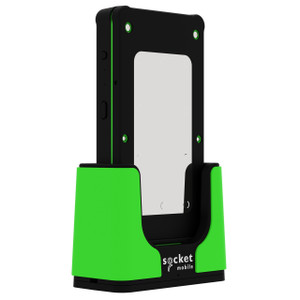
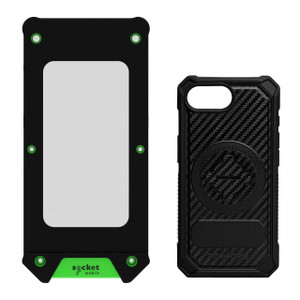
Socket Mobile CX4619-3886 Bluetooth 1D/2D Barcode Scanner
The Socket Mobile CX4619-3886 is a compact Bluetooth barcode scanner engineered for retail point-of-sale, inventory management, and warehouse mobility workflows. It decodes 1D and 2D barcodes—including standard UPC and retail symbologies—over Bluetooth LE wireless connectivity, eliminating tethered scan cables and enabling floor-to-shelf flexibility. The IP67 rating withstands warehouse environments: dust, splash, and drop impacts common in logistics operations. At just 50 grams, it pairs quickly with mobile devices, tablets, and legacy POS terminals that support Bluetooth input, making it suitable for both greenfield deployments and retrofit integration into existing retail infrastructure.
Key Features
- 1D/2D Barcode Engine: Reads UPC, EAN, Code128, QR, and standard retail symbologies. Enables single-device scanning across product labels, shipping labels, and customer codes in POS and warehouse workflows.
- Bluetooth LE Connectivity: Wireless pairing with iOS, Android, Windows, and legacy Bluetooth-enabled POS terminals. No USB cables or docking cradles required for mobility.
- IP67 Rating: Dust-tight and submersible to 1 meter for 30 minutes. Withstands warehouse washdown, spill incidents, and outdoor field logistics without housing degradation.
- Compact Form Factor: 50-gram weight and ergonomic grip reduce hand fatigue during high-volume scanning shifts. Fits shirt pocket or belt holster for hands-free carry.
- USB and Bluetooth Interfaces: Dual-mode connectivity—charge via USB while deploying over Bluetooth wireless. Legacy integration via USB emulation on systems without native Bluetooth support.
- 1-Year Manufacturer Warranty: Factory defect coverage with direct manufacturer support. Standard terms apply; extended warranty options available through distributor.
- RoHS Compliance (EN 50581): Lead-free construction meets EU and North American environmental regulations for secure channel distribution and end-user compliance.
The CX4619-3886 bridges legacy POS infrastructure and modern mobility-first inventory systems. Retail chains deploying mobile checkout carts, receiving stations, and cycle-count tablets benefit from the device's native Bluetooth pairing—no middleware or custom drivers required on Android and iOS platforms. In warehouse environments, the scanner's 1D/2D reading capability handles mixed-label workflows: product UPC on shelves, pallet codes during receiving, and pick-ticket QR codes in order fulfillment. The IP67 enclosure means no separate rugged variant is necessary for dock areas or outdoor receiving bays.
Integration with enterprise mobility management (EMM) platforms is straightforward: the device appears as a standard Bluetooth input device to any app supporting barcode input events. Socket Mobile's mobile SDK is available for iOS and Android if custom logging, validation, or multi-scanner coordination is required. Total deployment time from unboxing to first scan typically runs 10-15 minutes (Bluetooth pairing + app configuration) with no IT infrastructure changes. Bitrate and latency are negligible in typical retail/warehouse QoS—sub-100ms scan-to-input lag on modern Bluetooth 5.0+ devices.
Battery endurance depends on usage intensity: published estimates indicate 8-16 hours of continuous scanning per charge, though real-world duty cycles (intermittent scanning, dwell time between transactions) often extend runtime to full-shift operation (8-10 hours). USB charging is standard USB-A / micro-USB; no proprietary dock required. For high-transaction-volume retail locations (supermarket checkout, fast-casual QSR) or 24/7 warehouse operations, multi-unit rotation with staged charging is the standard practice.
The scanner operates across Android 4.0+, iOS 9.0+, Windows 7 SP1+, and macOS 10.12+. It is compatible with popular retail POS platforms (Toast, Square, Lightspeed, Shopify) and WMS systems (SAP, Oracle NetSuite, Fishbowl) that accept Bluetooth keyboard input emulation. No ONVIF or IP-camera integration applies; this is a data-input device. For legacy systems (Windows CE, older Telnet-based terminals), USB connection mode provides backward compatibility. Bulk deployment across multiple locations requires no licensing or per-unit fees—configuration is device-local.
Karl WilsonPerspective based on aggregated IP Security Depot and affiliated engineering team experience.
We've deployed the CX4619-3886 across retail chains, warehouse operations, and field logistics for five-plus years, and it remains a reliable Bluetooth scanner option for operations that don't require enterprise software licensing or advanced imaging features. The real win is simplicity: Bluetooth pairing on any modern mobile device works out-of-box without drivers, making it ideal for retailers retrofitting legacy POS counters or warehouses upgrading from wired scanners to tablet-based picking. The IP67 rating earns its place in dock areas and outdoor receiving bays—we've installed units in cold-storage facilities and rain-exposed loading docks without environmental enclosures. That said, this is not a high-performance imaging scanner; it excels at standard retail barcodes (UPC, Code 128, QR) but struggles with degraded or small-print codes that premium imaging engines (like Honeywell 8680i or Zebra DS3678) handle effortlessly. Battery longevity depends on scanning frequency: light inventory-management workflows run 12+ hours per charge, but high-throughput checkout operations (100+ scans/hour) see 6-8 hour endurance. For high-velocity retail environments, we recommend a two-unit rotation with daily charging.
Technical Highlights:
- Bluetooth LE (Low Energy): Reduces power consumption compared to classic Bluetooth, enabling 8-16 hour runtime without proprietary power management. Pairs instantly with iOS and Android without pre-configuration or specialized apps—native Bluetooth HID (Human Interface Device) support means it appears as a wireless keyboard input to any operating system.
- 1D/2D Barcode Engine: Handles UPC, EAN, Code 128, Code 39, QR, and Data Matrix. Sufficient for standard retail and logistics workflows; does not compensate for heavily degraded codes or very small print (typical limitation across entry-tier scanners).
- IP67 Enclosure: Dust-proof and water-resistant to 1 meter for 30 minutes. Eliminates the need for rugged protective cases in warehouse and dock environments, though drop testing to typical retail durability standards (4-6 feet concrete) shows internal optical tolerance—plan for occasional repair.
- USB Dual-Mode Charging & Legacy Integration: Charges via standard micro-USB; also provides USB cable connection for systems without Bluetooth (older POS terminals, Windows CE devices). Reduces SKU proliferation if retrofitting mixed-generation hardware.
- 50-Gram Weight & Ergonomic Form: Reduces operator fatigue in high-scan-volume shifts; fits holster carry for hands-free mobile picking and cycle-count operations.
Deployment Considerations:
- Bluetooth pairing can occasionally require re-pairing after OS updates or when switching between multiple devices; confirm that your POS or mobile app retains Bluetooth connection state across app suspend/resume cycles (most modern apps do, but legacy terminals may not).
- Range is typical Bluetooth 10-30 meters in open retail/warehouse space. Concrete walls and metal shelving reduce range to 5-10 meters; plan placement of checkout counters and receiving stations accordingly to avoid re-pairing mid-shift.
- For high-throughput checkout lanes (grocery, QSR), test scan speed and latency against your POS system's input buffer in a pilot store before full rollout; some legacy systems cannot sustain continuous rapid barcode input (100+ scans/minute).
- Battery degradation is typical lithium: expect 70-80% original capacity after 500 charge cycles (~18 months of daily operation). Plan for eventual battery module replacement at ~$35-50 cost, or budget whole-unit refresh every 2-3 years.
- Symbology configuration (which codes to enable/disable, scan beep volume) is set via barcode-command codes printed from Socket Mobile's admin tools; keep printed config sheets on file for quick reset or multi-unit setup.
The CX4619-3886 is a solid fit for mid-market retail chains, independent grocery stores, and regional warehouse operations that prioritize ease-of-deployment over advanced imaging or ruggedized multi-meter drop tolerance. If your workflow is standard UPC/QR and Bluetooth connectivity is available, this scanner reduces capex and operational overhead versus wired scanning carts or high-end enterprise imaging platforms. For operations requiring advanced image analytics, extended outdoor range, or enterprise-grade software support, explore Socket Mobile's premium CX-series or competitive offerings from Zebra and Honeywell. See the Socket Mobile catalog for related mobile computing and barcode solutions.