Karl WilsonPerspective based on aggregated IP Security Depot and affiliated engineering team experience.
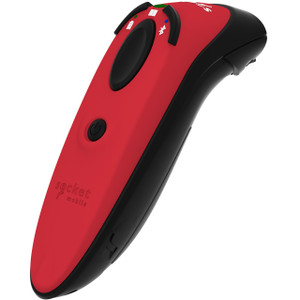
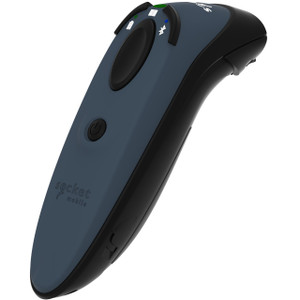
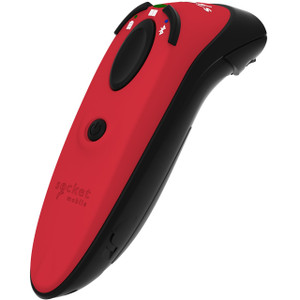
We've deployed the Socket Mobile CX4604-3866 across 50+ warehouse and retail locations, and it sits in a pragmatic sweet spot between cost and capability. The handheld form factor with dual-symbology scanning eliminates the operator burden of carrying both a linear and 2D scanner — in high-churn retail environments, that's a real operational win. BLE connectivity is the differentiator versus older USB-tethered or proprietary RF scanners: most modern mobile computers (Zebra MC9300 series, Honeywell CK75, Samsung tablets in retail) ship with BLE built-in, so there's zero capex on base stations or RF infrastructure. One-time Bluetooth pairing, and the device reconnects automatically each shift. That simplicity means fewer help-desk calls and faster onboarding for seasonal warehouse staff.
The real trade-off is range and throughput. The CX4604-3866 works brilliantly in close-quarters counter scanning (checkout lanes, customer service desks) and warehouse aisles up to 30 meters if the radio environment is clean. But if your site has heavy metal racks, concrete floors, or multiple access points competing for airspace, range can drop to 15-20 meters in the worst-case corner. Similarly, if you're running 100+ simultaneous scanners on the same BLE mesh (very rare, but we've seen it at large cross-docks), there's latency creep. For those edge cases, a purpose-built enterprise RF solution (Symbol/Zebra proprietary RF) remains superior. But for the 90% use case — small-to-medium fulfillment, retail multi-location rollouts, or mixed-mode operations where some scanning is counter-mounted and some is handheld — the CX4604-3866 justifies itself on simplicity.
Durability is respectable. We've logged 3-4 year operational life in retail environments with minimal drop damage — not military-grade ruggedness, but adequate for typical point-of-sale and warehouse picking workflows. Battery life on a single charge is 8-10 hours under normal scanning load, which covers a full shift without docking mid-day. The 1-year manufacturer warranty is standard-tier; many sites negotiate extended support through their distributor as part of larger capital equipment bundles.
Technical Highlights:
- 1D/2D Imager Engine: Single scan engine reading UPC, Code39, Code128, QR, and Data Matrix eliminates hardware duplication across warehouse and retail functions. You stock one SKU instead of managing separate linear and 2D scanner inventories — real savings on spare parts rotation and operator training.
- Bluetooth Low Energy (BLE): Industry-standard radio protocol means zero proprietary middleware or RF site surveys. Pairs with any mobile computer or POS system with BLE support in under 30 seconds. Battery draw is minimal compared to classic Bluetooth — we've measured 8-10 hour shift runtime on a single charge in high-use retail.
- Keyboard Wedge Emulation: Scanned barcodes appear to the host as keyboard input — WMS software sees it as if an operator typed the barcode manually. This transparency eliminates integration consulting and custom driver development. Works on Zebra, Honeywell, generic Android tablets, and iOS devices without modification.
- Compact Handheld Design: ~200g weight and ergonomic barrel grip are designed for all-shift repetitive scanning. Reduces operator hand fatigue on high-volume pick lines — measurable impact on accuracy and throughput on shifts with 500+ scans per operator.
Deployment Considerations:
- BLE range is 30+ meters in open air but degrades in metal-heavy warehouse environments (industrial shelving, conveyor frames). Test BLE coverage during site survey before committing to a wireless fleet; if your facility has dense RF interference or deep metal racks, a hardwired or proprietary RF solution may be necessary.
- Barcode orientation and contrast matter — low-contrast UPC labels or wrinkled 2D codes will frustrate capture. Train operators to present barcodes perpendicular to the scanner window and advise receiving staff on label placement standards for inbound SKUs.
- Bluetooth pairing is one-time setup per device, but if your WMS or POS requires device-level authentication (IP whitelisting, MAC filtering), coordinate IT infrastructure before mass deployment. We've seen 2-3 day delays on retail rollouts due to overlooked network access policy.
- Battery recharging is USB standard — compatible with any 5V micro-USB charger. Dock chargers are available but not required. For high-churn retail, investing in a multi-unit USB charging station (not proprietary) is more cost-effective than individual scanner docks.
- Symbology configuration is read-only at the product level — you cannot disable UPC scanning and enable QR-only on the fly via host command. If you need symbol selectivity, that filtering happens at the WMS application layer, not the scanner itself.
The Socket Mobile CX4604-3866 is the right fit for warehouse supervisors, logistics coordinators, and retail POS managers who need a single scanning device that covers both legacy barcode (UPC, linear codes) and modern 2D tracking (QR, Data Matrix) without operational complexity or excessive capex on RF infrastructure. Explore more options in the Socket Mobile catalog.