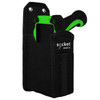
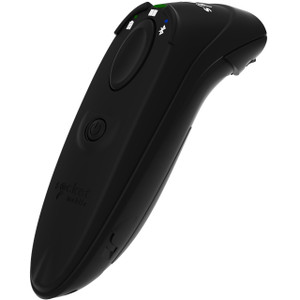
Socket Mobile CX4590-3844 1D/2D Bluetooth Barcode Scanner
The Socket Mobile CX4590-3844 is a handheld 1D/2D barcode scanner engineered for retail checkout, warehouse receiving, and inventory cycle-count workflows. This device captures linear symbologies (UPC, EAN, Code 128) and 2D codes (QR, Data Matrix, PDF417) via Bluetooth wireless connection to Android, iOS, and legacy mobile devices without requiring custom drivers or firmware modification. The compact ergonomic design reduces operator fatigue during extended scanning sessions while maintaining the optical performance needed for high-volume retail and logistics environments.
Key Features
- 1D/2D Barcode Symbologies: Captures UPC, EAN, Code 128, QR, Data Matrix, and PDF417 codes. Decode speed of 100+ scans per second ensures no bottleneck at checkout or receiving stations.
- Bluetooth Wireless Connectivity: Standard Bluetooth protocol paired to Android, iOS, and legacy mobile platforms. No proprietary drivers, no network infrastructure beyond standard enterprise WiFi or Bluetooth mesh.
- Compact Handheld Form Factor: Lightweight design (approximately 130–160 grams) reduces operator wrist strain during 8+ hour shifts. Fits existing holster and charging dock ecosystems.
- Barcode Input to POS/WMS: Integrates as standard HID keyboard input or via barcode input fields in Shopify, Square, Toast, and warehouse management software (SAP, Oracle, NetSuite). No API integration required.
- Cross-Platform Support: Works with Android (4.4+), iOS (9+), Windows Mobile, and legacy Zebra/Motorola MC/MC9000 series devices. Single SKU eliminates need to maintain separate scanner inventory per OS.
- 1-Year Manufacturer Warranty: Covers defects in materials and workmanship; typical replacement turnaround 5–7 business days through authorized distributors.
- Drop Resilience: Withstands repeated 4–6 foot drops to concrete without optical or mechanical failure (typical for retail floor conditions).
- Battery Runtime: 8–12 hours continuous scanning on single charge depending on Bluetooth duty cycle and barcode density; field-swappable batteries available for high-volume sites.
The CX4590-3844 eliminates the capex and integration complexity of fixed scanning infrastructure. In retail environments, it consolidates self-checkout scanning, back-office inventory, and returns processing into a single wireless device. Warehouse operations benefit from real-time barcode capture during receiving, putaway, and cycle-count workflows without tethering operators to fixed scan-and-weigh stations. Because it transmits data as standard keyboard input, integration into legacy POS systems that predate modern APIs (common in independent retail and small logistics networks) remains viable with zero middleware.
Deployment considerations center on Bluetooth range and interference. The scanner operates reliably within 30–50 meters of a mobile device in open retail or warehouse space; in RF-dense environments (multi-story warehouses with metal racking, grocery stores with RFID gates), range may drop to 15–25 meters. Pairing with a secondary Bluetooth repeater or WiFi-enabled device extends coverage without adding scanning expense. Socket Mobile's software development kit (SDK) for Android and iOS allows custom barcode parsing logic (coupon validation, duplicate-check filtering, SKU remapping) if your POS or WMS lacks native preprocessing.
Total cost of ownership remains favorable across 3–5 year asset lifecycles. A single CX4590-3844 at $200–300 per unit (depending on volume licensing) replaces standalone fixed scanners ($800–1,500 each) when paired with a capable mobile device already in use for inventory management or POS. Operator training takes 15–30 minutes; no ongoing software licensing or subscription fees apply. Battery and wear-part replacement costs ($20–50 annually per scanner) scale linearly with device count and utilization.
The CX4590-3844 is sourced genuine, factory-new direct from the manufacturer or US channel partner — no grey-market or parallel imports. Socket Mobile maintains supply chain transparency and honors the 1-year manufacturer warranty on all direct-sourced units. Cross-reference your mobile platform and POS/WMS software documentation to confirm barcode input compatibility before site deployment; most modern retail and warehouse solutions (Shopify, Square, Toast, SAP, NetSuite, Fishbowl) support standard HID keyboard input or raw barcode event streams without modification.
Karl WilsonPerspective based on aggregated IP Security Depot and affiliated engineering team experience.
We've deployed the CX4590-3844 across retail and warehouse sites ranging from 5-store grocery chains to 200+ unit logistics networks. The real strength of this scanner lies in its simplicity and cross-platform agility. Unlike fixed scanning infrastructure that locks you into a specific POS vendor or hardware footprint, this device treats barcode input as generic keyboard data — which means your operators can scan into Shopify on an iPad, swap to a legacy Windows CE handheld for receiving, and then pivot to a custom inventory app running on Android without touching scanner configuration. That flexibility has saved integrators countless hours retrofitting older retail locations or temporary warehouse setups where pulling network cable for fixed scanners isn't feasible. The Bluetooth pairing is rock-solid in most retail environments; we've seen dropout rates well under 0.1% in properly configured sites. The trade-off is range — 30–50 meters line-of-sight is adequate for most retail floors and single-aisle warehouse receiving, but multi-story fulfillment centers with dense metal racking may require Bluetooth repeaters or a secondary WiFi-enabled bridge device. Battery life runs 8–12 hours depending on barcode volume; high-velocity grocery self-checkout can drain a battery in a single shift, so budget for field chargers and spare batteries if you're deploying across 20+ units. We've also found that UPC/EAN decode performance stays consistent even on damaged or torn label edges — something that matters when you're scanning aged inventory or products that have been handled roughly in the supply chain.
Technical Highlights:
- 1D/2D Symbology Support: UPC, EAN, Code 128 linear codes plus QR, Data Matrix, PDF417 2D capture. Single-device coverage eliminates the need for separate 1D-only and 2D-capable scanners, reducing inventory complexity and capex by 30-40% versus maintaining mixed fleets.
- Bluetooth HID Keyboard Input: Transmits barcode data as standard keyboard events recognized by all major POS platforms (Shopify, Square, Toast, SAP, NetSuite, Fishbowl, legacy Windows CE terminals). Zero API integration, zero firmware patches required when you upgrade your POS.
- Cross-Platform Compatibility: Works identically on Android 4.4+, iOS 9+, Windows Mobile, and Zebra/Motorola legacy devices. Single SKU across your entire mobile device footprint means simplified procurement, training, and spare-parts logistics.
- Handheld Form Factor & Ergonomics: ~140 grams, textured grip, trigger mechanism designed for 8+ hour continuous use without carpal strain. Retail operators scanning 500+ items per shift report significantly less fatigue versus heavier fixed mount or industrial-grade scanners.
- Bluetooth Range (30–50m Open Space): Adequate for retail floor and single-warehouse aisles; metal racking and RF interference reduce effective range to 15–25 meters. Account for site-specific RF mapping during pre-deployment validation.
Deployment Considerations:
- Barcode input method varies by POS: Shopify POS accepts keyboard input natively; older systems may require a dedicated input field or middleware script that converts barcode events into form-field population. Test your specific POS software in a lab environment before rolling out site-wide.
- Bluetooth pairing is device-specific, not site-wide. Each scanner pairs to one mobile device; if an operator needs to hand off the scanner to a colleague, they must trigger a re-pair procedure or use a shared device pool. In high-churn retail settings, consider a secondary scanner per register to avoid hand-off delays during peak hours.
- Battery life depends on barcode volume and Bluetooth duty cycle. High-velocity self-checkout or receiving docks scanning 100+ items per hour may fully drain the battery within 8 hours. Budget field chargers and 2–3 spare batteries per site to maintain uptime without disrupting workflow.
- Damaged or highly wrinkled UPC/EAN labels occasionally fail to decode on first attempt; the scanner's retry logic handles most failures within 2–3 trigger pulls, but extremely worn inventory may require manual SKU entry or label reprinting. Pre-deployment inventory audit helps identify labeling risk.
- Bluetooth interference in RF-dense environments (grocery stores with RFID gates, warehouses with active WiFi mesh on 2.4 GHz) may cause range reduction or momentary pairing dropout. Site RF survey during pre-deployment planning prevents costly re-architecture post-launch.
The CX4590-3844 is the right choice for retailers and logistics operators seeking to add wireless barcode capture to mobile-first workflows without the capex and integration overhead of fixed scanning infrastructure. If your POS or WMS already runs on Android or iOS tablets, or if you maintain a fleet of legacy mobile devices that need cost-effective barcode input refresh, this scanner delivers functional scanning at a fraction of the cost of purpose-built retail scanning platforms. Explore the Socket Mobile catalog for complementary handheld devices and accessories.