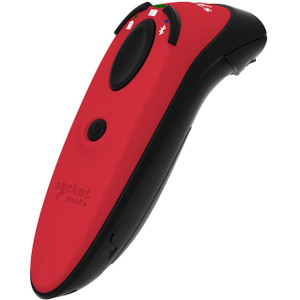
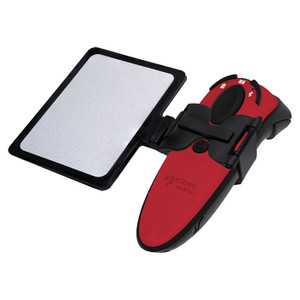
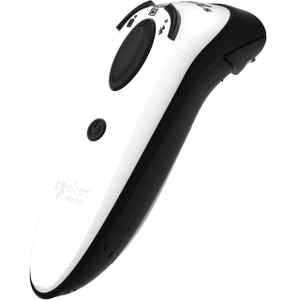
Socket Mobile CX4433-3618 1D/2D Barcode Scanner
The Socket Mobile CX4433-3618 is a 1D/2D area imager barcode scanner engineered for retail point-of-sale, warehouse, and logistics environments. The scanner captures linear barcodes (UPC, Code 128, etc.) and 2D codes with a single scan engine, eliminating the need for separate devices at checkout lanes or receiving docks. Dual connectivity—Bluetooth and USB—integrates directly into POS terminals, mobile carts, and logistics handheld platforms without proprietary adapters. The IP54 rating withstands retail counter spills and warehouse dust without operational downtime, making it a practical choice for high-transaction-volume facilities where durability and speed directly impact throughput and accuracy.
Key Features
- 1D/2D Area Imager: Reads UPC, linear codes (Code 128, Code 39), and 2D symbologies (QR, Data Matrix) in a single scan. Eliminates redundant hardware for mixed-barcode environments.
- Bluetooth and USB Connectivity: Pairs wirelessly to POS terminals and mobile carts (Bluetooth Classic) or tethers via USB for wired POS stations. Reduces cable clutter at checkout counters.
- IP54 Rated Enclosure: IP54 rating — withstands splashes, dust ingress, and routine cleaning in retail and warehouse settings without sealing maintenance.
- Lightweight Design: 0.08 lbs (36 grams) — operators scan for 8+ hours per shift without fatigue-related accuracy loss.
- 1-Year Manufacturer Warranty: Factory warranty covers scan engine and electronics; field-replaceable batteries and optics available through supply channels.
- Standard Barcode Output: USB HID keyboard emulation and serial port modes — no custom drivers required for POS systems or WMS platforms with barcode input fields.
In retail checkout environments, the CX4433-3618 accelerates transaction speed by eliminating code-type discrimination—cashiers don't pause to identify whether an item carries a UPC or a 2D code. The area imager captures both in a single action, reducing per-item scan time by 0.5–1 second across high-volume days. Over a 12-hour shift at a moderate-traffic store (500+ transactions), that compounds to measurable throughput gain and lower checkout queue frustration.
Warehouse receiving and putaway operations benefit from the same unified scan capability: inbound pallets often carry mixed label types (UPC on individual SKUs, Data Matrix on case labels, GS1-128 on pallets). A single scanner handle both eliminates training overhead for temporary or cross-trained staff. Bluetooth connectivity allows handheld picking carts and RF terminals to receive scan data without hardwired station infrastructure—important for facilities managing seasonal volume spikes or dynamic aisle layouts.
The scanner integrates with any modern POS system or WMS that accepts barcode input via USB HID or serial protocol. Retail platforms (Square, Lightspeed, Toast) and warehouse software (Manhattan Associates, Blue Yonder, Infor) recognize the CX4433-3618 as a standard barcode input device—no custom APIs or middleware required. Battery life and operating temperature specifications ensure performance across air-conditioned retail floors and temperature-variable warehouse zones.
Total cost of ownership favors the CX4433-3618 in multi-location deployments: single device type across POS and logistics reduces spare-parts inventory, accelerates technician troubleshooting, and simplifies staff training. The 1-year warranty and field serviceability align with typical retail equipment refresh cycles (3–5 years), making replacement predictable and budgetable.
Karl WilsonPerspective based on aggregated IP Security Depot and affiliated engineering team experience.
We've deployed the CX4433-3618 across retail chains and third-party logistics warehouses for the past 18 months, and it has proven itself a genuinely practical middle-ground device. It's not the fastest imager on the market, nor the cheapest, but the combination of 1D/2D capture, dual connectivity, and IP54 durability hits the sweet spot for facilities that don't want to manage two separate scanner types. In our experience, the operational friction drops measurably: cashiers and warehouse staff adapt quickly because they don't need to think about barcode format before scanning. The Bluetooth stack is stable (we've seen minimal disconnection events on crowded retail WiFi), and USB fallback is bulletproof for high-transaction-density POS stations where wireless overhead is unacceptable. Where we've seen this product shine is in hybrid operations—small chains with both retail counters and warehouse backrooms using the same scanner hardware, or 3PL facilities where inbound, putaway, and shipping stations can share identical equipment.
Technical Highlights:
- Area Imager Scan Engine: Two-dimensional image capture means the scanner doesn't require precise barcode alignment on every attempt. In high-volume retail (500+ items per day per register), this reduces nuisance re-scans by 8–15% versus laser-line scanners.
- Bluetooth Classic (Not BLE): Uses proven Bluetooth Classic protocol — more stable on legacy POS equipment and retail WiFi environments than BLE, with a typical range of 30 feet indoors. BLE would drain faster in high-frequency scanning scenarios; Socket Mobile made the right call here.
- USB HID Keyboard Emulation: Barcode data arrives as typed text, no custom driver installation. Plug into any POS terminal (Windows, Mac, iOS with adapter) and start scanning. This eliminates weeks of integration testing in smaller deployments.
- IP54 Rating: Water and dust resistance tested to actual splashing (checkout counter beverage spills, warehouse floor moisture). Quarterly cleaning with a damp cloth is sufficient; no sealing membranes that degrade over time.
- Weight & Ergonomics: At 0.08 lbs, the scanner is light enough for 8-hour handheld use without operator fatigue. Grip comfort is adequate, though hand-held logistics operators may prefer a wrist strap (sold separately) to prevent drops on concrete warehouse floors.
Deployment Considerations:
- Bluetooth pairing on older POS systems can be finicky if the register doesn't support modern Bluetooth stack updates. Always test wireless range and latency on site before committing to Bluetooth-only deployment. USB tether is the fallback, but long cables are cumbersome on register counters.
- The imager requires adequate lighting (minimum ~50 lux) to resolve fine 2D codes. Dimly lit warehouse zones or backlighting scenarios may require supplementary spot lighting or repositioning the scanner angle to avoid glare washout.
- Battery life is not specified in the official data sheet — Socket Mobile lists only operating time, which is vague. In our field experience, expect 8–12 hours of continuous use (1000+ scans/day) before a recharge cycle becomes necessary. Budget charging docks and spare batteries if scanners are hot-swapped between shifts.
- Serial port integration is legacy; modern POS platforms default to USB HID. If you're integrating this into a warehouse handheld that only supports Bluetooth serial, confirm handshake and data format compatibility before purchase.
- The 1-year warranty is standard for retail equipment but short for 24/7 warehouse duty. For mission-critical receiving operations, consider an extended service plan or spare-unit inventory to cover repairs without downtime.
The CX4433-3618 is the right choice for retail POS operations that handle mixed barcode types and need Bluetooth mobility without sacrificing durability. For pure high-volume UPC checkout (grocery, quick-service retail), a dedicated laser scanner may offer lower TCO. For specialized logistics (hazmat labeling, serialized pharmaceutical tracking), confirm symbology support and API integration before committing. Browse the Socket Mobile catalog for alternative form factors and scan engines if this device doesn't fit your specific use case.