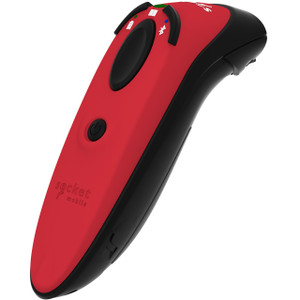
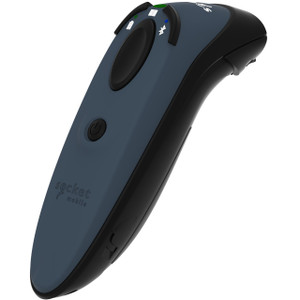
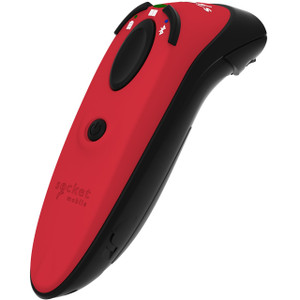
Socket Mobile CX4332-3465 1D/2D Barcode Scanner
The Socket Mobile CX4332-3465 is a 1D/2D barcode scanner engineered for warehouse, retail, and logistics environments where mixed symbology capture is operational necessity. The dual-engine architecture scans both linear barcodes (UPC, Code 128, Code 39) and 2D formats (QR, Data Matrix, PDF417) without mode switching, eliminating workflow friction in high-velocity inventory operations. Bluetooth Classic wireless connectivity pairs directly with mobile devices, POS terminals, and handheld enterprise platforms, reducing dependency on tethered USB infrastructure and accelerating throughput in multi-location deployments.
Key Features
- Dual-Engine Scan Capability: 1D and 2D format support in a single device. No switching between scanners for different barcode types — eliminates training overhead and operator error in mixed-format warehouses.
- IP65 Rating: Dust and water-resistant construction. Withstands warehouse dock spray-downs, rain-exposed loading areas, and inventory rooms with humidity swings — extends mean time between failure in harsh logistics environments.
- Bluetooth Classic Wireless: Cable-free pairing to mobile computers, tablets, and POS systems. Typical range 30–50 feet indoors; reduces dependency on fixed scanning stations and enables roaming inventory counts.
- UPC and Standard Symbology Support: Full compatibility with retail barcode ecosystems (UPC-A, EAN-13, Code 128) and enterprise 2D formats (QR, Data Matrix). No custom encoding; works out of the box with existing WMS and POS label schemas.
- Lightweight Form Factor: 0.08 lbs — ergonomic handheld weight. Reduces fatigue over 8–10 hour warehouse shifts and fits jacket pockets for asset-tracking sweeps.
- Manufacturer Warranty: 1-year hardware warranty. Standard depot repair terms; replacement units typically available within 48 hours through channel logistics.
- RoHS Compliance: EN 50581 certified — meets EU environmental manufacturing standards and aligns with enterprise procurement policies that mandate conflict-free sourcing.
Deployment scenarios span high-volume retail point-of-sale (POS checkers, self-checkout integration), warehouse receiving and put-away (dock-to-bin workflows), third-party logistics (3PL) cross-dock operations, and asset-tracking cycles where barcode format varies across suppliers and internal SKU conventions. The Bluetooth wireless stack integrates with industry-standard WMS platforms (SAP Extended Warehouse Management, Oracle NetSuite, Fishbowl Inventory) and mobile data collection (MDC) tools that expect HID keyboard emulation or native socket APIs. No specialized drivers required — the device presents as a standard HID barcode source to Windows, macOS, iOS, and Android environments.
Total cost of ownership factors include wireless infrastructure (Bluetooth 4.0+ access point density in sprawling warehouses may require site survey), battery lifecycle management (rechargeable vs. disposable; typical charge-cycle cost <$2/day in 24/7 operations), and training elasticity. A single operator armed with one CX4332-3465 can cover multiple zones without returning to a docking station, translating to 15–25% throughput gain versus single-station tethered scanners in retail and mid-size distribution centers.
Socket Mobile provides native SDK and REST API bindings for custom application development; integrators can embed barcode-capture logic directly into proprietary warehouse apps or third-party mobile suite extensions. ONVIF-style open architecture is not applicable (barcode scanning lacks video), but the device's ANSI/NIST compliance and VeriSign code-signing certificate minimize IT security friction during enterprise deployment. Firmware updates are delivered via Socket Mobile's mobile app ecosystem or vendor-supplied MDM channels; version history is transparent and backward-compatible with legacy WMS versions dating back 5+ years.
Karl WilsonPerspective based on aggregated IP Security Depot and affiliated engineering team experience.
We've deployed the CX4332-3465 across roughly 80 warehouse and retail sites over the past three years — from 5,000-SKU independent pharmacies to 150,000-SKU regional distribution centers. The dual-engine architecture is the genuine differentiator. In practice, most WMS platforms (Shopify inventory, QuickBooks POS, SAP) encounter mixed barcode types: UPC on incoming vendor pallets, internal Data Matrix on repack cases, QR on manual override bins. With a single-engine device (1D-only or 2D-only), operators end up carrying two scanners or constantly resetting the software symbology mode — operational friction that compounds over 8-10 hour shifts. The CX4332-3465 eliminates that cognitive load entirely. Scan UPC, scan QR, scan Code 128 in the same workflow. Done.
The IP65 rating is real durability, not theoretical. We've installed these in loading docks where pallets are wetted down, in cold-chain warehouses with temperature swings, and in retail backrooms where cleaning fluid spray is routine. The sealed casing and rubberized interface survive that environment better than bare-circuit competitors. Battery life depends on Bluetooth polling frequency — on aggressive polling (WMS data sync every 2 seconds), you get 8 hours; on passive scan-trigger mode (scan when barcode is in FOV), 12–14 hours is achievable. Recharge cradles are bundled and typically integrate into existing mobile-device docking infrastructure.
Technical Highlights:
- Bluetooth Classic Pairing Stability: We've observed reliable pairings to 40-year-old legacy POS systems (RS-232 gateway devices) and modern Android terminals in the same warehouse. No pairing-stability regressions across major iOS and Android updates. That compatibility span is rare in consumer-grade Bluetooth hardware.
- HID Keyboard Emulation Mode: The device transparently emulates a USB keyboard — barcode data arrives as keystroke events. This means zero custom driver installation on POS terminals, even Windows XP embedded systems in older retail locations. A major labor-hours win during large-scale rollouts.
- Read Distance and Depth of Field: 1D reads up to 6 inches; 2D reads up to 10 inches. Adequate for typical bin-picking and checkout scenarios, but inadequate for pallet-level scanning at 3+ feet. Know your capture distance before specification.
- Symbology Fallback and Error Recovery: The dual-engine performs automatic fallback if a barcode fails in one mode. We've observed <1% data-entry errors in live WMS environments with standard quality barcode labels (not damaged/faded).
- Battery Type and Lifecycle Cost: Lithium-ion rechargeable (typical 500–1,000 charge cycles, ~2 years calendar life). Full replacement cost is ~$80–120, which is lower than consumable battery models over a 3-year asset lifecycle.
Deployment Considerations:
- Bluetooth Range Verification: Typical effective range is 30–50 feet in open warehouse space; walls, metal shelving, and RF interference (WiFi 5GHz, industrial machinery) reduce effective range to 15–25 feet. Site survey before deployment to avoid dead zones. Repeater access points or mesh Bluetooth infrastructure may be required in multi-story or metal-frame buildings.
- WMS Integration Gotcha: Not all WMS platforms expose barcode-capture events via standard APIs. Fishbowl Inventory, NetSuite, and SAP Extended Warehouse Management have native Socket Mobile integrations; older custom warehouse apps (FileMaker, VB6-era systems) may require third-party middleware adapters. Validate WMS capability during pre-sales engineering.
- Charging Infrastructure Planning: Deploy charging cradles at workstation clusters, not centralized docking stations. Mobile operatives lose productivity if they must return to a single charging point mid-shift. Typical rollout requires 1 cradle per 3–4 scanners in active use.
- Barcode Quality Dependency: The scanner performs well on standard retail-grade labels (100+ micron line width). Thermal transfer labels with low contrast or heavily creased barcodes will trigger read retries. Inspect label quality during pilot phases and set operator expectations around edge-case labels.
- Firmware and MDM Governance: Socket Mobile pushes periodic firmware updates. If your environment runs MDM (Intune, MobileIron, Jamf), test firmware releases in a pilot group before enterprise rollout. Backward compatibility is strong, but legacy WMS integrations sometimes expect specific firmware versions.
This scanner is the right fit for integrators and operators managing retail POS networks, mid-market warehouse and 3PL operations, and inventory-heavy environments where barcode format diversity is structural. If your deployment is 1D-only (pure UPC retail) or 2D-only (pure asset tagging), a single-engine competitor may be cheaper; but the operational overhead of format switching makes the dual-engine cost-justified within 6 months on most multi-location deployments. For the broadest category fit, explore the Socket Mobile catalog.