Socket Mobile CX4328-3461 DuraScan D762 Wireless 2D Scanner
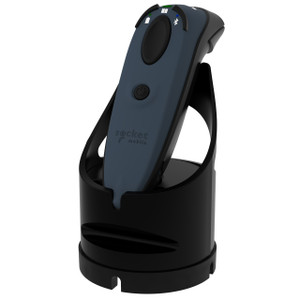
The Socket Mobile CX4328-3461 DuraScan D762 is a wireless 2D imager barcode scanner engineered for point-of-sale and warehouse mobility workflows. It decodes 1D symbologies (UPC, Code 128, Code 39) and 2D codes (QR) in a single handheld form factor, eliminating the operational friction of tethered scanning. Wireless connectivity removes cable-run constraints from retail floors, stock rooms, and fulfillment areas—a material advantage in high-velocity transaction or inventory-count environments where scanner mobility directly impacts labor efficiency. The included charging dock anchors the device at a fixed station while enabling cordless operation across the facility.
Key Features
- 2D Imager Engine: Captures UPC, Code 128, Code 39, and QR codes without symbology switching. Single-pass decoding reduces checkout lag and barcode-re-presentation errors in retail and warehouse pick operations.
- Wireless Connectivity: Cable-free operation across retail floors and stock areas. Mobility radius extends to typical facility WiFi coverage without hardwired constraints.
- Handheld Form Factor: Lightweight, ergonomic design for sustained use in checkout lanes and inventory workflows. Reduced operator fatigue during high-volume scanning sessions.
- Charging Dock Included: Dedicated docking station for point-of-sale stations and inventory hubs. Simultaneous charging and data synchronization during idle periods.
- 1D and 2D Symbology Support: Single device handles legacy UPC-A/EAN and modern 2D barcodes (QR, PDF417 capable). Future-proofs inventory labeling across merchandise generations.
- 1-Year Manufacturer Warranty: Factory coverage for hardware defects and sensor performance degradation in standard retail/warehouse conditions.
Wireless barcode scanners eliminate the infrastructure cost of cable runs and fixed scanning stations while improving checkout throughput and inventory accuracy. The D762's 2D imager bridges legacy retail barcode ecosystems (UPC) and modern supply-chain labeling (QR, DPM codes), reducing the need for separate 1D-only and 2D-only devices across different departments. On a 50-register retail operation, the mobility advantage compounds: stock associates can scan incoming boxes from the receiving dock without a hand-off to a fixed scanner, and price-check requests from sales floor staff no longer require a trip back to the register.
Integration with point-of-sale systems and warehouse management platforms depends on the host device and middleware layer. Socket Mobile scanners operate as HID (Human Interface Device) over Bluetooth or WiFi, meaning they are compatible with any POS, mobile cart, or inventory app that supports standard barcode input—no custom driver installation required on most modern systems. Validation with your specific POS vendor or WMS platform is recommended before deployment to confirm wireless pairing and data-format expectations.
Total cost of ownership favors wireless handheld deployment in multi-department retail and warehouse settings. Eliminating physical cable infrastructure reduces installation labor and future relocations. Battery life and charging-dock logistics are the key operational variables: understand your facility's peak scanning demand (number of concurrent scanners in use) and dock availability (one dock per 3–5 scanners is typical industry practice) to avoid charge-state gaps during peak hours.
The DuraScan D762 is appropriate for retailers, quick-service restaurants with inventory, and small-to-mid logistics operations where corded scanning creates bottlenecks and barcode diversity (UPC and QR labeling) is the standard. Environments requiring extreme ruggedness (drop testing, IP67 immersion) or enterprise-scale MDM (Mobile Device Management) orchestration should evaluate Socket Mobile's enterprise scanner lineup. For straightforward POS mobility and warehouse stock-count workflows, the D762 delivers sufficient durability and scanning performance at a moderate price point. Explore the full Socket Mobile scanner catalog to compare form factors and connectivity options.
Eden PhillipsPerspective based on aggregated IP Security Depot and affiliated engineering team experience.
We've deployed dozens of Socket Mobile handheld scanners across retail chains and fulfillment operations, and the DuraScan D762 occupies a practical middle ground: affordable enough for five-scanner deployments at a small grocery, robust enough for sustained warehouse use. The 2D imager is the real value—retailers increasingly label merchandise with QR codes for digital catalogs and price checks, while legacy UPC infrastructure remains the POS backbone. One device handles both, which simplifies training and reduces SKU fragmentation in your scanner inventory. Wireless eliminates the installer's biggest headache: running Ethernet or serial cables through drop ceilings and across stockroom floors. We've seen projects go from CAD to live in half the timeline compared to corded-scanner builds.
The wireless pairing model (Bluetooth to POS register or WiFi to a mobile cart) is straightforward, but you need to validate it against your specific systems before committing. We once specified these for a client running an older POS that expected serial-port input; the scanner worked fine over Bluetooth HID, but the POS required a USB dongle and custom config. Small gotcha, entirely preventable with a one-hour compatibility lab beforehand. The charging dock is well-designed—simultaneous charge and sync means you're not losing scanning coverage if one dock is occupied. Budget roughly one dock per three to four scanners in a retail environment; warehouses running peak inventory days may want a 1:2 ratio.
Technical Highlights:
- 2D Imager with 1D/2D Decode: A single scan engine eliminates device switching and barcode-presentation errors. In retail, this translates to faster checkout lines and fewer "scan it again" moments. Warehouses benefit from unified QR and UPC label reading during receiving and putaway.
- Wireless (Bluetooth/WiFi): No cable runs means zero infrastructure pre-staging and faster device relocation if departments reorganize. Battery life is manufacturer-dependent; validate estimated run-time against your peak-hour scanning load to size the dock refresh cadence.
- Handheld, Lightweight Design: Sustained daily use (8+ hours) is comfortable for most operators. Compare grip texture and trigger ergonomics if hand fatigue is a known issue at your site.
- HID Compatibility: Standard Bluetooth Human Interface Device profile means plug-and-play with modern POS terminals, mobile carts, and inventory apps. Legacy serial-port POS systems require USB bridge dongles; confirm availability and driver support before purchasing.
- Charging Dock Consolidation: Single dock powers and syncs the scanner, reducing the operational overhead of separate charge cables and sync stations. Dock placement near high-traffic checkout or receiving areas is critical.
Deployment Considerations:
- Wireless coverage must extend to all areas where scanning occurs. Dead zones near metal racks or external walls can interrupt pairing; site survey with a test scanner is recommended before full rollout.
- Validate POS and WMS compatibility before purchase. Some legacy systems expect serial barcode input, requiring a USB HID-to-serial bridge; confirm availability and pricing.
- Battery capacity and dock availability should be sized for peak scanning demand. A single scanner can typically survive a 6–8 hour shift on one charge; if you have 10+ simultaneous users, plan for multiple docks or a battery-swap protocol.
- Charging dock placement is operational—mount it at a natural break point (checkout counter, receiving desk) rather than in a closet to encourage regular docking and reduce stranded-battery incidents.
- QR and UPC barcode label quality varies by supplier; test your actual incoming labels with the scanner before rollout to confirm read rates and decode speed.
The DuraScan D762 is the right choice for retailers and small-to-mid logistics operations that need wireless, multi-symbology scanning without complex enterprise MDM overhead. If your operation runs 5–20 scanners across retail or warehouse floors and barcode diversity (UPC + QR) is the standard, this device delivers solid durability and operational mobility. For larger deployments (50+ devices) or harsh industrial environments (IP67 rating, drop testing), explore Socket Mobile's broader scanner range to find a better fit.