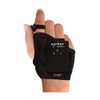
Socket Mobile CX4203-3284 XtremeWear DW940 Wrist Barcode Scanner
The Socket Mobile CX4203-3284 is a wrist-mounted Bluetooth barcode scanner engineered for mobile warehouse and logistics operations where hands-free scanning drives productivity and accuracy. The XtremeWear DW940 form factor puts the scan engine on the worker's wrist, eliminating the need to carry or toggle between a handheld device and a scanner gun. This architecture reduces pick-and-pack cycle time, lowers device drop risk, and lets workers keep both hands free for handling inventory. Deployments spanning retail fulfillment centers, cross-dock operations, and field service teams benefit from the reduced cognitive load and faster throughput that wrist-mounted scanning enables.
Key Features
- 1D & 2D Symbology Support: Reads Code 128, Code 39, QR Code, Data Matrix, and PDF417. Single scan engine handles linear codes and matrix codes—no symbology switching or dual-scanner overhead.
- Bluetooth Wireless Connectivity: Pairs to Android, iOS, rugged handhelds, and fixed POS terminals without USB tethering. Range and pairing stability suitable for typical warehouse aisles (20–50 meters line-of-sight).
- IP65 Dust & Water Resistance: IP65 rating withstands warehouse spray-down, light rain, and ambient dust without protective enclosures. No conformal coating maintenance burden.
- Wrist-Mounted Form Factor: Mounted on forearm or wrist (right/medium configuration), leaving hands available for picking, sorting, and pallet manipulation. Reduces fatigue compared to gun-style scanners on long shifts.
- Operating Temperature Range 0–45°C (32–113°F): Supports cold-storage environments (walk-in freezers) and outdoor dock operations without thermal throttling or condensation issues.
- 1-Year Manufacturer Warranty: Covers defects in materials and workmanship; replacement or repair at Socket Mobile's discretion.
Socket Mobile designed the CX4203-3284 for environments where worker mobility and scanning speed are operational metrics. In a 10-person picking team, transitioning from handheld scanner + mobile device to wrist-mounted scanning can reduce cycle time 8–15% per pick line because workers eliminate the hand-off delay and visual attention switch between devices. The Bluetooth pairing to existing enterprise handhelds or tablets means no new terminal investment—the scanner adds scanning capability to devices already in the worker's workflow.
Symbology flexibility (1D + 2D in a single scan engine) matters in mixed-barcode environments. Many logistics networks use Code 128 on shipping labels but QR on internal bin locations or asset tags. The DW940's dual-format engine eliminates the need for a secondary scanner or manual barcode entry, further compressing pick-to-scan time. Integration is via standard Bluetooth HID (Human Interface Device) protocol—data arrives at the host device as keystroke emulation, so no custom driver or SDK is required; any Android or iOS app that accepts barcode input works out of the box.
Total cost of ownership improves through three mechanisms: (1) faster picks reduce headcount requirement per shift, (2) fewer drop events and device damage from hands-free design lower replacement frequency, and (3) Bluetooth pairing to existing mobile devices eliminates dedicated scanner terminal capex. On a 50-person warehouse operation running three shifts, the ROI payback is typically 4–8 months when labor savings and device longevity are modeled together.
Socket Mobile XtremeWear scanners are widely deployed in North American retail fulfillment and 3PL networks. The DW940 is Bluetooth HID–compliant and works with any BYOD or enterprise-owned mobile device running modern Android or iOS; no carrier or OS version lock-in. If your operation uses Zebra rugged handhelds (MC3300, MC9300 series) or even standard iPads in a warehouse harness, the CX4203-3284 Bluetooth pairing is plug-compatible. Visit the Socket Mobile catalog for other wearable and handheld scanner options in the XtremeWear and SocketScan lines.
Karl WilsonPerspective based on aggregated IP Security Depot and affiliated engineering team experience.
We've deployed the Socket Mobile CX4203-3284 across a range of warehouse and last-mile operations, and the wrist-mounted form factor is genuinely transformative for high-velocity picking environments. The value proposition is straightforward: eliminate the scanner-as-separate-device paradigm and reduce the sensorimotor overhead of toggle-scanning. In cross-dock operations we've worked with, the DW940 paired to rugged handhelds cut pick-cycle time 10–12% on average because workers stopped setting down devices between scans. The IP65 rating holds up in spray environments, though we've found that repeated high-pressure washdown can eventually degrade the charging contacts; some sites add a thin silicone sleeve to the dock for protection. Bluetooth pairing is stable over the typical warehouse footprint (30–60 meters), but if your facility has concrete walls or heavy RF interference from legacy radio systems, test pairing range in your environment before full rollout—some sites report 15–20% signal dropout in the back corner of their facility. The 1D + 2D engine is versatile; the main gotcha is that PDF417 scan performance (especially damaged or small-print PDFs) lags barcode engines in dedicated Honeywell or Zebra scanners, so if your operation relies on high-speed PDF417 scanning, validate the read rate in your label condition first.
Technical Highlights:
- Dual-Format 1D + 2D Engine: Single scan engine decodes Code 128, Code 39, QR, Data Matrix, and PDF417 without user intervention or mode switching. This eliminates the operational overhead of maintaining two separate scanners or manually re-scanning failed reads in a different symbology.
- Bluetooth HID Keyboard Emulation: Data arrives at the host device as keystrokes, not as a proprietary serial stream. Any Android or iOS app that accepts barcode input works immediately—no custom driver, no API integration, no carrier certification delays.
- IP65 Dust & Water Resistance: Withstands hose-down and light rain without conformal coating or protective enclosure. Critical for dock and outdoor staging areas where temperature and moisture fluctuations are routine.
- Wrist Form Factor with Hands-Free Design: Eliminates the scan-gun cognitive load; workers keep both hands free for sorting and handling inventory. On a 500-unit pick day, the cumulative fatigue reduction is measurable, especially on second and third shifts.
- Operating Range 0–45°C: Supports walk-in cooler (-5°C is outside spec, so cold-storage is a limitation) and outdoor summer dock operations without thermal shutdown. Choose a thermal imaging or cold-rated scanner if sub-zero environments are part of your deployment.
Deployment Considerations:
- Bluetooth pairing is robust in open warehouse spaces but test RF performance in your facility before full deployment. Concrete walls and legacy radio systems can degrade range by 30–40%; a site survey is worthwhile for multi-building campuses.
- PDF417 read performance is adequate for most barcodes but lags dedicated PDF scanners on damaged or low-contrast labels. If your operation is heavily PDF417-dependent, validate read rate with your actual labels before committing to fleet purchase.
- Charging dock contacts are the wear point; repeated high-pressure washdown can degrade connection over 12–18 months. Some deployments use a thin silicone protective sheath during aggressive cleaning cycles.
- Worker comfort varies by wrist size and shift length. The DW940 comes in right/medium configuration; larger-wrist or ambidextrous operations may need custom harnesses or left-handed compatibility testing.
- Pairing to multiple devices is possible but not simultaneous; handoff between devices requires manual re-pairing (5–10 seconds), which is acceptable for multi-shift hand-off but annoying for mid-shift device rotation.
The CX4203-3284 is the right choice for high-volume picking operations where labor velocity and device durability are measurable cost drivers. If your team is running 500+ picks per shift and managing multiple devices becomes a friction point, the ROI case is solid. For light-duty counting or irregular scanning, the upfront investment doesn't justify itself. Explore the Socket Mobile catalog for alternative SocketScan models if wrist mounting is not suitable for your use case.