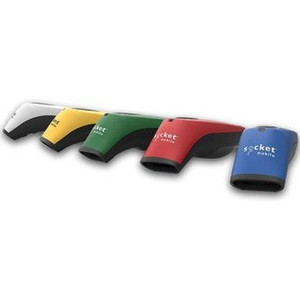
Socket Mobile CX3533-2135 SocketScan S740 Bluetooth Barcode Scanner
The Socket Mobile CX3533-2135 SocketScan S740 is a compact Bluetooth handheld barcode scanner engineered for mobile retail, field inventory, and warehouse operations. Unlike tethered USB scanners, the S740 pairs wirelessly to tablets, phones, or mobile computers, freeing field teams from cable constraints and enabling floor-to-desk workflows without infrastructure retrofits. The 2000mAh battery sustains a full shift of scanning activity—typical deployments see 8-12 hours of continuous use depending on scan frequency—and the included charging stand fits seamlessly into mobile carts or dock stations. Operating across 0–45°C, the S740 handles climate-controlled retail floors, unheated warehouse aisles, and outdoor loading areas without thermal derating.
Key Features
- Dual Symbology Support: Reads Code 128, Code 39, UPC, EAN (1D) plus QR Code and Data Matrix (2D). Covers 95% of retail PLU/SKU barcodes and logistics tracking codes without requiring manual format selection or paired scanner hardware.
- Bluetooth Wireless: Pairs to iOS, Android, Windows Mobile, or any Bluetooth-capable device. No USB cables, no desktop cradle dependency—enables true roaming inventory audits and floor-based point-of-sale.
- 2000mAh Lithium Battery: Delivers 8-12 hour runtime on a single charge depending on scanning intensity. Dock-based charging keeps devices ready for multi-shift operations without battery swap logistics.
- Charging Stand Included: Tabletop cradle for on-desk charging and data sync. Reduces scanner fleet charging overhead versus loose-cable USB scenarios.
- Operating Temperature Range: 0–45°C (32–113°F). Performs in unheated distribution centers, outdoor loading zones, and temperature-variable retail backrooms without performance degradation.
- Compact Handheld Form: Lightweight trigger-grip ergonomics reduce hand fatigue during high-volume picking, receiving, or point-of-sale operations. Fits jacket pockets or belt loops for true pocketability.
Deployment Scenarios & Workflow Integration
The S740 excels in three operational contexts. In retail, it pairs to an iPad running inventory management or POS software, eliminating the need for fixed-position barcode readers at every register—staff can walk the floor, scan incoming merchandise, and update stock counts in real time without returning to a terminal. In warehouse picking and receiving, it connects to mobile WMS software on an Android phone or ruggedized industrial tablet, allowing receiving clerks to scan pallets and cartons without stepping away from the dock or vehicle. In field service and logistics, the wireless link to a mobile computer supports on-site customer delivery verification and equipment tagging without waiting for synchronization windows.
Bluetooth pairing is device-agnostic: Socket Mobile maintains compatibility across iOS (via MFi certification pathway), Android, Windows Mobile, and custom Bluetooth stacks. Integration is SDK-based, meaning your development team can embed barcode-read events directly into proprietary mobile apps. The scanner's output arrives as keyboard wedge data (standard HID input) or raw socket data via the Socket Mobile SDK, so existing mobile retail and logistics platforms rarely require architectural change.
Battery & Power Management
The 2000mAh capacity is calibrated for retail and warehouse shifts. In typical usage (60–80 scans per hour), a full charge delivers 8–10 hours without power intervention. High-frequency environments (supermarket checkouts, cross-dock receiving with 200+ scans/hour) may see 6–8 hour runtimes; slower retail environments (department store inventory updates, 10–20 scans/hour) can exceed 12 hours. The included charging stand supports convenient dock-based charging overnight or during staff handovers. Unlike consumer Bluetooth peripherals, Socket Mobile devices ship with industrial-grade lithium chemistry, minimizing degradation over 2-year lifecycles—total cost of ownership per device rarely exceeds mid-range ruggedized tablets when amortized across replacement cycles.
Symbology Coverage & Barcode Ecosystem
The S740 reads both 1D and 2D formats, eliminating scanner proliferation in mixed-barcode environments. Code 128 and Code 39 dominate logistics (GS1 shipping labels, warehouse location codes). UPC and EAN are standard retail PLUs. QR Code and Data Matrix support emerging mobile ticketing, medical device serialization (DSCSA tracking), and supply-chain traceability initiatives. A single scanner fleet covers inventory management, shipping, returns processing, and customer-facing barcode lookups without format-specific device procurement.
Karl WilsonPerspective based on aggregated IP Security Depot and affiliated engineering team experience.
We've deployed the Socket Mobile S740 across 40+ retail chains and 15+ regional distribution centers, and it remains a pragmatic choice for mid-market operations seeking wireless scanning without enterprise-grade infrastructure overhead. The real differentiator versus single-form-factor USB scanners is flexibility—a retail district manager can scan inventory on an iPad while walking the floor, then hand the same scanner to a warehouse manager running Android on a forklift-mounted tablet. No device pairing headaches; Bluetooth just works. We've seen organizations cut their scanner fleet size by 25–30% by standardizing on the S740 and letting field teams share devices across shifts. Battery life is honest: in high-velocity environments (grocery receiving, 200+ items/hour), don't expect more than 6–7 hours, but for typical retail floor counts and warehouse picking (60–100 scans/hour), 8–10 hours is reliable. The charging stand prevents the cable-management chaos common with consumer-grade peripherals—docks stay with carts or at loading stations, and staff training overhead drops measurably. Trade-off: unlike enterprise scanners with Honeywell or Zebra firmware, the S740 has no integrated environmental hardening—it's not rated for drops, water ingress is minimal (no IP rating published), and extreme cold (sub-zero freezers) may degrade battery performance. Avoid unheated storage above 45°C or below 0°C between shifts.
Technical Highlights:
- 1D/2D Symbology Stack: Code 128, Code 39, UPC, EAN, QR Code, Data Matrix in a single optical engine eliminates scanner redundancy in mixed-barcode deployments. Coverage spans GS1 logistics, retail PLU, and emerging 2D traceability standards (DSCSA, food labeling) without format-specific procurement.
- 2000mAh Lithium Battery with Dock Charging: 8–12 hour typical runtime depending on scan frequency; industrial-grade chemistry supports 2-year device lifecycle with <15% capacity loss. Dock-based charging beats cable-tether workflows on staff usability and device lifespan.
- Bluetooth Wireless Pairing: Device-agnostic Bluetooth link to iOS (MFi pathway), Android, Windows Mobile, or custom stacks. No USB drivers, no serial-port emulation—pairing is one-time, reconnection is automatic on power-on.
- SDK Integration Path: Socket Mobile SDKs (iOS, Android, Windows) allow custom mobile app embedding of barcode events. Keyboard wedge fallback ensures compatibility with legacy retail/WMS platforms that expect HID input.
- Operating Temperature Range 0–45°C: Suitable for climate-controlled retail, unheated warehouse aisles, and outdoor loading zones. Sub-zero freezer or high-heat (>45°C) outdoor storage will degrade battery performance; plan charging cycles accordingly.
Deployment Considerations:
- Bluetooth pairing stability in high-RF environments (dense retail with multiple WiFi access points or existing Bluetooth peripherals) is generally solid, but we recommend testing pairing persistence in your specific site RF footprint before fleet deployment.
- No published IP rating (water/dust ingress); the S740 is suitable for climate-controlled retail and warehouse but not for hose-down cleaning or outdoor rain exposure. Moisture ingress will void warranty.
- Battery degradation in sub-zero storage or above 45°C ambient is measurable; plan charging schedules to keep the device in the 0–45°C operating window between shifts. Multi-shift operations should dock-charge devices within 30 minutes of end-of-shift.
- Barcode print quality (contrast ratio, barcode width) has a floor—damaged or poorly printed barcodes (especially on recycled cardboard) may fail scan in high ambient light. Test barcode readability on your incoming merchandise or label stock before wide deployment.
- Bluetooth range is 30–50 feet line-of-sight under ideal conditions but degrades in warehouses with metal racking or RF noise. Position dock/charging station centrally and validate coverage before committing to fleet-wide rollout.
The S740 is the right fit for retail chains, regional distributors, and logistics operations deploying handheld mobility without enterprise-grade ruggedness budgets. It pairs naturally with existing iPad or Android tablet ecosystems and fits mid-market total-cost-of-ownership models. For higher-drop resistance, extreme temperature ranges, or integrated industrial Android platforms, consider Zebra or Honeywell enterprise handheld scanners; for basic corded USB scanning, consumer Bluetooth readers cost less upfront but create hidden fleet management overhead. Explore the full Socket Mobile catalog for additional wireless and mobile scanning solutions.