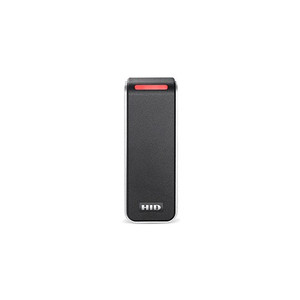
HID 20NKS-00-000025 Signo 20 Reader Credentials - Piggybacking Cards, Standard Wiegand 32-Bit MSB Format
When deploying HID Signo 20 readers in multi-technology environments, you need credentials that match the reader's dual-frequency capability without forcing a complete system overhaul. These piggybacking cards deliver both 125 kHz proximity and 13.56 MHz contactless smart card technology in a single credential, letting you migrate access control systems incrementally while maintaining backward compatibility with legacy proximity infrastructure.
Key Features
- Dual-technology piggybacking design combines 125 kHz prox and 13.56 MHz smart card in one credential
- Standard 26-bit Wiegand output with 32-bit MSB (Most Significant Bit) data structure
- 4-bit message format supports facility codes 0-15 for multi-site deployments
- 13-character card number length accommodates large user populations
- Black and silver physical design maintains professional appearance standards
- No parity bit configuration simplifies panel programming during installation
- Compatible with HID Signo 20 readers and legacy 125 kHz prox readers
- Standard CR80 credit card dimensions for existing badge holder compatibility
The piggybacking architecture solves a common integration challenge: you want to deploy Signo 20's advanced features—mobile credentials, encrypted communications, secure identity data—but can't replace every reader across the facility simultaneously. These cards let users access both upgraded Signo readers and older proximity readers during the transition period. The 13.56 MHz side supports future expansion into secure identity applications, while the embedded prox chip maintains day-one access to existing doors.
The 32-bit MSB format with 4-bit messaging gives you clean data structure for access control panels expecting standard Wiegand input. Facility code range 0-15 works for smaller distributed sites or departmental access segmentation. The 13-character card number field provides sufficient namespace for organizations managing several thousand credentials without risking duplicates. No parity bit means one less configuration variable when programming panels—the credential transmits data cleanly without additional error-checking overhead that can complicate troubleshooting.