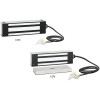
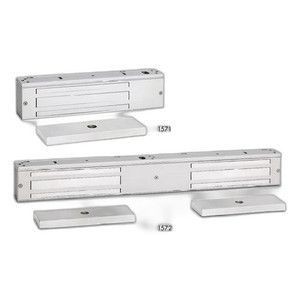
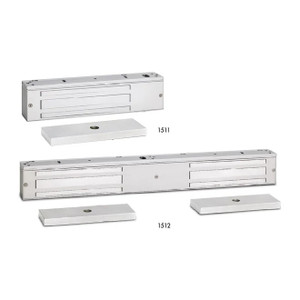
SDC 1575U Single Electromagnetic Lock with Magnetic Bond
Overview
The SDC 1575U is a wired electromagnetic lock strike assembly designed for standard single-door access control deployments. Operating at 24VDC, the 1575U uses magnetic bond technology to maintain consistent holding force on door strikes in IP-based access control systems. Unlike proprietary lock controllers, it supports OSDP (Open Supervised Device Protocol) communication, meaning it integrates directly with certified controllers and reader hubs without additional gateways or middleware. This wired architecture eliminates wireless interference concerns and simplifies troubleshooting in noisy RF environments.
Key Features
- 24VDC Operation: Powers directly from standard access control power supplies. Most integrators already have 24VDC infrastructure in place, so the 1575U avoids the cost and complexity of adding a separate power domain for this lock.
- OSDP Protocol Support: Native OSDP means the lock communicates directly with your controller without proprietary converters. Reduces licensing costs and vendor lock-in — a real advantage if you're moving away from legacy systems or integrating multiple brands.
- Magnetic Bond Strike Design: Provides predictable, repeatable holding force suitable for standard hinged doors. Magnetic bond is less prone to mechanical wear than solenoid latches, so it typically requires less maintenance over a 5–10 year deployment window.
- Multi-Credential Input Support: Accepts proximity cards, NFC/13.56MHz credentials, and keypad PIN entry on the same interface. This flexibility means you can mix credential types without rewiring or adding separate readers — a deployment win in retrofit scenarios where tenants have different badge ecosystems.
- Wired Connectivity: Eliminates RF coordination headaches. No frequency coordination meetings, no interference from WiFi or cellular, no battery replacement cycles. In warehouse or manufacturing environments with heavy machinery, wired is often more reliable.
- Single-Door Form Factor: Designed for standard inswing or outswing single-leaf doors. If you need to control a double-wide or traffic lane, this is not the right model — consider a multi-reader access control system instead.
Integration & Compatibility
The 1575U integrates into modern IP-based access control ecosystems via OSDP. Any OSDP-certified controller or reader hub can manage the lock directly — Salto, Gallagher, Software House, and other major platforms support OSDP. Pair it with a proximity card reader, NFC reader, or pin-pad, and you have a complete single-door access point. Because it runs on standard 24VDC, it plays well with uninterruptible power supplies (UPS) and backup power schemes — no special wiring required.
For warehouse automation or industrial access control, the wired approach also integrates neatly into structured cabling runs alongside your building management system. No wireless survey needed, no channel conflicts with forklift RF tags or inventory scanners.
When to Choose a Different Model
If you need wireless operation, a battery-backed strike, or support for mobile credential technologies like Apple Wallet, the SDC 1575U is not the right fit. Similarly, if your facility requires a fail-safe or fail-secure logic that differs from magnetic bond behavior, check the detailed specification sheet or consult your integrator — some applications require solenoid or electric strike alternatives.
Deployment Context
The 1575U is a solid choice for small to mid-size single-door access control projects: warehouse back doors, server room entry, lab access, or tenant space entrances where you want standards-based control without proprietary dependencies. Its wired design and OSDP support make it a lower-risk choice for integrators who work with multiple platforms or rotate VMS/control systems across customer bases.
Frequently Asked Questions
Q: Does the SDC 1575U require a separate power supply?
A: No. The 1575U draws power directly from standard 24VDC access control supplies, which are already present in most installations. No additional power domain is required.
Q: Is the 1575U compatible with my access control system?
A: If your system is OSDP-certified (which most modern controllers are), yes. The 1575U communicates via OSDP protocol. If your controller is older or proprietary-only, consult the controller manufacturer to confirm OSDP support.
Q: Can the 1575U work with wireless readers?
A: The 1575U itself is wired, but it can be paired with any credential reader (proximity, NFC, keypad) that connects to an OSDP controller. The lock does not transmit wirelessly — it receives control signals over the wired connection to the controller.
Q: What's the holding force of the magnetic bond strike?
A: Consult the product datasheet for exact force specifications. Magnetic bond strikes are rated for standard single-leaf doors; verify with the manufacturer if your door weight or opening force is unusually high.
Q: Is the 1575U suitable for outdoor installation?
A: The 1575U is a wired lock strike intended for indoor door frame mounting. For outdoor vestibules, weather-sealed aluminum strikes or stainless-steel alternatives may be required. Confirm environmental requirements with your integrator.
Q: What warranty does SDC provide on the 1575U?
A: Warranty terms vary by distributor and region. Contact your authorized supplier for warranty details and support terms.
Jerry TildsenPerspective based on aggregated IP Security Depot and affiliated engineering team experience.
The SDC 1575U sits in a narrow but important lane: wired, standards-based access control for single doors where you want to avoid vendor lock-in. Most integrators I've worked with pick electromagnetic locks based on form factor (surface vs. flush) and holding force, but they often overlook the protocol layer. The 1575U's OSDP support is its real strength — it means you're not hostage to a proprietary gateway or licensing fee just to control a door strike.
Technical Highlights:
- 24VDC Direct Power: Draws from the same 24VDC bus as your readers and controller. No separate power conditioning, no wiring complications. Simplifies UPS integration — a single backup power supply covers the entire access point.
- OSDP Native: No protocol translation layer required. This reduces latency on lock/unlock commands and eliminates a potential failure point. In high-traffic areas (warehouse dock, parking garage entry), that responsiveness matters.
- Magnetic Bond vs. Solenoid: The magnetic bond design in the 1575U is less wear-prone than solenoid latches over 5+ years of continuous cycling. Service calls for lock replacement or adjustment are rarer, which impacts your total cost of ownership on a 50+ door deployment.
Deployment Considerations:
- This is a single-door strike. If you're managing traffic flow through a dual-leaf vestibule or need fail-safe logic, you'll need a different architecture — likely a controlled double-egress strike or a separate controller.
- The 1575U supports multiple credential types (proximity, NFC, keypad) on input, but the credential reader itself is a separate device. Confirm your reader is OSDP-compatible; some older proximity panels are not, and retrofitting them can add cost.
- Wired operation eliminates RF survey work, but it also means conduit routing and wire pulls during install. In retrofit scenarios, plan for that labor — it's not a 30-minute swap like some modern battery-backed strikes.
The 1575U is the right choice for institutional deployments — universities, hospitals, office parks, warehouses — where you expect system longevity and want to preserve flexibility for future controller upgrades. Avoid it if your requirement is rapid deployment, wireless operation, or mobile credentialing.