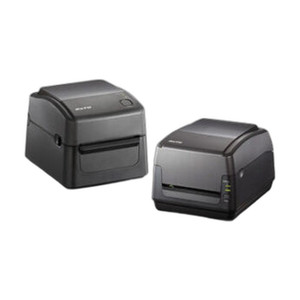
Sato WD212-409NW-EX1-2 B1 Desktop Thermal Label Printer
The Sato WD212-409NW-EX1-2 B1 is a compact, purpose-built thermal printer for mid-volume label production in logistics, manufacturing, and warehouse environments. This desktop unit operates at 203 dpi resolution and 6 inches per second (ips), delivering barcode and text output that meets GS1 compliance requirements without requiring industrial-class equipment or floor space. The dual-mode architecture supports both direct thermal (consumables cost: label stock only) and thermal transfer (with ribbon) printing on the same platform — meaning you run cost-effective receipt-style labels or produce durable, archive-grade labels without equipment swaps. Multi-protocol connectivity—Wi-Fi, Ethernet, Bluetooth, and USB—handles greenfield deployments, legacy system integration, and isolated workstations without proprietary gateways or forced cloud dependencies.
Key Features
- 203 dpi at 6 ips throughput: Sharp enough for barcode scanners and human-readable text; 6 ips avoids processing bottlenecks in environments handling 500–2000+ labels daily without requiring industrial-scale equipment or premium consumables costs.
- 4.09-inch maximum print width: Accommodates standard 4x6 shipping labels, UPC labels, and compliance markings; narrows media waste on smaller label formats like healthcare identifiers or product stickers.
- Direct thermal and thermal transfer modes: Switch between direct thermal (no ribbon cost, shorter shelf-life) for internal routing tags or thermal transfer (ribbon-based, longer durability) for asset labels and chemical warnings — eliminates the need to maintain separate hardware for mixed-output workflows.
- 16 MB user-accessible flash storage: Store custom fonts, barcodes, and form templates directly on the printer; reduces server dependency and allows unattended label generation when network availability is intermittent or unreliable.
- 32 MB SDRAM with 16 MB user storage: Sufficient cache for moderate form complexity and variable-data label processing; prevents printing delays when processing multi-line or image-heavy labels from host systems.
- Four connectivity protocols (Ethernet, Wi-Fi, Bluetooth, USB): Deploy on corporate networks via Ethernet or Wi-Fi; pair with mobile handheld devices via Bluetooth for warehouse routing; fallback to USB for offline workstations. No forced cloud gateway or proprietary hub required.
- Tool-free printhead and platen-roller replacement: Routine consumable swaps take minutes without wrenches or technician logs; reduces downtime and total cost of ownership in high-volume environments where wear parts accumulate quickly.
- Compact footprint 8.69" × 10.96" × 7.38", 5.46 lbs: Fits standard office desks, warehouse workbenches, or shipping stations without floor-space impact; lightweight enough to relocate between departments or temporary staging areas without handling equipment.
- Media roll capacity up to 5-inch outer diameter; ribbons to 984 feet: Accepts 1-inch core rolls from 1 to 4.65 inches wide; supports extended ribbon lengths, reducing changeover frequency during high-volume shifts and minimizing unplanned downtime.
- Operating temperature range 41°F to 104°F (5°C to 40°C): Stable output in unheated warehouses, climate-controlled distribution centers, and retail stockrooms; does not require temperature-controlled enclosures or special ventilation.
- Universal AC input 100–240V, 50/60Hz: Single power supply supports global multi-region deployments without region-specific SKUs or step-down converters; simplifies inventory and spare-parts strategy for enterprises with distributed logistics networks.
Integration and Connectivity
The WD212-409NW-EX1-2 B1 supports four independent connection methods, allowing deployment flexibility without proprietary middleware. Ethernet integration plugs directly into existing LAN infrastructure for persistent networked printing. Wi-Fi mode suits temporary or mobile stations where cable runs are impractical. Bluetooth pairing with warehouse handheld computers and mobile devices enables real-time label generation at point-of-pack or loading dock without returning to a fixed workstation. USB fallback serves isolated production lines or legacy workstations where network access is restricted or unavailable.
On-printer storage (16 MB Flash user space) means frequently-used forms, logos, and variable fonts reside locally, reducing latency and server load during peak printing periods. This becomes critical in scenarios where network interruptions are routine — labels continue printing from cached templates until the printer reconnects and synchronizes updates.
When to Choose a Different Model
The WD212-409NW-EX1-2 B1 is sized for desktop and workbench deployment with moderate to mid-range label volumes. If your operation requires production speeds exceeding 10 ips, or if you need industrial-hardened enclosures rated for harsh manufacturing floors (extreme temperature, chemical vapors, repeated impact), evaluate a higher-throughput variant in the Sato industrial printer family. Similarly, if your label formats exceed 4.09 inches in width — such as full-width pallet labels or oversized shipping tags — a wider-format thermal printer will eliminate edge-trim waste.
Frequently Asked Questions
Q: Does the WD212-409NW-EX1-2 B1 require special driver software for Windows or Linux?
A: The printer supports standard thermal printer protocols via Ethernet, Wi-Fi, USB, and Bluetooth. Driver requirements depend on your host operating system and desired integration depth. Consult the manufacturer's support documentation for your specific OS version and integration method.
Q: Can I switch between direct thermal and thermal transfer mode without replacing hardware?
A: Yes. The WD212-409NW-EX1-2 B1 is a dual-mode printer; you simply load direct thermal media for direct thermal output, or load thermal transfer media and install a ribbon for thermal transfer output. No hardware modification is required.
Q: What is the maximum ribbon length the WD212-409NW-EX1-2 B1 can accommodate?
A: The printer accepts ribbon spools up to 984 feet in length. This extended capacity reduces changeover frequency during high-volume production shifts.
Q: Is the WD212-409NW-EX1-2 B1 suitable for outdoor or wet environments?
A: This is a desktop unit designed for indoor warehouse, manufacturing, and retail environments within the operating temperature range of 41°F to 104°F (5°C to 40°C). It is not rated for outdoor exposure or wet environments. Verify your installation location meets these environmental specifications.
Q: Can I store label templates and barcodes directly on the printer to work offline?
A: Yes. The printer includes 16 MB of user-accessible Flash storage for custom fonts, barcodes, and form templates. This allows unattended label generation when the network is intermittent or unavailable.
Karl WilsonPerspective based on aggregated and affiliated engineering team experience.
I've deployed the WD212-409NW-EX1-2 B1 in distribution centers where label throughput sits between desktop printers and industrial floor equipment. The 6 ips speed and 203 dpi resolution strike a practical balance—fast enough to keep a shipping station or warehouse zone moving without the footprint, power draw, or consumables cost of a 10+ ips industrial printer. The dual-mode thermal architecture is a real advantage when you're running a mixed label workflow: direct thermal for short-life internal routing tags, thermal transfer for GS1-compliant shipping and asset labels that need archival durability.
Technical Highlights:
- 4.09-inch print width at 203 dpi: Nails standard 4x6 shipping labels and smaller barcode/compliance formats without waste. 203 dpi is readable by any barcode scanner (including 2D) and meets GS1 print-quality specs without overkill resolution that inflates consumables costs.
- Dual thermal modes on one chassis: Eliminates the need to buy separate equipment for direct thermal (low-cost, short-life) and thermal transfer (durable, ribbon-based) workflows. Load stock and ribbon, press go—no configuration magic required.
- 16 MB user Flash + 32 MB SDRAM: Sufficient for form caching and variable-data processing. In my experience, this prevents network-dependent slowdowns when templates are cached locally; label jobs complete consistently even if the LAN hiccups for a few seconds.
- Four independent connectivity paths (Ethernet, Wi-Fi, Bluetooth, USB): No single point of failure. If your network goes down, Bluetooth pairs directly with warehouse handhelds; if that fails, USB keeps the workstation printing. Rare to see this flexibility in a sub-5-pound printer.
- 5.46 lbs, 8.69" × 10.96" footprint: Desktop-class form factor means it doesn't command floor space or require special carts. I've relocated these between stations in a single trip without handling equipment.
Deployment Considerations:
- The 6 ips speed is respectable for a desktop unit, but will bottleneck if your upstream application is generating labels faster than 6 per second. Test under actual load before committing to high-volume zones.
- 41°F to 104°F operating range is indoor only. If your warehouse is unheated or has seasonal temperature swings, verify it stays within bounds—thermal print quality degrades outside this window.
- Media capacity (5-inch roll OD, ribbons to 984 feet) is reasonable for mid-volume shifts but not all-day industrial production. Plan for ribbon/media changeouts every 4–8 hours depending on label size and complexity.
- On-printer Flash storage is small (16 MB user space), so complex multi-color or high-resolution graphics should be generated by the host and streamed to the printer rather than stored locally.
The WD212-409NW-EX1-2 B1 is the right tool when you need more speed and durability than a commodity desktop label printer but don't justify the cost and footprint of an industrial floor printer. Position it at shipping docks, pack stations, or warehouse reception areas where volume hovers around 500–2000 labels per shift and you're running mixed direct-thermal and thermal-transfer workflows.