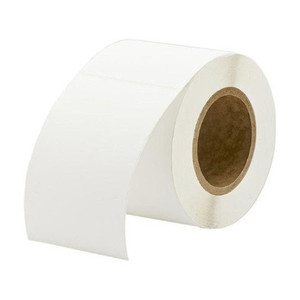
Sato SR30LT-10399 4x2 Thermal Transfer Paper Label
The Sato SR30LT-10399 is a 4" × 2" thermal transfer paper label engineered for high-volume industrial labeling operations. Each case contains 4 rolls with 3,000 labels per roll—12,000 labels total—wound on 3" inner diameter cores with 8" outer diameter hubs for direct compatibility with SATO industrial thermal transfer printers. The thermal transfer paper facestock delivers sharp barcode reproduction and legible human-readable text, while permanent acrylic adhesive ensures dependable adhesion across cartons, packaging, and product surfaces in varied temperature environments.
Key Features
- Thermal Transfer Paper Facestock: Accepts crisp ink transfer from wax, wax-resin, and resin ribbon formulations—meaning you choose ribbon durability (wax for indoor use, wax-resin for moderate outdoor exposure, resin for extreme environments) based on your specific application rather than being locked into one ribbon type. This multi-ribbon flexibility lets you optimize print durability without changing label stock.
- 4" × 2" Label Dimensions: Large enough to accommodate detailed GS1/UPC barcodes, asset numbers, and multi-line text without requiring multiple labels per item, yet compact enough for standard carton and shipping label workflows without excessive waste or surface area consumption.
- 12,000 Labels per Case (3,000 per Roll × 4 Rolls): A single case supplies medium-to-large operations with regular label demand—12,000 labels typically cover 2–4 weeks of high-throughput warehouse or manufacturing labeling cycles, reducing purchasing frequency and lowering per-label cost versus smaller quantity orders.
- 3" Core ID, 8" OD Hubs: Engineered for seamless integration into SATO printer roll feeders without adapter hardware, minimizing setup time and reducing installation errors in fast-paced labeling environments. Direct core fit eliminates the need for custom spindles or mechanical adapters.
- Perforated Dispensing Design: Labels are perforated between each impression in the wound-in orientation, enabling single-label tear-off without manual cutting or blade adjustment—critical for high-speed operations where labor time per label directly impacts throughput and direct labor cost.
- Permanent Acrylic Adhesive: Reliable adhesion across temperature-controlled warehouses and ambient distribution environments. Acrylic formulation resists temperature cycling and humidity fluctuations common in logistics facilities without lifting, edge-curling, or premature release—important for labels that may spend weeks or months on shipped cartons.
Integration & Compatibility
The SR30LT-10399 is purpose-built for SATO thermal transfer printer platforms across the SR30LT and compatible industrial printer lines. Multi-ribbon compatibility—wax (T101A), wax-resin (T110A Premier II), and resin (R333A) formulations—removes vendor lock-in and allows you to optimize print durability for specific applications without changing label stock. Barcode print quality meets standard GS1 and UPC scanning specifications when used with appropriate ribbon chemistry. Verify your printer's roll feed slot width and core specifications before ordering to ensure mechanical fit.
Typical Applications
Warehouse management and asset tracking, manufacturing floor identification, distribution center shipping labels, retail product and shelf-edge labeling, and supply chain logistics operations all benefit from the 4" × 2" format and rapid dispensing design. The permanent adhesive performs reliably on corrugated cartons, plastic containers, metal equipment tags, and mixed-material pallet surfaces typical in 3PL and fulfillment environments.
Frequently Asked Questions
Q: Will the SR30LT-10399 work with my SATO thermal transfer printer?
A: Yes. The 3" core ID and 8" outer diameter are designed for SATO industrial thermal transfer printers in the SR30LT family and compatible SATO roll-feed systems. Verify your printer's roll feed specification and core diameter requirement before ordering to ensure mechanical compatibility.
Q: What ribbon types are compatible with these labels?
A: Wax (T101A), wax-resin (T110A Premier II), and resin (R333A) formulations. Wax ribbons are suitable for indoor-only labeling; wax-resin supports moderate outdoor and temperature exposure; resin provides maximum durability for extreme humidity, UV, or chemical exposure. Choose the ribbon chemistry based on your label's final environment, not your printer model.
Q: How many labels come in a case?
A: 12,000 labels per case (4 rolls × 3,000 labels per roll). For most warehouse and manufacturing operations, one case covers 2–4 weeks of typical labeling volume.
Q: Can I use the SR30LT-10399 with non-SATO printers?
A: The core diameter and hub size are designed for SATO roll feed systems. If your printer uses a different core diameter or feed mechanism, you may require an adapter or a different label stock. Confirm your printer's core ID and OD specifications before purchasing.
Q: How does the perforated design improve dispensing?
A: Perforations between labels allow single-label tear-off without a cutting blade or manual intervention. This reduces labor per label and minimizes label jams in high-speed printer environments, improving overall throughput and operator efficiency.
Q: Does the adhesive work on all surface types?
A: The permanent acrylic adhesive performs reliably on corrugated cardboard, plastic, metal, and most porous/semi-porous warehouse surfaces. For highly glossy, wet, or chemically treated surfaces, test a small batch first—extreme conditions may require a specialty adhesive formulation.
Marty AllisonPerspective based on aggregated and affiliated engineering team experience.
The SR30LT-10399 is a workhorse label for any SATO thermal transfer deployment. The 12,000-label case count and perforated tear-off design mean minimal re-spooling and labor per label—something you'll notice when you're running 500+ labels a day in a fulfillment center. The permanent acrylic adhesive won't let you down in typical warehouse temperature swings, either.
Technical Highlights:
- 4" × 2" Format: Fits a full 128-character UPC barcode plus asset number and descriptive text on a single label without crowding, eliminating the need for dual-label workflows or secondary lookup tables.
- Multi-Ribbon Compatibility (Wax/Wax-Resin/Resin): You're not locked into one ribbon type—swap T101A for light indoor use, T110A Premier II for dock doors and ambient conditions, or R333A for extreme UV/moisture exposure. Same label stock works across all three, reducing SKU complexity and storage overhead.
- 12,000 Labels per Case, 3,000 per Roll: Single roll fits most SATO feeders, and a case typically lasts 2–4 weeks at 50–100 labels/hour—meaning fewer purchase orders, lower per-unit cost, and less inventory turnover friction in compliance-heavy environments.
- Permanent Acrylic Adhesive: This isn't a repositionable label. Once it's on a carton, it stays. No peeling or curling when labels sit in a 40°F dock or a 75°F warehouse for weeks. Acrylic resists humidity cycling better than rubber-based formulas.
Deployment Considerations:
- Verify your SATO printer's roll feed slot width and core diameter before ordering. The 3" core ID is standard for industrial SATO models, but older or specialty printers may use 1" or 2" cores—an adapter will be needed.
- Perforated tear-off works best when labels feed straight through the print path. If your printer has a jam history or old ribbon cartridge, test a pilot roll first—ribbon tension can affect tear quality at high speed.
- Test adhesive on your specific substrate if you're moving labels to atypical surfaces (plastic wrapping film, sealed corrugated, cold-chain labels). Acrylic adhesive works great on cardboard, but glossy or coated surfaces may benefit from a test batch.
Best Fit: Distribution centers and 3PL operations running 24/7 labeling on SATO hardware—especially those juggling multiple label runs per shift and needing standard 4×2 GS1 compliance. If you're hand-applying 50 labels a day or working with a desktop printer, this case is overkill; consider a smaller roll or sample quantity first.