Vertiv 17798 2U Passive Rack Airflow Manager
Overview
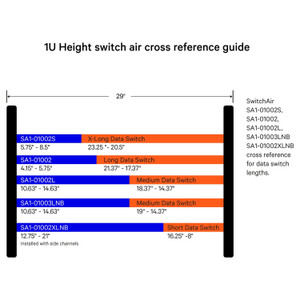
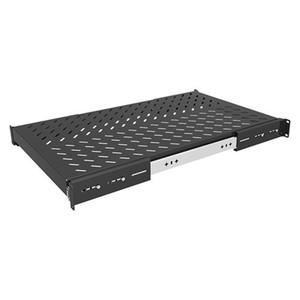
The Vertiv 17798 is a 2U passive airflow management panel designed to close off unused rack space and redirect conditioned air toward active equipment. By adjusting from 5.75 inches to 8.5 inches, the 17798 accommodates varying rack depths and mixed-depth equipment configurations without requiring tools or custom fabrication. If your data center or wiring closet is bleeding cold air through open rack slots — driving up cooling costs and creating hotspots — this is the component that closes the loop.
Passive airflow management is one of the most cost-effective improvements available in a populated rack environment. Unlike powered alternatives, the 17798 requires no wiring, no configuration, and no maintenance. It simply occupies the 2U gap and forces air through equipment that needs it rather than escaping through open space. For infrastructure deployments where rack density is increasing and cooling efficiency matters, blanking panels and airflow managers are not optional — they are load-bearing parts of the thermal design.
Key Features
- Adjustable depth: 5.75in to 8.5in: The telescoping design covers a 2.75-inch range, which means it fits shallow 2-post open-frame racks as well as deeper 4-post enclosed cabinets without requiring a separate SKU per rack type. One panel covers most standard rack depth variants in a mixed-infrastructure environment.
- 2U form factor: Two rack units of coverage per panel — practical for filling equipment gaps left by servers, switches, or storage units that don't stack cleanly. A pair of these covers a 4U gap; three cover 6U. Plan the fill before you order.
- Passive operation: No power draw, no fan noise, no failure modes. The 17798 contributes nothing to your rack's power budget and adds zero management overhead. In facilities where uptime and simplicity are the priority, passive components are always preferred over active alternatives when they can do the job.
- Rack gap sealing: Open rack slots in a hot-aisle/cold-aisle arrangement allow cold air to bypass equipment and mix with exhaust heat before it reaches equipment intakes. Sealing these gaps with the 17798 can meaningfully improve inlet temperatures — the exact delta depends on your cooling architecture and rack fill ratio, but even modest improvements reduce CRAC unit workload.
- Commercial-grade construction: Built to Vertiv's data center infrastructure standards, this is not a sheet-metal blank — it's an engineered airflow component designed for environments where thermal management is a system-level concern.
- Tool-free or minimal installation: The adjustable panel drops into standard EIA-310 rack mounting positions. No custom cutting, no adhesive, no permanent modification to the rack cabinet.
Integration and Compatibility
The 17798 is compatible with standard 19-inch EIA-310 rack cabinets across manufacturers. The 5.75-to-8.5-inch depth adjustment range makes it suitable for most network infrastructure racks as well as server and storage enclosures. It is not rated for environments requiring active airflow direction (e.g., side-to-side cooling architectures) — passive blanking panels are appropriate for front-to-rear airflow configurations that follow hot-aisle/cold-aisle containment design.
If your rack contains equipment with rear-facing exhaust that conflicts with front-to-rear airflow assumptions, assess your airflow architecture before ordering blanking panels — passive management assumes a defined airflow direction. For environments building out structured rack infrastructure, pairing this with proper cable management and rack planning will yield the most consistent thermal performance.
Frequently Asked Questions
Q: What rack depth range does the Vertiv 17798 cover?
A: The 17798 adjusts passively from 5.75 inches to 8.5 inches in depth, covering most standard 19-inch rack cabinet configurations including shallow open-frame and deeper enclosed cabinets.
Q: How many rack units does the 17798 occupy?
A: The 17798 is a 2U panel. It fills two rack unit positions per panel installed.
Q: Does the Vertiv 17798 require any power or cabling?
A: No. The 17798 is a fully passive component — no power, no data connections, and no configuration required. It adds zero load to your rack's power budget.
Q: What airflow direction is the 17798 designed for?
A: The 17798 is designed for standard front-to-rear airflow configurations consistent with hot-aisle/cold-aisle containment. It is a passive gap-sealer and is not appropriate for side-to-side or non-standard airflow architectures.
Q: Is the 17798 compatible with all 19-inch rack cabinets?
A: The 17798 is designed for standard EIA-310 19-inch rack mounting positions and is compatible across major rack cabinet manufacturers. Verify your rack's internal depth falls within the 5.75–8.5-inch adjustment range before ordering.
The 17798 is the component most integrators remember to order last and regret skipping first. The 2U passive panel with its 5.75-to-8.5-inch depth adjustment is simple on paper, but in practice it's what prevents a freshly commissioned rack from developing a hotspot six months after go-live because nobody filled the gap left by a decommissioned appliance.
Technical Highlights:
- Adjustable 5.75–8.5in depth range: A single SKU covers shallow and deep rack variants — eliminates the need to stock multiple blanking panel sizes for mixed-depth infrastructure deployments.
- 2U passive fill: No power, no maintenance, no failure modes. Two rack units sealed per panel with zero ongoing operational cost or management overhead.
- Front-to-rear airflow optimization: Closing open rack slots in a hot-aisle/cold-aisle layout stops cold bypass air from mixing with exhaust heat before it reaches equipment intakes — directly reducing CRAC unit workload.
Deployment Considerations:
- Before installing, confirm your rack's internal depth falls between 5.75 and 8.5 inches — the panel won't extend beyond its 8.5-inch maximum, so deeper cabinet interiors won't be fully spanned.
- Passive blanking only works in front-to-rear airflow architectures. If your facility uses in-row cooling with side-entry airflow or non-standard containment, the 17798 won't address your gap-sealing problem and a different solution is needed.
The 17798 belongs in any rack refresh or new-build project where equipment doesn't fill the cabinet cleanly — particularly in edge deployments, wiring closets, and secondary server rooms where cooling efficiency is constrained and hotspot risk is real.