Vertiv VP7N50A0 Switched Outlet-Level Monitored Vertical PDU
Overview
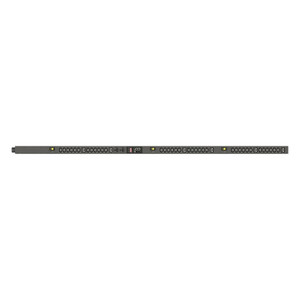
The Vertiv VP7N50A0 is a zero-U vertical rack PDU engineered for high-density three-phase deployments where per-outlet control and granular power visibility are non-negotiable. Rated at 50A / 208V Delta with a 14.4kW load capacity, this unit delivers outlet-level switching across 24 C13 receptacles — giving data center and network operations teams the ability to remotely cycle individual devices without touching the rack. If you're managing servers, storage arrays, or network gear at scale and still rebooting equipment by hand, this is the PDU that changes that workflow.
Mounted vertically in 0U space (rail-mounted alongside the rack), the VP7N50A0 keeps your horizontal rack units free for revenue-generating gear. The 3-meter input cable provides enough reach to route cleanly to a floor-mounted distribution panel or overhead busway without forced cable management compromises.
Key Features
- Per-Outlet Switching (24 C13 Outlets): Each of the 24 C13 outlets can be independently switched on, off, or power-cycled via the network interface — no more dispatching hands-and-eyes to remote sites just to reboot a hung server. For multi-tenant colocation or branch IT rooms, this is the single feature that justifies the unit's cost on the first remote reboot call you avoid.
- 50A / 208V Three-Phase Input at 14.4kW: Operating on 200–240V three-phase Delta at 50A, the VP7N50A0 handles serious rack loads. At 14.4kW capacity, it can support a fully loaded high-density compute rack without hitting derating thresholds on an average circuit. Verify your facility's circuit protection matches the 50A draw before installation.
- Outlet-Level Current, Voltage, and Power Monitoring: The unit reports current, voltage, power, and temperature at the outlet level — not just at the input. This means you can see precisely which device is spiking, trending toward a trip, or drawing idle phantom load. Power budgeting across a rack becomes an actual data exercise rather than a guess.
- Dual RJ-45 Ethernet Ports: Two onboard Ethernet ports support daisy-chaining of multiple PDU units on a single network drop — a significant wiring advantage in a dense row of racks where running individual Ethernet runs to each PDU would be impractical. The daisy-chain topology keeps cable density manageable.
- Enterprise Protocol Suite — SNMP v1/v2c/v3, Modbus TCP, TACACS+, RADIUS, LDAP: The VP7N50A0 integrates natively with enterprise DCIM, BMS, and SNMP-based monitoring platforms. SNMP v3 provides authenticated, encrypted polling — required in any environment with a security posture beyond basic monitoring. TACACS+ and RADIUS mean you can enforce role-based access control through your existing AAA infrastructure rather than managing local PDU credentials. Modbus TCP extends integration reach to building management systems and industrial monitoring tools.
- SSH, HTTPS, and IPv6 Support: All management traffic can be secured via SSH or HTTPS, and the unit supports IPv6 alongside IPv4 — relevant for organizations mid-transition to IPv6 addressing or running dual-stack data center networks. HTTP is available but should be disabled in production environments as a basic security hygiene step.
- NTP, SMTP, Syslog Integration: NTP sync keeps event timestamps accurate for log correlation. SMTP alerts route power events directly to operations email. Syslog forwarding pushes PDU events into your centralized log management platform — useful when you need a complete audit trail of outlet state changes and alarm events alongside server and network logs.
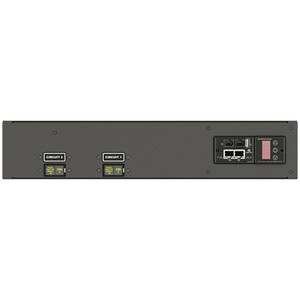
- LED Display and Indicators: The onboard LED display and status indicators provide local visibility without requiring a laptop or network connection — useful during initial commissioning or when the network is down and you need to assess load status in person.
- USB Port for Local Management: The single USB port supports local out-of-band configuration and firmware updates — valuable when network access to the PDU is unavailable during initial setup or recovery scenarios.
- Reset Button: A hardware reset button provides a path back to factory defaults if credentials are lost or the management interface becomes inaccessible — important for long-lifecycle data center equipment that may outlast multiple IT team rotations.
Integration & Compatibility
The VP7N50A0 is designed for integration into existing enterprise monitoring ecosystems. SNMP v1/v2c/v3 MIB support enables plug-in compatibility with leading DCIM platforms and network management systems including SolarWinds, PRTG, Nagios, and similar SNMP-capable tools — check your platform's Vertiv MIB support before deployment. Modbus TCP opens integration with building management systems (BMS) and industrial control environments where Modbus is the native protocol.
RADIUS and TACACS+ integration means the PDU can authenticate against Active Directory via RADIUS proxy or directly against a TACACS+ server, keeping user management centralized. LDAP support provides an additional directory-services authentication path.
The daisy-chain capability via dual RJ-45 ports allows multiple VP7N50A0 units to share a single network connection, reducing switch port consumption in high-PDU-density deployments. Confirm your Vertiv management software version supports the daisy-chain topology for your specific installation count before committing to this wiring approach.
Input voltage range of 200–240V with 50/60 Hz support makes this unit suitable for both North American 208V three-phase distribution and international 230V environments, though the 50A / L21-30 or equivalent input connector type should be confirmed against your facility's panel configuration prior to ordering.
Frequently Asked Questions
Q: What is the difference between a switched PDU and a monitored PDU — does the VP7N50A0 support both?
A: A monitored PDU only reads and reports power data; a switched PDU adds remote on/off/reboot control per outlet. The VP7N50A0 is a switched outlet-level monitoring PDU, meaning it provides both real-time monitoring (current, voltage, power, temperature) and remote per-outlet switching control via its network interface.
Q: Can I manage multiple VP7N50A0 units from a single network connection?
A: Yes. The VP7N50A0 has two RJ-45 Ethernet ports that support daisy-chaining, allowing multiple PDU units to share a single upstream network port. This reduces the number of switch ports required in a row of racks with multiple PDUs.
Q: What network protocols does the VP7N50A0 support for integration with DCIM or BMS platforms?
A: The unit supports SNMP v1/v2c/v3, Modbus TCP, HTTP, HTTPS, SSH, SMTP, Syslog, NTP, DHCP, LDAP, RADIUS, TACACS+, RSTP, and both IPv4 and IPv6. This covers the majority of enterprise monitoring, DCIM, and building management system integration requirements.
Q: What authentication methods are supported for user access control?
A: The VP7N50A0 supports RADIUS, TACACS+, and LDAP for centralized authentication and role-based access control, in addition to local credential management. This allows integration with existing enterprise AAA infrastructure.
Q: What is the input power specification and what facility infrastructure does this PDU require?
A: The VP7N50A0 operates at 200–240V, three-phase Delta, 50A input, delivering up to 14.4kW. It requires a dedicated 50A three-phase circuit with the appropriate input connector at the panel. Verify circuit protection, breaker sizing, and connector type with your facilities team before installation.
Q: Does the VP7N50A0 take up rack unit space?
A: No. This is a 0U vertical PDU that mounts vertically alongside the rack rail, leaving all horizontal rack units free for servers, switches, and other equipment.
The VP7N50A0 is the PDU I'd spec for a high-density three-phase row where the operations team needs real remote control — not just monitoring dashboards. The combination of per-outlet switching on all 24 C13 receptacles with a full enterprise protocol stack (SNMP v3, TACACS+, Modbus TCP) puts this unit in a different category from basic metered PDUs, and the dual-port daisy-chain design means you're not burning a switch port for every PDU in the row.
Technical Highlights:
- 50A / 208V Three-Phase, 14.4kW: At 14.4kW on a single unit, you can load a high-density compute or storage rack without hitting derating limits — meaningful when you're running NVMe storage shelves or GPU nodes that push 8–12kW per rack.
- SNMP v3 + TACACS+ + RADIUS: Authenticated encrypted SNMP polling plus centralized AAA — this is the protocol combination that satisfies most enterprise security audits. SNMP v1/v2 should be disabled at commissioning; the v3 support means there's no reason to leave cleartext polling active.
- Outlet-Level Current, Voltage, Power, and Temperature Monitoring: Four metrics per outlet, not just per-PDU totals. This is what separates outlet-level monitoring from input-level monitoring — you can identify exactly which device is trending toward a trip before it happens, not after the breaker opens.
Deployment Considerations:
- The 3-meter input cable covers most standard raised-floor or overhead-busway installations, but measure your panel-to-rack distance before ordering — if your row is more than ~2.5m from the distribution panel, you may need an extension or different cable length variant.
- All 24 outlets are C13 — if you have C19-requiring devices (high-draw servers, large UPS bypass inputs) in the same rack, this unit won't cover them. Plan your outlet-type mix at the rack design stage, not after the PDU is installed.
This PDU is the right fit for a colocation operator or enterprise IT team managing multi-tenant high-density racks where remote outlet control and DCIM-grade monitoring are operational requirements, not nice-to-haves — specifically in 208V three-phase environments running 30A–50A per rack.