Vertiv VP7U20A1 Switched Vertical PDU with Outlet-Level Monitoring
Overview
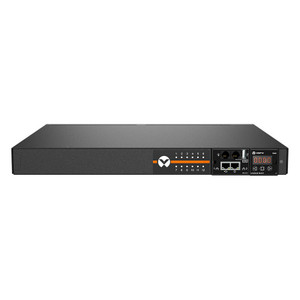
The Vertiv VP7U20A1 is a 1U-profile vertical rack PDU built for data center and server room deployments where granular power control and real-time outlet-level monitoring are non-negotiable. Rated at 20A/3600W with a C20 input plug and 24 mixed C13/C19 outlets, it delivers the switching flexibility and protocol depth that IT architects need to manage dense rack environments without relying on manual intervention or on-site staff. With dual Ethernet ports, a full enterprise protocol stack, and a front-panel LCD, the VP7U20A1 fits naturally into existing DCIM and network management frameworks.
Key Features
- Outlet-Level Switched Control: Each of the 24 outlets can be individually switched on, off, or power-cycled remotely — critical for rebooting locked servers, staged power sequencing during maintenance windows, or isolating a misbehaving device without touching the rest of the rack.
- 24 Mixed C13/C19 Outlets: The combination of C13 and C19 receptacles means you can serve both standard 1U/2U servers drawing under 10A and higher-draw devices like blade chassis or GPU servers pulling 16A+ from the same PDU — no need for a second unit to handle mixed workloads.
- 20A / 3600W Maximum Capacity: At 100–240V input and up to 3600W maximum power, this unit handles fully loaded racks. The C20 coupler input matches standard 20A whips already deployed in most raised-floor and hot-aisle containment environments.
- Dual Gigabit Ethernet (RJ-45) Ports: Two network ports support out-of-band management network separation or daisy-chain topologies — keeping management traffic off the production LAN without requiring a dedicated switch port for every PDU in the row.
- Enterprise Protocol Stack: SNMP v1/v2c/v3, RADIUS, LDAP, TACACS+, Modbus TCP, SSH, HTTPS, IPv4/IPv6, Syslog, NTP — this is the full protocol set expected in managed enterprise environments. SNMP v3 in particular means encrypted, authenticated polling rather than the cleartext trap forwarding that SNMP v1/v2c expose. RADIUS/LDAP/TACACS+ integration means access credentials are managed centrally, not per-device.
- Front-Panel LCD Display: Local status and readings available directly on the unit — useful during commissioning or when a network outage takes remote management offline. No laptop or phone required for a quick current reading at the rack.
- Serial Console Port: The single RS-232 serial port provides an out-of-band console path independent of the Ethernet management interface — important when IP connectivity to the PDU itself is lost and you need a direct CLI session to recover configuration.
- USB Port: The USB port supports firmware updates and configuration backup/restore via local media — no network required for maintenance operations, which matters in air-gapped or restricted environments.
- Wide Input Voltage Range: 100–240V / 50–60Hz input compatibility means a single SKU works in North American 120V environments, 208V three-phase-derived circuits, or 230V international deployments — reducing the number of PDU SKUs you need to stock across multi-site rollouts.
- Vertical Mounting Form Factor: At 1683mm depth (the long axis runs vertically in the rack), this PDU mounts in the zero-U space at the rear or side of a standard 42U cabinet, preserving all front rack units for compute and network gear.
Integration & Compatibility
The VP7U20A1 supports Modbus TCP alongside the standard SNMP/HTTP/HTTPS stack, which means it can integrate into building management systems (BMS) and DCIM platforms that speak Modbus natively — a practical advantage in facilities where power monitoring is managed at the BMS layer rather than through a dedicated PDU management console. SNMP v3 with AES/SHA authentication plugs directly into enterprise NMS platforms such as SolarWinds, PRTG, or Nagios without additional middleware. The dual Ethernet ports accommodate both dedicated out-of-band management VLANs and daisy-chain PDU topologies common in high-density rows where switch port counts are limited.
Frequently Asked Questions
Q: What is the maximum current and power draw supported by the VP7U20A1?
A: The VP7U20A1 supports a maximum of 20A and 3600W. Input voltage range is 100–240V at 50–60Hz, so the 3600W ceiling applies at higher voltage (230V/208V circuits). At 120V the practical maximum is closer to 2400W at 20A.
Q: How many outlets does the VP7U20A1 have, and what types?
A: It provides 24 AC outlets in a mix of C13 and C19 coupler types. C13 outlets serve standard servers and 1U/2U equipment; C19 outlets accommodate higher-draw devices such as blade chassis, dense storage, or GPU servers.
Q: Does the VP7U20A1 support SNMP v3?
A: Yes. The supported network protocol list includes SNMP v1, v2c, and v3. SNMP v3 provides encrypted, authenticated communication, which satisfies most enterprise and government security policies that prohibit cleartext SNMP.
Q: Can the VP7U20A1 integrate with RADIUS or LDAP for centralized authentication?
A: Yes. The unit supports RADIUS, LDAP, and TACACS+ — all three major enterprise AAA protocols — so user credentials and access policies can be managed centrally rather than configured on each PDU individually.
Q: What mounting orientation does the VP7U20A1 use?
A: It is designed for vertical mounting at 1683mm in length, fitting in the zero-U space at the rear or side of a standard rack cabinet. This preserves front rack unit space for compute and network equipment.
Q: Does the VP7U20A1 support IPv6?
A: Yes. Both IPv4 and IPv6 are listed in the supported network protocols, making it compatible with dual-stack and IPv6-only management networks.
The VP7U20A1 is one of those PDUs I recommend when the conversation is about control, not just capacity. The outlet-level switching on all 24 ports combined with SNMP v3 and TACACS+ means you get per-outlet remote reboot capability with fully audited, encrypted access — something that matters when you're managing colocated racks or multi-tenant environments where a support technician shouldn't have unchecked physical access to cycle gear.
Technical Highlights:
- Protocol Depth — SNMP v3 + Modbus TCP: Most managed PDUs stop at SNMP v2c; having v3 with authentication and encryption closes the audit gap that SNMP v2c leaves open. Modbus TCP is the bonus — it means the same PDU feeds both IT NMS and OT/BMS platforms without a protocol translator in the middle.
- Dual Ethernet Ports: Two RJ-45 ports let you separate management traffic onto a dedicated VLAN or daisy-chain multiple PDUs in a row without consuming additional switch ports — a practical benefit in high-density deployments where management switch port budgets are tight.
- 3600W / 20A at Wide Input Range: The 100–240V / 50–60Hz range means this SKU travels across North American 120V, data center 208V, and international 230V installations without a hardware swap. At 20A maximum, it handles a densely loaded 42U cabinet on a single whip.
Deployment Considerations:
- Verify the C20 input plug matches your rack's existing power whip before ordering — C20 is the correct mate for C19 PDU inlets on 20A circuits, but retrofitting a cabinet wired for C19 whips requires an adapter or new whip.
- The 1683mm vertical length fits standard 42U cabinets with rear vertical mounting channels, but measure your cabinet's usable vertical channel depth before ordering — some zero-U channels in shorter 36U or 40U cabinets may not accommodate the full length.
For a colocation provider or enterprise IT team managing high-density compute rows where remote reboot, per-outlet metering, and centralized AAA are mandatory — not nice-to-have — the VP7U20A1 is the right tool. It is particularly well-suited to rows running mixed-wattage devices where C13/C19 flexibility and 3600W headroom eliminate the need for a second PDU circuit to handle outlier high-draw nodes.