Vertiv VP7N11A0 Switched Outlet-Level Monitoring PDU, 15A 120V 1.4kW Horizontal 6-Outlet
Overview
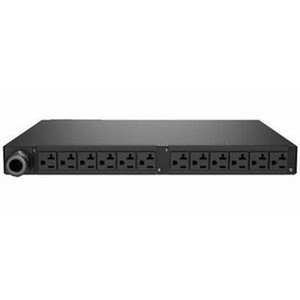
The Vertiv VP7N11A0 is a horizontal, outlet-level switched and monitored rack PDU rated at 15A/120V (1.4kW) with six individually controllable NEMA 5-15R/5-20R receptacles. Designed for IT infrastructure environments where remote outlet management and granular power monitoring are non-negotiable — think edge deployments, server closets, and co-lo cages where a technician can't always be on-site to cycle a hung device. This unit pairs outlet-level switching with real-time current, voltage, and power monitoring through a front-panel LCD and full network management stack, making it a practical fit for operations teams managing mixed-load racks remotely.
Browse the full Vertiv power management catalog or explore the broader rack PDU category to compare models across amperage and outlet configurations.
Key Features
- Per-Outlet Switching: Each of the six NEMA 5-15R/5-20R outlets can be switched on, off, or power-cycled independently via the network interface. When a server locks up at 2 AM and a remote reboot is all that's needed, per-outlet control eliminates a truck roll — that's the core value of a switched PDU over a monitored-only unit.
- Real-Time Current, Voltage, and Power Monitoring: The VP7N11A0 measures all three parameters continuously and surfaces them through the front LCD, SNMP, and the web interface. Knowing actual draw per outlet — not just aggregate — lets you load-balance before you trip a breaker and get meaningful capacity planning data for the rack.
- 15A/120V Input via NEMA L5-15P, 1.4kW Capacity: The locking L5-15P input plug connects directly to standard 15A branch circuits common in North American data closets. At 1.4kW nominal capacity, plan for 80% derated usage (roughly 1.12kW continuous) to keep within NEC best practices — that's your real working budget when populating outlets.
- LCD Front Panel: The onboard display gives local visibility into load and status without requiring a laptop or network connection during initial commissioning or physical inspection. Useful in dense rack environments where pulling up a browser isn't always practical.
- Horizontal 0U Mounting: Mounts horizontally in a standard rack without consuming a rack unit. The 3-meter power cord provides enough reach to route to most rack PDU whips without extensions — verify your cabinet depth and whip position before ordering.
- Dual Protocol Support — SNMP v1/v2c/v3 + Modbus TCP: SNMP v3 handles encrypted authenticated polling for most NMS and DCIM platforms. Modbus TCP support is the less-common addition that matters in OT-adjacent environments (building automation, industrial control) where BACnet/Modbus is already the monitoring fabric — you don't need a protocol bridge.
- Enterprise Authentication Protocols — LDAP, RADIUS, TACACS+: Integrates directly with existing enterprise directory services and AAA infrastructure. Rather than managing a separate credential silo for the PDU, assign access via the same AD/LDAP groups controlling your network gear. TACACS+ support specifically appeals to teams running Cisco ISE or similar.
- Dual-Stack IPv4/IPv6 via RJ-45 Ethernet: Single Ethernet port for network management. IPv6 dual-stack means the unit is ready for modern network architectures without NAT workarounds — relevant in government and academic environments already running IPv6.
- HTTPS + SSH Encrypted Management: All remote access — web UI and CLI — is encrypted by default. HTTP and unencrypted Telnet are optionally available but should be disabled in any security-conscious deployment. The unit also supports NTP for synchronized event timestamps in Syslog output, which matters for incident correlation.
- USB + Serial Console Ports: The single serial (RJ-45) and USB ports support out-of-band management and firmware updates without requiring network access. Essential for initial setup in environments where DHCP isn't pre-configured on the management VLAN.
Integration and Compatibility
The VP7N11A0 supports SNMP v1, v2c, and v3, making it compatible with virtually any enterprise NMS or DCIM platform that polls standard power MIBs — including Vertiv's own Trellis platform, as well as third-party tools like SolarWinds, PRTG, and Nagios. Modbus TCP extends compatibility to BAS and industrial monitoring systems. LDAP, RADIUS, and TACACS+ authentication allows the PDU to integrate into existing enterprise identity infrastructure without local account proliferation. Syslog output routes power events (outlet state changes, load alerts) into SIEM platforms for audit trails.
For environments requiring structured power redundancy, consider pairing this PDU with a compatible UPS system upstream to protect the 15A branch circuit. Planning a full rack power strategy? The rack power planning guide covers load calculations, redundancy tiers, and PDU selection criteria.
Frequently Asked Questions
Q: Can I control individual outlets remotely on the VP7N11A0, or only monitor them?
A: Both. The VP7N11A0 is a switched and monitored PDU — each of the six outlets can be individually switched on, off, or power-cycled remotely via the web interface, SSH CLI, or SNMP. This is distinct from a monitored-only PDU, which provides readings but no remote switching capability.
Q: What input plug does the VP7N11A0 use, and what branch circuit does it require?
A: The VP7N11A0 uses a NEMA L5-15P locking plug on a 3-meter cord. It requires a 15A, 120V branch circuit. Per NEC 80% continuous load guidelines, plan for a maximum continuous draw of approximately 1.12kW (80% of the 1.4kW rated capacity).
Q: What network protocols does the VP7N11A0 support for monitoring and management?
A: The unit supports DHCP, HTTP, HTTPS, IPv4, IPv6, LDAP, NTP, RADIUS, RSTP, SSH, SMTP, SNMP (v1/v2c/v3), Syslog, TACACS+, and Modbus TCP. For most enterprise environments, SNMP v3 and HTTPS are the primary management paths; Modbus TCP is available for OT and building automation integration.
Q: What outlet types are on the VP7N11A0, and can I plug 20A devices into it?
A: The VP7N11A0 has six outlets rated for both NEMA 5-15R and NEMA 5-20R device plugs. However, the PDU input is rated at 15A total — plugging 20A-rated devices does not give you 20A per outlet. The 15A branch circuit remains the limiting factor for aggregate load.
Q: Does the VP7N11A0 take up rack unit space?
A: No. The VP7N11A0 is a horizontal 0U PDU — it mounts horizontally in the rack (typically along the top, bottom, or side depending on your cabinet) without consuming a rack unit. Verify your cabinet's horizontal PDU channel or mounting provisions before ordering.
Q: What authentication methods does the VP7N11A0 support for user access?
A: The VP7N11A0 supports LDAP, RADIUS, and TACACS+ for enterprise authentication, allowing access control to integrate with existing directory services (Active Directory, FreeRADIUS, Cisco ISE) rather than relying solely on local user accounts.
The VP7N11A0 sits in a specific and useful niche: it's a 15A/120V horizontal PDU that combines outlet-level switching with per-outlet power monitoring in a 0U horizontal form factor. That combination — not just monitoring, not just switching, but both at the outlet level — is what separates it from cheaper monitored-only units in the same price band. In edge deployments and small server closets where you're managing a mix of network gear, compute, and storage on a single 15A circuit, the ability to cycle a specific outlet without touching everything else on the strip is operationally significant.
Technical Highlights:
- SNMP v3 + Modbus TCP dual protocol: SNMP v3 with authentication and encryption is the right default for any NMS integration. The addition of Modbus TCP is unusual at this PDU tier and specifically useful in environments where building automation or industrial monitoring systems are already deployed — avoids a protocol gateway entirely.
- NEMA L5-15P locking input on 3m cord: The locking plug prevents accidental disconnection on vibration-prone or high-traffic installations. The 3-meter cord length is typically sufficient for routing to a rack whip, but measure your cabinet before ordering if the PDU won't sit directly below the whip connection point.
- LDAP/RADIUS/TACACS+ authentication: In any environment with more than one person managing infrastructure, centralized authentication isn't optional. TACACS+ support specifically means this PDU integrates cleanly into Cisco ISE or similar AAA environments — no separate local account to audit or rotate credentials on.
Deployment Considerations:
- The 15A input is the hard ceiling. With six outlets capable of accepting 20A device plugs (NEMA 5-20R), it's easy to assume more headroom than exists. Derate to 1.12kW continuous (80% of 1.4kW rated) and account for inrush on server boot before finalizing your load plan.
- Initial setup requires either DHCP pre-configured on your management VLAN or local access via the serial console port. The USB port supports firmware updates out-of-band — if you're deploying in a secure environment with no DHCP on the management network, have a USB drive and the firmware package ready before racking.
This PDU is well-suited to edge IT closets, small co-location deployments, and branch office server rooms where a 15A/120V circuit is the standard branch feed and remote outlet-level control is needed to avoid dispatching a technician for routine device reboots.