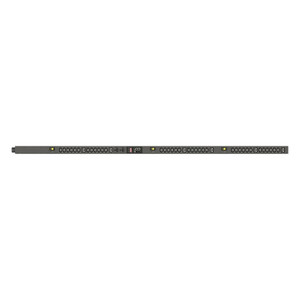
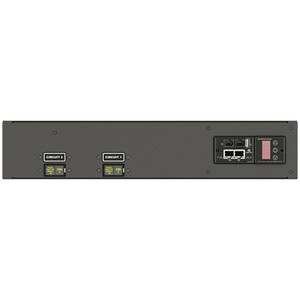
Vertiv VP6N50A1 Monitored Outlet-Level Rack PDU, 50A 208V Delta, 14.4kW, 0U Vertical
Overview
The Vertiv VP6N50A1 is a three-phase, outlet-level monitored rack PDU rated at 50A / 208V Delta, delivering up to 14.4kW of managed power across 36 C13 locking outlets in a 0U vertical form factor. If you're deploying dense compute or storage racks where individual outlet accountability matters — think colocation cabinets, high-density HPC rows, or enterprise data center rows where per-port metering is the baseline expectation — the VP6N50A1 gives you that granularity without burning rack unit space. The unit measures current, voltage, power, and temperature at the outlet level, feeding telemetry upstream via dual RJ-45 Ethernet ports and a full enterprise protocol stack.
Key Features
- Outlet-Level Monitoring (Current, Power, Voltage, Temperature): Most monitored PDUs measure at the input or branch level — this unit goes per-outlet. That means you can identify the exact receptacle driving a capacity anomaly, not just narrow it to a branch. In dense colocation or multi-tenant rows, per-outlet metering is what makes chargeback reporting accurate and meaningful.
- 36 C13 Locking Outlets: Locking C13 receptacles prevent accidental cable pull — a real operational concern in high-vibration environments or busy colocation floors where cable management is shared. 36 outlets at 50A / 14.4kW gives you headroom for high-density server and storage deployments without daisy-chaining units.
- 50A / 208V Delta, 14.4kW Capacity: Running 208V Delta three-phase at 50A puts you firmly in high-density territory. The 14.4kW rating per PDU supports rack loads that would oversubscribe single-phase alternatives. Size your branch circuits and panel accordingly — a 50A three-phase input requires matched breaker and whip infrastructure.
- 0U Vertical Form Factor: The zero-U vertical mount preserves every rack unit for compute. Side-mount it in a standard 42U or 48U open-frame or enclosed rack using the included mounting points. Vertical orientation also improves cable egress management compared to horizontal PDUs in tall racks.
- Dual RJ-45 Ethernet + Daisy-Chain Support: Two Ethernet ports let you assign a dedicated management VLAN while keeping a pass-through path available. Daisy-chain capability means you can network multiple PDUs through a single IP address, reducing switch port consumption in environments with many cabinets.
- Enterprise Protocol Stack — SNMP v1/v2c/v3, HTTPS, SSH, RADIUS, TACACS+, LDAP, Modbus TCP: SNMP v3 with RADIUS and TACACS+ means this PDU fits natively into enterprise AAA infrastructure. Modbus TCP expands BMS integration options for facilities teams running building management systems alongside IT monitoring. HTTPS and SSH close the plaintext management surface — critical for any environment with compliance requirements.
- IPv4 / IPv6 Dual-Stack + DHCP / NTP / Syslog: Dual-stack IP support future-proofs management plane connectivity in environments transitioning to IPv6. NTP synchronization keeps outlet-level power event timestamps accurate for forensic log correlation. Syslog integration pushes events directly to your SIEM without requiring SNMP trap configuration.
- LED Display + LED Indicators: The onboard LED display surfaces load and status information without requiring a laptop or network access — useful during initial commissioning or when network management is unavailable. LED indicators provide at-a-glance outlet state visibility on the floor.
- Reset Button: A physical reset button allows management controller recovery without cycling the PDU's power output — meaning connected load stays up while you restore management connectivity.
- 3m Input Cable: The 3-meter (approximately 9.8 feet) input cable gives you practical reach to panel or in-row PDU tap connections. Verify this length against your floor tile grid and panel proximity before installation — short cable runs are a common cabinet deployment gotcha.
- USB Port: A single USB port supports firmware updates and configuration transfer via local media — useful for commissioning in environments where network access is restricted during initial setup.
- 50/60 Hz, 200–240V Input Range: Accepts both 50 Hz and 60 Hz at 200–240V, making the VP6N50A1 deployable in North American 208V environments as well as international 230V facilities without a hardware swap.
Integration and Compatibility
The VP6N50A1 integrates with Vertiv's rack power management line and is compatible with any rack PDU monitoring platform that supports SNMP v1/v2c/v3. The Modbus TCP protocol opens integration paths to BMS and DCIM platforms beyond traditional IT monitoring tools. LDAP and RADIUS/TACACS+ support means user authentication can be centralized in your existing directory infrastructure — no local account sprawl across dozens of PDUs. Review your power management planning guide to confirm branch circuit and whip sizing before ordering. For high-density deployments pairing this PDU with in-row cooling or intelligent rack accessories, Vertiv's ecosystem documentation covers compatible cabinet and cooling configurations. Syslog and SNMP trap destinations are configurable post-installation through the web interface or SSH CLI — plan your NMS integration during the network pre-deployment phase.
Frequently Asked Questions
Q: What input plug type does the VP6N50A1 use?
A: The VP6N50A1 is rated for 50A / 208V Delta three-phase input with a 3-meter input cable. Specific plug/connector type is not listed in available specifications — verify with your electrical contractor and confirm compatibility with your panel or PDU tap before ordering.
Q: Can I monitor individual outlet power consumption on the VP6N50A1?
A: Yes. The VP6N50A1 is an outlet-level monitored PDU — it measures current, voltage, power, and temperature at each outlet, not just at the branch or input level. This supports per-tenant chargeback reporting and precise capacity management.
Q: Does the VP6N50A1 support daisy-chaining for multi-PDU management?
A: Yes. The VP6N50A1 supports daisy-chain networking, allowing multiple units to be managed under a single IP address through its dual RJ-45 Ethernet ports. This reduces switch port consumption in multi-cabinet deployments.
Q: What authentication protocols does the VP6N50A1 support?
A: The VP6N50A1 supports RADIUS, TACACS+, and LDAP for centralized authentication, plus SNMP v3 for secure SNMP management. Local access is secured via HTTPS and SSH — plaintext HTTP and Telnet are not the only options.
Q: Is the VP6N50A1 compatible with building management systems (BMS)?
A: Yes. The VP6N50A1 supports Modbus TCP, which is the standard protocol for BMS and many DCIM platforms. This allows facilities and IT teams to pull power data into the same BMS infrastructure used for cooling and environmental monitoring.
Q: What is the physical form factor of the VP6N50A1?
A: The VP6N50A1 is a 0U vertical rack PDU — it mounts along the side of the rack, consuming no rack units. This preserves the full rack height for compute, storage, or networking equipment.
The VP6N50A1 is the unit I reach for when a customer needs genuine outlet-level accountability at high-density power loads — specifically that 50A / 208V Delta three-phase input delivering 14.4kW per PDU. At that capacity, knowing which C13 port is pulling an anomalous load matters operationally, and this unit gives you that resolution with current, voltage, power, and temperature monitoring at every outlet.
Technical Highlights:
- 36 Locking C13 Outlets at 14.4kW: The locking mechanism is underrated in colocation environments — accidental cable pull on a shared floor is a real incident vector, and locking receptacles eliminate it. At 14.4kW across 36 ports, you have meaningful per-outlet headroom for dual-corded 1U servers without hitting soft load limits on individual receptacles.
- SNMP v3 + RADIUS/TACACS+ + Modbus TCP: This combination covers both IT monitoring (SNMP v3 to your NMS) and facilities integration (Modbus TCP to BMS) without requiring a protocol gateway. RADIUS and TACACS+ keep PDU authentication inside your existing AAA infrastructure — no local password sprawl.
- Dual RJ-45 + Daisy-Chain: Two Ethernet ports with daisy-chain support means a 10-cabinet row can run through a single switch port and a single management IP. That matters when you're dealing with exhausted 1G management switch ports in a dense build-out.
Deployment Considerations:
- Confirm your panel breaker and whip are sized for 50A three-phase before the PDU ships. A 50A input at 208V Delta requires a matching breaker — typically 60A rated at 80% — and the correct L21-50 or CS8265C connector depending on your panel configuration. The 3-meter cable gives you ~9.8 feet of reach, which is adequate for most in-row panel placements but tight if your panel is across the aisle.
- The unit provides 36 C13 outlets but no C19 outlets are listed in the spec — if your load mix includes high-draw devices requiring C19 (PDU input, high-watt switches, GPU servers with C19 PSUs), plan for C19-to-C13 step-down adapters or a complementary PDU with C19 ports. Don't assume C13-only works for every device in the rack.
This PDU is best suited for enterprise colocation cabinets and high-density HPC or storage rows where per-outlet billing, DCIM integration via Modbus TCP, and AAA-compliant management access are non-negotiable requirements — not a general-purpose low-density office rack unit.