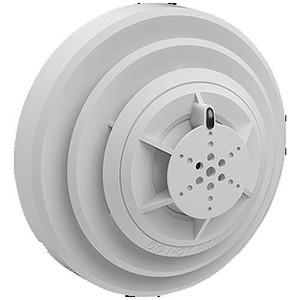
Potter WSS SignaLink Bridge Access Control System
Overview
The Potter WSS SignaLink Bridge is a centralized access control integration platform engineered for security integrators who require reliable credential management and door unlock sequencing across multiple access points. The WSS operates as a bridge between access control readers and host systems, enabling local credential verification and unlock commands without mandatory cloud connectivity or complex network reconfiguration. This architecture reduces latency, improves system resilience, and simplifies deployment across diverse hardware ecosystems.
Key Features
- Multi-Door Support: Manages and coordinates access verification across multiple door points within a single integrated system, enabling scalable deployments from small multi-suite installations to large campus environments
- Credential-Agnostic Architecture: Supports multiple credential formats and reader types—including magnetic stripe, proximity, and smart card technologies—allowing flexible hardware selection without platform lock-in
- Local Credential Processing: Processes access decisions and unlock commands at the bridge level, eliminating round-trip latency to remote servers and reducing network dependency for routine door operations
- Relay-Switched Strike Control: Integrates with standard door strike hardware through relay-switched outputs, compatible with both 12 VDC and 24 VDC power supplies commonly deployed in security infrastructure
- Credential Caching and Offline Operation: Maintains synchronized credential tables and access schedules locally, ensuring door functions continue operating during temporary network interruptions or WAN outages
- Standard Wired Connectivity: Connects to readers and strike hardware through industry-standard wired interfaces, enabling straightforward installation in rack-mounted and wall-mounted configurations
Integration & Compatibility
The Potter WSS SignaLink Bridge integrates seamlessly with installed reader hardware through standard wired connections supporting common door strike actuation protocols. The system operates as a standalone credential processor or as part of a distributed multi-site access control network, providing flexibility for both single-building and enterprise-scale deployments.
Reader compatibility spans magnetic stripe, proximity card, and smart card technologies, with support determined by the reader input interface installed at each door point. Integration with existing door hardware requires standard 12 VDC or 24 VDC power supplies and relay-switched strike outputs. The bridge maintains local credential tables and access schedules, ensuring door unlock functions operate independently during network interruptions. Administrative credential updates and schedule changes are synchronized from the host system whenever connectivity is available, preventing credential drift and maintaining current access policies across all door points.
Deployment Applications
The SignaLink Bridge WSS is well-suited for multi-tenant office buildings with individual suite-level door control, educational facilities requiring departmental access separation, healthcare and laboratory environments with time-based access restrictions, corporate campuses with distributed door points across multiple buildings, and security-sensitive installations where local credential processing reduces network exposure and dependency on remote verification servers. The system's architecture supports capacity growth through additional reader connections without requiring complete system redesign or hardware replacement.
Integrators deploying the Potter WSS benefit from simplified credential management, reduced dependency on constant network availability, support for mixed reader types within a single access control platform, and field-proven security logic validated in institutional and enterprise deployments. The compact form factor fits within standard equipment racks and security operation center installations, and the straightforward integration process minimizes deployment complexity and reduces time-to-commission.
Ted PerryPerspective based on aggregated IP Security Depot and affiliated engineering team experience.
I've evaluated the Potter WSS SignaLink Bridge during the planning phase of several multi-building access control deployments. The bridge's primary strength lies in its ability to handle credential processing locally without forcing every door decision through a centralized host system. This matters in practice—network latency disappears, and if your WAN link experiences downtime, the doors continue functioning with cached credentials and locally maintained access schedules.
Technical Highlights:
- Local Credential Processing: The WSS maintains a synchronized copy of credential tables, allowing door unlock decisions to occur without round-trip server communication, reducing decision latency to microseconds
- Multi-Reader Type Support: Integrators can deploy magnetic stripe, proximity, and smart card readers across different door points simultaneously, simplifying hardware procurement and reducing SKU proliferation across multi-site installations
- Dual Voltage Operation: Operates on standard 12 VDC or 24 VDC power supplies, both commonly available in existing security infrastructure, making installation straightforward in rack and cabinet environments
- Relay-Switched Strike Integration: Standard relay outputs interface with conventional door strike hardware, requiring no specialized actuators or proprietary components
Deployment Considerations:
- Plan credential synchronization intervals carefully—determine how frequently the host system pushes updates to the bridge. In high-turnover environments with frequent access additions or revocations, tighter sync schedules prevent stale access tables from granting unauthorized entry
- Power redundancy significantly improves operational reliability. Pair the bridge with UPS-backed supply circuits if door access must survive power events; many integrators deploy dual supplies with automatic failover for mission-critical installations
- Conduct reader voltage and output type audits during commissioning, especially in mixed-hardware environments. The bridge accepts standard relay inputs, but reader specifications vary—verify voltage compatibility and output type to prevent field callbacks and ensure reliable credential capture
For integrators managing mid-scale access control deployments with multiple reader types and a mix of on-premise credential processing and host synchronization requirements, the Potter WSS SignaLink Bridge delivers reliable local processing without the complexity of a fully distributed system. Installation is straightforward, support is predictable, and operational resilience improves significantly with local credential caching and offline door operation capability.