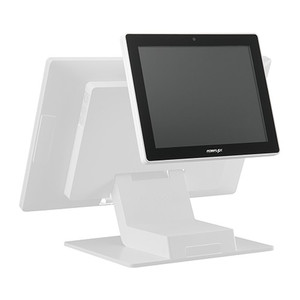
Posiflex TM3010EX1000 Secondary Projected Capacitive Touch Monitor
Overview
The TM3010EX1000 is a 9.7-inch secondary display built on projected capacitive (CapTouch) technology, designed to extend customer-facing or operator interaction surfaces in compact retail and hospitality spaces. The projected capacitive touch layer responds to fingertip input without requiring pressure — a meaningful advantage in high-volume environments where touch responsiveness directly affects transaction speed and customer experience.
Compatibility
This secondary monitor integrates into Posiflex POS systems and multi-terminal retail configurations where space constraints or workflow requirements demand a second display. Verify compatibility with your host terminal's video and USB output specifications before deployment. Consult your system integrator or the Posiflex product compatibility matrix for exact model pairing.
Installation Notes
As a secondary display, the TM3010EX1000 requires both video input (via standard connector) and USB power/touch interface connection to the primary POS terminal or controller. Position the monitor to minimize glare and optimize staff or customer sightlines; projected capacitive touch performs consistently in well-lit environments and does not require calibration after initial installation. Ensure stable power supply and protected cabling in high-traffic areas.
Why Consider This Model
The 9.7-inch form factor fits countertop footprints where 12–15-inch displays prove impractical. Projected capacitive technology eliminates touch-glass wear and supports simultaneous multi-touch input if your application requires gesture recognition or rapid input sequences. Use this monitor when secondary workflow signaling, customer prompts, or staff task displays are mission-critical but space is premium.
When to Choose a Different Model
If you need a larger display surface for detailed graphics or longer viewing distance, consider a higher-capacity secondary display in the Posiflex lineup. If your workflow does not require touch input on the secondary display, a passive non-touch secondary monitor may reduce cost and complexity.