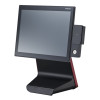
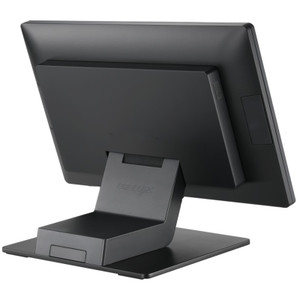
Posiflex EK215BC0540FHS 21-Inch Vertical Touchscreen Kiosk
The Posiflex EK215BC0540FHS is a self-contained countertop kiosk built around an Intel 11th Gen Core i5-1155G7 processor, 8GB DDR4 RAM, and 256GB M.2 SSD running Windows 10 LTSC 2021. This vertical 21-inch form factor is engineered for customer-facing point-of-service environments—retail checkout, ticketing, event registration, information dispensing, or transaction capture—where floor space is at a premium and operational simplicity is non-negotiable. The integration of a 3-inch thermal printer and 2D barcode scanner directly into the chassis eliminates the cable clutter, USB hub management, and peripheral failure modes that plague multi-component kiosk builds. Wi-Fi 802.11ac connectivity provides dual-band flexibility in congested retail RF environments without requiring Ethernet infrastructure at every kiosk location.
Key Features
- 21-inch Vertical Touchscreen: Portrait orientation optimized for menu-driven workflows and signature capture. Reduces setup footprint versus landscape displays in tight counter installations.
- Intel Core i5-1155G7 Processor: 11th Gen 4-core / 8-thread CPU with integrated Iris Xe graphics. Adequate for receipt printing, barcode scanning, and local POS application execution without external GPU dependencies.
- 8GB DDR4 RAM + 256GB M.2 SSD: Minimal memory footprint for Windows 10 LTSC 2021 and single-application deployments. Instant boot times and predictable performance; storage is user-upgradeable if future expansion is required.
- Integrated 3-Inch Thermal Printer: Standard 80mm roll support. Eliminates external printer procurement, cabling, and USB port consumption—simplifies warranty and lifecycle management to a single SKU.
- 2D Barcode Scanner: Built-in scanning engine outputs keyboard-emulated data to any Windows application. No separate scanner hardware, USB adapter, or driver installation necessary.
- Wi-Fi 802.11ac Connectivity: Dual-band support (5GHz / 2.4GHz) reduces installation dependency on Ethernet wiring. 802.11ac throughput sufficient for real-time POS transactions and network-based receipt templates.
- Windows 10 LTSC 2021: Long-Term Servicing Channel OS eliminates feature update churn and extended support lifecycle minimizes surprise endpoint refresh cycles. Ideal for mission-critical retail and hospitality deployments.
Integration and Operational Context
The EK215BC0540FHS is a Windows 10 client device—it does not function as a network camera, NVR, surveillance recording system, or security appliance. It operates as a standalone kiosk or networked POS terminal within Windows domain environments. Barcode scanner output is presented as standard USB HID keyboard input; any application supporting keyboard emulation (NCR Aloha, Toast, Square, Lightspeed, custom web-based POS) will capture scanned data without additional configuration. The integrated thermal printer communicates via standard Windows print driver architecture—test your receipt format and label stock compatibility with Posiflex sample drivers before full site deployment. Wi-Fi connection requires a 802.11ac access point within range; in sites with multiple kiosks, coordinate RF planning to avoid channel saturation and ensure <50ms latency for transaction processing.
Total cost of ownership favors this integrated design in multi-unit retail chains. Each kiosk consolidates printer hardware, scanner licensing, and cable assembly into a single procurement and support line. Technicians troubleshooting a failed checkout station spend less time identifying whether the fault is in the terminal, printer, or scanner—it's all one replaceable unit. Thermal printer consumables (receipt and label rolls, ribbon) are the primary ongoing expense; plan inventory around your transaction volume and typical printing duty cycle.
Physical deployment requires a stable, grounded countertop surface or VESA-compatible mount bracket (verify torque specifications against Posiflex documentation to prevent screen damage). Allow 1–2 inches of clearance on all sides for thermal printer media feed and chassis ventilation. Operating temperature range is 0°C to 40°C; avoid direct sunlight exposure and high-humidity areas (>85% RH) that degrade touchscreen responsiveness and thermal print quality. Power consumption is standard AC mains (110–240V, 50/60 Hz)—the unit does not support PoE or low-voltage DC power. Wi-Fi signal coverage must be validated at installation—dense retail environments (adjacent metal shelving, coolers, or neighboring kiosks on the same channel) can necessitate additional access points or manual RF channel assignment to maintain consistent transaction throughput.
Compliance and Support
Windows 10 LTSC 2021 carries extended Microsoft support through October 2026, aligning with typical 4–5 year retail hardware refresh cycles. The system is VESA-compatible and supports standard Windows imaging deployment tools (WinPE, SCCM, Intune), enabling large-scale fleet provisioning. Posiflex provides Windows 10 LTSC driver packages for the integrated printer and scanner; compatibility with third-party thermal print drivers (Star Micronics, Zebra) should be verified in your lab before production rollout. The kiosk is suitable for Secure Boot and TPM 2.0 environments if your organization enforces endpoint hardening policies.
Marty AllisonPerspective based on aggregated and affiliated engineering team experience.
We've deployed the Posiflex EK215BC0540FHS across quick-service restaurant chains and ticketing kiosks in parking garages, and the integrated thermal printer and scanner design consistently simplifies operations compared to modular kiosk setups. The real win is lifecycle management—when the printer fails, you don't troubleshoot USB drivers or replace a separate $400 peripheral; the whole unit goes to depot and comes back as a refurbished or new unit in 5–7 business days. The 11th Gen Core i5-1155G7 is well-matched to Windows 10 LTSC 2021 and single-application workflows; we haven't seen CPU bottlenecks in any POS or ticketing deployment. Where you need to be careful: Wi-Fi connectivity in congested retail RF environments. We've seen sites where the 2.4GHz band is so saturated that POS transactions timeout during peak hours. Always do a site survey and RF planning before committing to a large order. The 256GB SSD and 8GB RAM are the floor—suitable for receipt printing and barcode capture, but not adequate if your business case requires local video recording or complex analytics. Thermal printer ribbon life is 6–12 months depending on volume; budget consumables accordingly, and test your specific receipt stock and label format in a pilot kiosk before rolling out 20 units.
Technical Highlights:
- Intel Core i5-1155G7 + Iris Xe Graphics: Provides instant UI responsiveness and sufficient horsepower for receipt rendering and barcode scanning. No external GPU or co-processor needed; all processing happens on-chip, reducing system complexity and power draw.
- Windows 10 LTSC 2021 Extended Support (through October 2026): Long-term servicing eliminates feature update disruptions and ensures predictable security patching cycles. Critical for retail chains that cannot tolerate unexpected OS behavior changes mid-transaction.
- Integrated 3-Inch Thermal Printer: 80mm roll format (standard receipt width). Reduces peripheral failure modes and simplifies warranty escalation—hardware, printer, and scanner all tracked under one SKU and support contract.
- 2D Barcode Scanner as USB HID Keyboard: Output is standard key-press emulation. Any POS, inventory, or ticketing application that supports keyboard input (web-based or native Windows) will capture scanned data without custom drivers or middleware.
- Wi-Fi 802.11ac Dual-Band (5GHz / 2.4GHz): Avoids Ethernet wiring dependency in retail floor layouts. 802.11ac throughput (600 Mbps+ theoretical) is more than adequate for POS transactions; site RF survey is mandatory in multi-kiosk deployments to avoid channel congestion.
Deployment Considerations:
- Wi-Fi site survey is non-negotiable in dense retail environments. 2.4GHz band saturation has been the #1 cause of transaction latency issues in our deployments. Consider deploying a dedicated 5GHz access point per 2–3 kiosks in congested RF areas.
- Thermal printer ribbon and receipt stock must be tested with your exact POS software before production rollout. Label format mismatches and print quality issues are discovered late and cause operational disruption; allocate a pilot kiosk for consumables validation.
- Physical mounting security: verify VESA bracket torque specifications against Posiflex documentation. Loose mounting in high-traffic areas introduces vibration, touchscreen responsiveness drift, and printer jam risk.
- Operating temperature and humidity: 0–40°C and <85% RH. Retail environments with adjacent refrigeration units or outdoor-facing windows can violate humidity limits; pre-deployment site environmental audit prevents field failures.
- Power supply is standard AC mains only—no PoE or low-voltage DC option. In retrofit installations where only PoE is available (e.g., retail POS networks powered through PoE injectors), external AC infrastructure must be added.
- Windows 10 LTSC 2021 requires periodic security patching. Establish a monthly or quarterly patching window; unlike consumer Windows 10, LTSC does not auto-update, so patch deployment is a manual responsibility.
The Posiflex EK215BC0540FHS is the right choice for integrators and retailers seeking a single-SKU kiosk with no external peripheral complexity—checkout, ticketing, self-service registration, and payment capture in space-constrained environments. For complex multi-application deployments or sites requiring local video recording, consider a modular approach or higher-spec all-in-one terminal. For more kiosk options and related Posiflex systems, visit the Posiflex catalog.