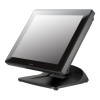
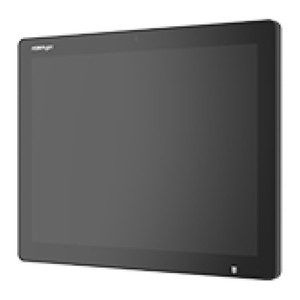
Posiflex EK2132D0400DGT 21" Landscape Touch Kiosk Thermal Printer
The Posiflex EK2132D0400DGT is a 21-inch landscape touchscreen kiosk engineered for countertop deployment in retail, hospitality, QSR, and service-counter environments. It combines an Intel Celeron J6412 processor, 4GB DDR4 RAM, 128GB M.2 SSD, and integrated PP7900EK thermal printer into a single all-in-one transaction platform running Windows 11 IoT LTSC. The purpose-built form factor eliminates external peripherals for most point-of-transaction, self-service check-in, and queue-management deployments, reducing cable clutter, footprint, and total cost of ownership on the counter or customer-facing station.
Key Features
- 21" Landscape Capacitive Touchscreen: Full HD (1920×1200) display with anti-glare optical bonding and support for multi-touch gesture input. Fast response and high visibility under fluorescent retail lighting reduce user frustration and transaction friction.
- Intel Celeron J6412 Quad-Core Processor: Fanless design (silent operation in quiet retail spaces) with sufficient throughput for POS, payment processing, and local analytics workloads. Adequate for single-kiosk or small-cluster deployments.
- 4GB DDR4 RAM, 128GB M.2 SSD: Sufficient for Windows 11 IoT LTSC base OS plus typical retail middleware (payment gateways, queue apps, check-in portals). SSD eliminates mechanical failure points and supports rapid boot/recovery cycles.
- Integrated PP7900EK Thermal Printer: 80mm roll-fed receipt printer mounted internally — no external print station required. Supports up to 203 DPI resolution for barcodes, QR codes, and promotion messaging on receipts.
- Windows 11 IoT LTSC Operating System: Long-Term Servicing Channel offers 10-year support lifecycle, security updates without forced feature upgrades, and compatibility with legacy POS and middleware applications. Ideal for unattended or low-admin environments.
- Integrated Proximity Sensor & Camera: Built-in sensors support idle-screen return, occupancy detection, and receipt-dispensing triggers without external components. Camera enables photo capture for check-in workflows or customer-facing promotional displays.
- Compact Footprint & Countertop Mounting: Designed for stable placement on standard service counters (approx. 24" W × 18" D × 4" H). Cable routing underneath reduces visual clutter; single power and Ethernet connection.
- Standard Ethernet Connectivity (RJ-45): Gigabit-capable network interface supports payment processing, cloud middleware, and optional integration into centralized fleet management or monitoring systems.
The EK2132D0400DGT hardware baseline assumes standalone deployment — each kiosk functions as an autonomous transaction device with no dependency on external NVRs, camera servers, or surveillance platforms. The embedded camera can capture check-in photos, receipt verification stills, or queue-monitoring snapshots locally; if centralized logging is required, standard HTTP or RTSP streams can be configured for optional integration into a Windows-based VMS or cloud logging service. Most retail operators, however, treat the kiosk as a self-contained POS appliance rather than a networked camera source, simplifying security posture and compliance scope.
Deployment scenarios include retail self-checkout (order placement, payment, receipt print), hospitality check-in kiosks (guest data capture, room-key issuance, receipt generation), QSR order stations (menu interaction, dietary preference capture, ticket print to kitchen), healthcare patient check-in (appointment confirmation, insurance card scanning, receipt of copay), and service-counter queue management (ticket dispensing, wait-time display, customer feedback collection). Each scenario benefits from the integrated thermal printer — eliminating the operational friction and maintenance overhead of a separate receipt station elsewhere in the workflow.
Windows 11 IoT LTSC is the critical differentiator for unattended or low-touch IT environments. Unlike consumer Windows 11, IoT LTSC decouples security patches from Windows feature updates — critical for retail chains operating hundreds of kiosks where update staging and rollback procedures carry operational cost. Fanless Celeron J6412 architecture also favors reliability in high-dust environments (QSR kitchens, warehouse receiving) where fan clogging is a common failure vector. For integrators specifying fleets of 10+ units, standardizing on this hardware baseline simplifies spare-parts inventory and training on OS configuration.
Network-attached optional upgrades include centralized management via Posiflex MMS (Merchant Management System) — enabling remote device monitoring, content updates, and transaction logging across geographically dispersed kiosks. Payment processing integrates with standard PCI-compliant gateways (Ingenico, Verifone, Square, PayPal) via HTTP/HTTPS REST APIs or legacy terminal emulation. For hospitality operators needing guest-data integration, the unit supports industry middleware connectors (Opera PMS APIs, Micros Systems integration) via Windows-native middleware running locally on the kiosk.
Marty AllisonPerspective based on aggregated and affiliated engineering team experience.
In our experience, the EK2132D0400DGT is the sweet spot for retail integrators deploying moderate-scale self-service or service-counter kiosk fleets where thermal receipt printing is non-negotiable. We've seen operators in QSR chains, hospitality groups, and retail pharmacies standardize on this form factor specifically because the integrated printer eliminates the capex and maintenance footprint of a separate receipt station — one less peripheral to cable, power, and support. The touchscreen is responsive, the Celeron processor is adequate for typical POS payloads, and Windows 11 IoT LTSC offers the stability and long-term support posture that multi-unit operators demand. That said, there are trade-offs worth understanding upfront.
The unit is not a camera-first device. Yes, it has an embedded camera for check-in photo capture or occupancy sensing, but don't spec it as a surveillance camera replacement or expect to build a centralized video analytics strategy around it. The camera is a convenience feature for standalone transaction workflows, not an IP camera suitable for networked video management. If your project requires synchronized video capture across 50+ locations for compliance or loss-prevention, you'd be better served by pairing dedicated IP cameras with headless kiosk hardware rather than treating the embedded camera as your video source of record. Similarly, the Celeron J6412 is efficient and fanless, but it's not a performance monster — avoid heavy-duty POS middleware or on-device analytics workloads that would be better suited to a core i5-based system.
Thermal printer maintenance is the operational hidden cost we often see overlooked in the RFP phase. The PP7900EK roll-feed mechanism works reliably for high-volume receipt printing, but paper jams, thermal head cleaning, and ribbon/roll replacement require hands-on technician familiarity. Budget for first-year on-site training and include spare-parts kits (thermal paper rolls, printer heads) in your service contract. Unlike belt-driven printers, thermal printers have no moving ink cartridges, which is a win; but the thermal head itself degrades over time (typically 2-3 years at high volume), so factor replacement into your lifecycle cost model.
Technical Highlights:
- Windows 11 IoT LTSC: 10-year support lifecycle with decoupled security updates — eliminates forced feature rollouts that can destabilize legacy POS middleware. On a 50-unit deployment, this means fewer compatibility surprises during your support window.
- Intel Celeron J6412 Fanless Design: No moving parts in the cooling path — critical for high-dust retail environments (QSR prep lines, warehouse receiving docks). Also eliminates acoustic noise complaints in quiet service counters.
- 128GB M.2 SSD: Solid-state storage removes mechanical failure modes common in retail kiosks subject to vibration and temperature swings. Fast boot recovery ensures minimal downtime if a kiosk crashes during transaction.
- Integrated PP7900EK Thermal Printer: 80mm roll-fed, 203 DPI capable of high-resolution barcode and QR encoding for promotional receipts or loyalty-program integration. Eliminates external print cabling and separate power supply for the printer.
- 21" Full HD (1920×1200) Landscape Display: Anti-glare bonded optical stack and wide viewing angles suit bright retail spaces with fluorescent or LED overhead lighting. Capacitive multi-touch registers finger swipes and gesture input reliably across age ranges.
- Gigabit Ethernet (RJ-45): Standard network interface supports payment gateway integration, real-time transaction logging, and optional centralized fleet management via Posiflex MMS or third-party MDM platforms.
Deployment Considerations:
- Thermal printer paper roll is an ongoing consumable — specify a service contract that includes rolls, thermal head replacements (at ~2-3 year intervals), and on-site technician training. Budget $30-60/month per unit for supplies and preventive maintenance across a fleet.
- Countertop placement requires stable furniture (no rocking or vibration) and power/network run discretely beneath the counter surface to avoid trip hazards or cable chew. Allow 6-12 inches behind the kiosk for thermal paper roll disposal and technician access to the printer compartment.
- The embedded camera is not suitable as a primary security camera for video analytics, loss prevention, or compliance video. Pair it with standalone IP cameras if your project scope includes multi-location surveillance or forensic video retention.
- Windows 11 IoT LTSC requires either a local administrator or remote MDM enrollment (Microsoft Intune or third-party device manager) to manage OS updates, security patches, and configuration drift across fleets. Plan for either on-site IT support or cloud-based device management tooling.
- POS middleware must be compatible with Windows 11 (most modern POS systems are; legacy Windows XP-era terminal emulation may require middleware bridges). Conduct a compatibility audit with your POS vendor before fleet rollout.
- The Celeron J6412 processor is adequate for single-kiosk POS loads but can become CPU-bound under sustained payment processing or on-device data analytics. For multi-terminal deployments (4+ kiosks per location), consider network-based payment processing and cloud-hosted analytics rather than offloading workload to the kiosk CPU.
The EK2132D0400DGT is the right choice for integrators building retail or hospitality kiosk fleets where integrated thermal printing is a core requirement and operational simplicity ranks above performance headroom. QSR chains, pharmacy chains, and multi-property hospitality operators have adopted this model as a standard platform precisely because it reduces deployment complexity and support overhead compared to building a custom integration around separate display, printer, and control hardware. For more details on Posiflex's full kiosk and POS hardware lineup, see the Posiflex catalog.