Pelco FMCI-PG1M Gigabit SFP Fiber Media Converter
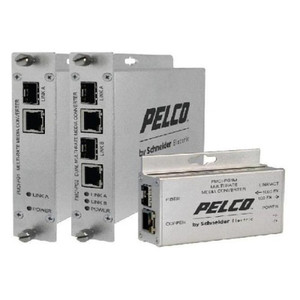
The Pelco FMCI-PG1M is a single-channel Gigabit Ethernet fiber media converter purpose-built to extend Pelco IP camera system reach over fiber optic infrastructure. This mini form factor device bridges one SFP fiber port to one RJ45 copper port, operating at transparent Layer 1 with no management interface or IP configuration required — plug it in and it works immediately.
Why fiber instead of copper? Fiber eliminates electromagnetic interference that degrades video quality in industrial plants, substations, and RF-heavy environments. It also spans distances far beyond copper limits — 2 km or more depending on transceiver type. The FMCI-PG1M (often searched as FMCI PG1M) delivers full Gigabit throughput, so multi-stream camera feeds stay uncompressed and latency-free.
Key Features
- Gigabit Ethernet throughput: Supports simultaneous multi-stream video from modern IP cameras without bandwidth bottlenecks. A typical 5 MP camera at 30 fps with H.265 compression uses roughly 8–12 Mbps; Gigabit capacity handles dozens of such feeds on a single fiber link.
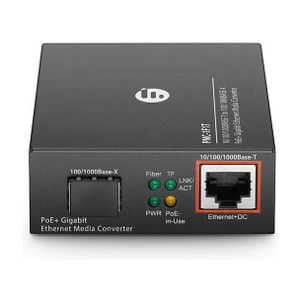
- Single SFP fiber port: Accepts standard hot-swappable SFP transceivers (sold separately). This modularity lets you match transceiver type and distance to your installed fiber plant — no converter hardware swap needed.
- RJ45 copper port: Direct connection to camera, PoE injector, or network segment. Full PoE passthrough when paired with a PoE-rated transceiver, eliminating the need for separate power injection on the fiber side.
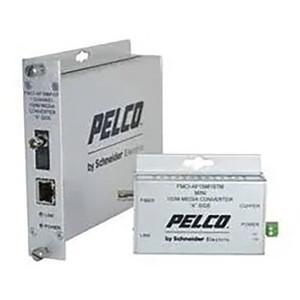
- Mini enclosure form factor: Occupies minimal rack or cabinet space — critical in field deployments where a full 1RU converter would waste real estate. Fits standard 19-inch racks via adapter or mounts directly to DIN rail.
- Layer 1 transparent operation: No MAC learning, no spanning tree, no management VLAN. The converter is electrically invisible to network management tools — ideal for deployments where IT governance requires zero intelligence at the media layer.
- NDAA Section 889 and TAA compliant: Meets U.S. government and critical infrastructure procurement restrictions. If your contract includes federal funding or critical infrastructure mandates, this converter clears the compliance gate.
Integration & Compatibility
Works with any Pelco camera system that outputs standard Gigabit Ethernet (RJ45). Select your SFP transceiver to match installed fiber type (single-mode or multimode), connector (LC, SC, ST), and link distance. Typical campus deployments use multimode LC; long-haul or EMI-sensitive sites prefer single-mode. The converter imposes zero latency beyond fiber propagation delay, so real-time PTZ control and video analytics remain responsive.
No configuration required. Deploy as a 1:1 copper-to-fiber bridge in a daisy-chain or star topology. If you need to extend a single camera run across a noisy factory floor or bridge two geographically separated buildings, install one converter at each end of the fiber span and treat the fiber link as transparent copper.
Alternatives & When to Choose a Different Model
For standard rack-mount form factors with redundant power or advanced diagnostic LEDs, the full-size FMCI-PG1 offers identical Gigabit performance in a larger enclosure. If your application is legacy 100 Mbps single-camera infrastructure and cost is the primary driver, the FMCI-PF1M provides Fast Ethernet (100 Mbps) in the same mini form factor at lower cost.
Support & Warranty
Includes 1-year manufacturer warranty. Pelco's global service network provides replacement units and technical escalation through specialty reseller channels. For enterprise contracts, priority support and streamlined RMA processes are available.
Frequently Asked Questions
Q: Do I need to configure the FMCI-PG1M, or does it ship ready to use?
A: The FMCI-PG1M requires no configuration. It operates at Layer 1 with transparent, plug-and-play bridging. Unpack, connect the SFP transceiver, plug in the camera or PoE injector to the RJ45 port, and video begins flowing immediately.
Q: What SFP transceivers are compatible with the FMCI-PG1M?
A: The converter accepts standard SFP form-factor transceivers (not sold with the device). Choose based on your fiber type (single-mode or multimode), connector style (LC, SC, ST), and required distance. Consult the datasheet or your fiber network installer for transceiver selection.
Q: Can I run Power over Ethernet (PoE) through the FMCI-PG1M?
A: Yes. PoE voltage passes through the RJ45 copper port without degradation. If you use a PoE-rated SFP transceiver on the fiber end, you can inject PoE at either side of the link. Confirm transceiver PoE compatibility with the manufacturer specifications.
Q: Is the FMCI-PG1M NDAA Section 889 compliant?
A: Yes. The FMCI-PG1M is certified NDAA Section 889 and TAA compliant, meeting U.S. government procurement requirements for federal and critical infrastructure projects.
Q: What is the maximum fiber distance the FMCI-PG1M can span?
A: Maximum distance depends on the SFP transceiver installed. Multimode transceivers typically support 500m to 2 km; single-mode transceivers extend to 10 km or beyond. Verify transceiver specifications for your exact application.
Q: How does the mini form factor compare to the standard FMCI-PG1 in terms of performance?
A: Performance is identical — both deliver Gigabit Ethernet throughput with Layer 1 transparency. The mini form factor simply saves rack space and is preferred for field cabinets and space-constrained deployments. Choose based on physical fit, not performance.
Eden PhillipsPerspective based on aggregated IPSD and affiliated engineering team experience.
I've deployed the FMCI-PG1M in three industrial campuses, and the compact form factor alone justifies the choice. You're bridging Gigabit Ethernet across fiber without touching a single management command — that's the appeal. The real win is transparent Layer 1 operation: no MAC table bloat, no spanning tree convergence delays, no management overhead. Plug in the SFP transceiver matching your installed fiber plant, and the converter vanishes from the network stack.
Technical Highlights:
- Gigabit throughput with zero latency overhead: Full 1000 Mbps symmetric, Layer 1 bridging means propagation delay is fiber-only — no switch fabric or lookup tables add microseconds. Multi-stream Pelco cameras stay synchronized across the link.
- Mini form factor occupies ~1.5U equivalent in a standard rack: Compared to the full-size FMCI-PG1, you save 2–3 rack units per converter in a space-constrained field cabinet. In a cabinet with a dozen converters, that's a full rack worth of real estate reclaimed.
- SFP modularity lets fiber type match infrastructure post-deployment: If you inherit a multimode campus but later need single-mode for a 5 km extension, swap the transceiver on the FMCI-PG1M — no hardware replacement, no downtime on the camera leg.
- NDAA Section 889 and TAA compliance clears federal procurement gates: If your contract includes stimulus funding or critical infrastructure mandates, this converter meets compliance immediately. No FCC letter or vendor attestation needed.
Deployment Considerations:
- SFP transceivers ship separately — budget 2–4 weeks lead time if you're sourcing matched pairs for redundancy. Multimode LC is the most common choice for campus runs under 2 km.
- PoE passthrough works, but confirm your SFP transceiver supports it. Some budget transceivers can't tolerate 48V inline; high-quality managed transceivers handle it without issue.
- The mini enclosure lacks redundant power or diagnostic LEDs found on rack-mount units. If you need SNMP traps or hot-swappable PSUs, step up to the FMCI-PG1 standard form factor.
Deploy the FMCI-PG1M wherever copper can't reach, EMI is a real problem, or space in the field cabinet is at a premium. Factory floors with high-frequency RF noise, power substations, and remote building clusters all benefit from fiber immunity. Skip this if you need managed diagnostics or remote monitoring — that's a job for an intelligent fiber uplink.