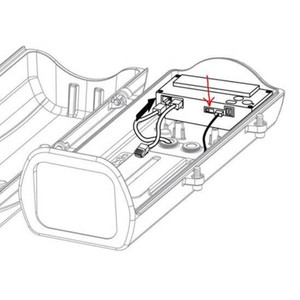
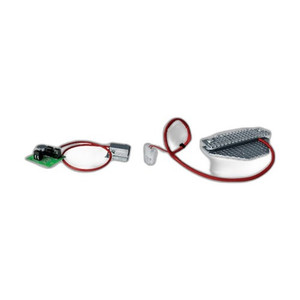
Pelco EH20-2-H Outdoor Housing Heater Blower 24Vac
The EH20-2-H is a weatherproof camera housing built for outdoor deployments in temperature-variable and condensation-prone environments. Its integrated heating and blower system — powered by 24Vac — addresses two critical failure modes in cold-climate surveillance: lens fogging from internal condensation and mechanical freeze-up that can damage sensitive optics. This makes it a targeted solution for perimeter security, traffic monitoring, and critical infrastructure sites where year-round operation without environmental control would compromise image quality or hardware longevity.
Key Features
- IP66 weatherproof rating: Direct rain and dust ingress won't degrade the housing or mounted camera — suitable for high-humidity and spray environments. Skip this if your site requires full submersion; IP67 housings are needed for that.
- Integrated 24Vac heater: Maintains operational temperature in cold climates where unheated housings would allow internal frost to form on optics. The heating function directly preserves image clarity without requiring a separate thermal control device.
- Integrated blower system: Actively removes moisture-laden air from the housing interior, preventing condensation buildup that clouds lenses and causes corrosion. This is especially valuable in humid coastal or high-precipitation zones.
- Accommodates standard fixed box cameras: The EH20 internal envelope accepts common fixed-mount surveillance cameras from the Pelco IP camera line and similar form factors. Verify mounting footprint against your specific camera model before ordering.
- 5-year warranty: Reflects manufacturer confidence in component durability and supports multi-year TCO planning for large deployments.
- NDAA Section 889 compliant: Meets U.S. federal procurement requirements for sensitive infrastructure projects, eliminating procurement friction if your buyer is a federal contractor or government agency.
Integration & Compatibility
The EH20-2-H requires 24Vac power input, typically supplied by a dedicated transformer or auxiliary power from your network video recorder control channel if available. Confirm your power source can deliver the required current before installation. The housing is designed to integrate with outdoor IP cameras in a box form factor — do not assume it will fit your current camera without cross-referencing internal dimensions against the camera's mounting profile. If you are planning NVR capacity and infrastructure, account for the heater/blower power draw on your auxiliary circuits, not your primary network power budget (PoE devices draw separately).
When to Consider Alternatives
If your deployment requires submersion-rated protection (spray washdown, full water immersion), an IP67 or higher housing is necessary. If heating and blower functionality are not required — that is, your site maintains above-freezing ambient temperature year-round and humidity is naturally controlled — a passive, non-powered housing will reduce power infrastructure and operational cost. For indoor surveillance, housing entirely unnecessary; direct mounting is simpler and more economical.
Frequently Asked Questions
Q: Does the EH20-2-H work with any camera, or only Pelco models?
A: The housing is designed for fixed box cameras within the EH20 internal envelope. It is not brand-specific, but you must verify that your camera's footprint and dimensions fit the housing mounting interface. Consult the datasheet for exact internal dimensions and cross-check your camera's specifications.
Q: What power source do I need for the 24Vac heater and blower?
A: The EH20-2-H requires a dedicated 24Vac transformer or auxiliary power output from your control system. Do not attempt to power it from a PoE injector or standard 12VDC supply — voltage mismatch will damage the heating element.
Q: Is the EH20-2-H suitable for coastal (salt-spray) environments?
A: The IP66 rating confirms protection against spray, but long-term salt-spray corrosion depends on housing material composition and drainage design. Consult the datasheet for material specifications and confirm with the manufacturer if your site involves direct salt-spray exposure.
Q: Can I use the heater and blower independently, or must both run together?
A: Operating instructions in the datasheet will clarify control logic. Typically, heating and blower functions can be controlled independently via thermostat or timer circuits, allowing you to run the blower seasonally and reserve the heater for cold months.
Q: What is the warranty on the EH20-2-H, and does it cover heating element burnout?
A: The EH20-2-H carries a 5-year warranty. Component-level coverage (heating element, motor, etc.) is defined in the warranty document. Contact the distributor or manufacturer for warranty claim procedures and coverage details.
Q: Is the EH20-2-H NDAA-compliant for federal procurement?
A: Yes, the EH20-2-H is NDAA Section 889 compliant, meaning it meets U.S. federal procurement requirements for critical infrastructure and government projects. No special approval is required for federal buyers.
James EverettPerspective based on aggregated IP Security Depot and affiliated engineering team experience.
The EH20-2-H is a straightforward accessory — no mystery here. What matters is whether your surveillance deployment actually needs active temperature and humidity management. If you're installing in a climate where frost forms inside housings or where marine-layer condensation kills cameras on a regular cycle, this housing eliminates that failure mode. The 24Vac power requirement is the constraint; make sure you have auxiliary transformer capacity before committing.
Technical Highlights:
- IP66 rating: Blocks rain and dust reliably, but does not support full submersion. Standard for outdoor fixed installations where direct washdown is not part of the environment.
- Integrated 24Vac heater: Prevents internal frost formation in below-freezing climates. This is a real operational win — passive housings routinely fail in cold zones due to lens optics clouding from internal frost. Active heating solves it directly.
- Blower system: Removes condensation-laden air, extending camera and optics lifespan in humid environments. Particularly valuable in coastal zones, rain-heavy climates, and high-humidity industrial sites.
Deployment Considerations:
- 24Vac power must be sourced separately from your PoE infrastructure. Plan for a dedicated transformer; do not attempt to scavenge PoE-powered auxiliary outputs.
- The housing is designed for fixed box cameras. Verify your camera's mounting footprint fits the EH20 envelope before procurement — a camera too large or oddly shaped will not mount cleanly.
- Heating and blower runtime can typically be controlled independently, so you can run seasonal logic (heater in winter, blower in humid months) rather than both simultaneously. This reduces power consumption and heating-element wear.
Deploy the EH20-2-H in perimeter and critical infrastructure surveillance where multi-season uptime is non-negotiable and passive environmental protection is insufficient. Cold coastal warehouses, offshore or high-altitude sites, and humid industrial perimeters are the right targets. Passive housing in stable, climate-controlled environments (secured roofed loading docks, etc.) is overkill and adds cost.