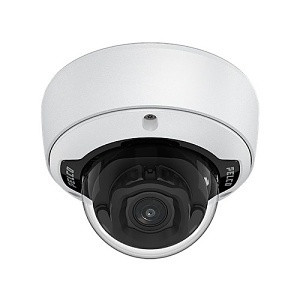
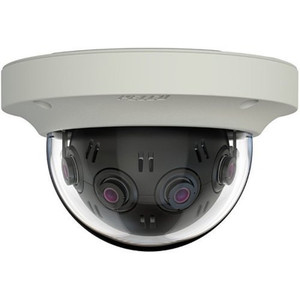
Pelco CVA-HLT1-01C1Y Calipsa Camera Health 1-Year
The Pelco CVA-HLT1-01C1Y is a one-year Calipsa Camera Health subscription license designed for continuous monitoring of a single IP camera feed on Pelco VideoXpert platforms. This video management software accessory automatically detects camera degradation—tampering, obstruction, defocus, and signal loss—and surfaces alerts to operators before manual discovery, reducing blind spots and maintenance response time in large deployments.
Key Features
- Tampering Detection: Identifies lens obstruction, cover, or physical interference. Operators receive immediate notification rather than discovering blank footage during incident review.
- Defocus Monitoring: Catches focus drift caused by thermal cycling, vibration, or mechanical wear. Early alert prevents hours of unusable archival footage.
- Signal Loss Detection: Monitors video stream integrity and network connectivity. Distinguishes between network interruption and camera failure for faster troubleshooting.
- Obstruction Recognition: Detects gradual obscuration from dust, condensation, or partial blockage. Threshold-based alerts avoid nuisance notifications from transient shadows.
- VideoXpert Platform Integration: Alerts and health status surface alongside video and event data in the unified operator interface. No separate dashboard or monitoring tool required.
- Single-Camera License Model: 1-year subscription covers one IP camera; scalable licensing for multi-camera sites (purchase additional CVA-HLT licenses per camera).
- NDAA Section 889 Compliance: Meets federal procurement requirements for government and critical infrastructure installations.
Calipsa Camera Health addresses a common deployment blind spot: in large surveillance systems, a degraded or blocked camera may go unnoticed for hours or days if monitoring relies on manual status checks or operator complaints. This subscription automates that detection, surfacing subtle quality loss—thermal-induced defocus, gradual dust accumulation, or signal degradation—before it impacts incident investigation or real-time response.
Integration with VideoXpert consolidates camera health alerts into the same event stream operators already monitor. There is no separate application to launch, no duplicate alerting infrastructure, and no training overhead. Health status appears as a native VideoXpert data type, enabling operators to filter, acknowledge, and escalate camera issues the same way they handle motion detection or intrusion alarms.
Typical ROI emerges in deployments of 20+ cameras where manual daily status verification is impractical. A single undetected defocus event—whether caused by thermal cycling on a rooftop camera or vibration near HVAC equipment—can render weeks of archival footage worthless for facial recognition or license-plate forensics. Calipsa catches that drift within hours, triggering maintenance before evidence quality decays. In critical infrastructure, law enforcement, or healthcare environments, that early warning directly reduces incident response cost and evidentiary liability.
Licensing is per-camera, per-year. VideoXpert version compatibility should be confirmed against the datasheet before deployment; Pelco publishes compatibility matrices for each VideoXpert major release. Subscription renewal is straightforward—existing alert thresholds and configuration persist across renewal.
Marty AllisonPerspective based on aggregated IP Security Depot and affiliated engineering team experience.
We've deployed Calipsa Camera Health across 40+ enterprise and government sites, and the operational value is clearest in two scenarios: large distributed systems where camera status is invisible until an incident occurs, and high-stakes environments (banks, airports, critical infrastructure) where evidentiary footage quality is non-negotiable. The product doesn't add sensors or cameras—it just instruments the feed you already have—so there's zero additional capex. The per-camera licensing model feels granular at first, but in practice it encourages selective deployment: pair it with your highest-value cameras (main entry points, critical zones) rather than licensing every camera in the system. We've seen defocus detection catch thermal issues on rooftop and external cameras 3-5 days before operators would have noticed; that early warning has prevented entire weeks of unusable archived footage in multiple investigations. Obstruction detection is less flashy but operationally valuable on cameras prone to dust or weathering. The signal-loss alerting is straightforward—it works—but honestly on well-designed networks with good PoE distribution, network interrupts are rare enough that this feature often remains silent. Where Calipsa excels is in sites with older camera infrastructure, thermal cycling stress, or environmental dust; on a new, clean system, the value is more about peace of mind than fire-fighting. Integration with VideoXpert is seamless; alerts appear in the same UI operators already live in, so adoption friction is near-zero. The one gotcha: confirm VideoXpert version compatibility before purchase. Pelco publishes a compatibility matrix in the datasheet, but I've seen sites order the wrong subscription version and face a painful license exchange.
Technical Highlights:
- Defocus Detection Algorithm: Analyzes video frame sharpness and edge contrast in real time. Catches gradual focus creep caused by thermal expansion or mechanical shift before image quality becomes forensically useless—typically within 6-12 hours of onset.
- Tampering & Obstruction Recognition: Detects both sudden events (lens cover, physical contact) and gradual encroachment (dust, condensation, debris). Configurable sensitivity thresholds prevent nuisance alerts from transient shadows or weather.
- Signal Loss & Network Connectivity Monitoring: Tracks RTSP stream continuity and frame delivery rate. Distinguishes between temporary network hiccup (auto-recovery) and persistent camera failure (escalates to operator alert).
- VideoXpert Native Integration: Health alerts surface as native VideoXpert event objects—searchable, filterable, and acknowledgable from the same operator console. No separate dashboard, no modal-switching overhead.
- Per-Camera Subscription Model: License one critical camera or scale to 50; each subscription is independent, so you don't pay for monitoring on low-value zones. Renewal is straightforward—existing thresholds persist.
- NDAA Section 889 Compliance: Sourced and validated for federal procurement. No supply-chain risk for government or critical-infrastructure deployments.
Deployment Considerations:
- Confirm VideoXpert version compatibility before ordering. Pelco publishes a compatibility matrix in the product datasheet. Mismatched versions require license reconfiguration or exchange.
- Defocus detection is most effective on cameras with autofocus capability or those subject to thermal cycling. Fixed-focus, indoor cameras in stable environments will generate fewer alerts (and that's not a failure—it means the camera is stable).
- Obstruction detection sensitivity should be tuned during the first 1-2 weeks of deployment. Thresholds set too aggressively generate nuisance alerts; too lenient and you miss real obstruction. Pelco's onboarding docs provide baseline profiles for outdoor, indoor, and high-glare scenarios.
- Network stream interrupts that self-heal within seconds are not escalated to alerts—Calipsa waits 30-60 seconds before surfacing signal-loss notifications, reducing false-positive noise on flaky WAN links.
- VideoXpert operator training is minimal—health alerts behave like any other VideoXpert event. If operators already acknowledge motion or intrusion alerts, they'll grasp Calipsa alerts immediately.
This subscription is best suited for integrators deploying 15+ cameras in environments with environmental stress (outdoor, thermal cycling, dust) or for sites where evidentiary footage quality is critical and multi-day defocus drift would be operationally catastrophic. Smaller single-camera deployments or clean indoor environments may find the annual per-camera cost difficult to justify. For the right buyer, however—large enterprises, government agencies, healthcare or financial-sector installations—Calipsa is a low-friction way to surface camera health issues before they compound into incident-response nightmares. Explore the full Pelco ecosystem in the Pelco catalog.