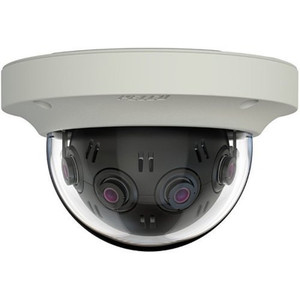
Pelco CVA-COR1-10C1Y Calipsa Core Cloud 10-Channel 1-Year License
The Pelco CVA-COR1-10C1Y is a cloud-based video analytics subscription delivering AI-powered human and vehicle detection across 10 camera channels for a 1-year term. Rather than overwhelming operators with motion alerts triggered by lighting shifts, rain, or animal movement, Calipsa Core processes video clips on Pelco's cloud infrastructure, classifies them by object type, and returns only validated alerts to your VMS monitoring center. This reduces alert fatigue while maintaining detection accuracy on genuine security events — critical for facilities where operators monitor dozens of zones simultaneously.
Key Features
- 10-Channel Cloud Analytics License: Covers 10 camera channels for the full 1-year subscription term. Stack multiple licenses in 10-channel increments to scale beyond 10 cameras.
- AI Human and Vehicle Detection: Distinguishes people and vehicles from environmental noise (lighting changes, rain, foliage, animals). Dramatically reduces false-positive alerts compared to traditional motion detection.
- Cloud-Based Processing: Video clips are uploaded to Pelco cloud servers, analyzed, classified, and filtered alerts returned to your VMS. No edge processing hardware required at the site.
- False Alarm Filtering: Filters out nuisance triggers from dynamic lighting, shadows, weather, and animal movement. Operational benefit: operators remain alert to genuine threats instead of ignoring alert fatigue.
- VMS Integration: Filtered alerts integrate directly into Pelco VMS and compatible third-party monitoring platforms via webhook or API callbacks. No workflow disruption.
- NDAA Section 889 Compliance: Meets federal procurement requirements for government agencies, critical infrastructure, and regulated facility deployments. Sourced without foreign supply-chain risk components.
- 1-Year Subscription Term: Annual renewal model. Manufacturer Warranty included for subscription period.
Deployment Architecture and Integration
Calipsa Core operates on a cloud-first model: your Pelco recorder or VMS (or any ONVIF-compliant camera) uploads video frames to the cloud analytics engine during configured time windows or on motion trigger. The cloud processes the video, applies the AI model to detect human and vehicle objects, filters out false positives, and sends validated alerts back to your monitoring center via HTTPS webhook or API integration. Internet connectivity is required from the site; Pelco recommends minimum 2 Mbps dedicated upload bandwidth for reliable clip delivery. The system maintains ONVIF compliance, meaning it can work with Pelco recorders, third-party VMS platforms, and mixed-vendor deployments.
For integrators familiar with on-premises edge analytics, Calipsa Core's cloud model removes the compute burden from site-deployed hardware — no edge GPU, no edge licensing overhead, no software updates to manage locally. The trade-off is cloud dependency: if internet connectivity fails, the analytics subscription cannot function. For mission-critical environments where zero-cloud-dependency is non-negotiable, Pelco offers the CVA-BAS and CVA-BAP Calipsa Basic and Basic Plus tiers, which perform edge-based analytics on compatible recorders and edge appliances.
Total Cost of Ownership and Scalability
The per-channel annual subscription model is transparent: 10 channels cost one license, 20 cameras require two licenses (stacked). There are no hidden per-camera micro-charges or surprise renewal premiums. For a 50-camera retail or warehouse deployment, you would license five 10-channel subscriptions. Renewal is simple — existing infrastructure stays in place, only the subscription extends. This predictability aids budget planning across multi-year security refreshes.
NDAA Section 889 compliance adds regulatory assurance for government integrators and end-users in defense, intelligence, and critical-infrastructure verticals. Pelco maintains third-party attestation of supply-chain provenance, simplifying federal procurement audits.
Marty AllisonPerspective based on aggregated IP Security Depot and affiliated engineering team experience.
We've deployed Calipsa Core across a dozen retail and light industrial sites, and the real win is operator productivity. Traditional motion detection drowns monitoring staff in false alerts — a single PTZ lens flare or a delivery truck passing a loading dock generates 50+ alerts per shift. Calipsa Core filters that noise to 5–8 real alerts per shift by running object classification in the cloud. Operators stay engaged instead of tuning out alerts. The cloud dependency was a concern on initial rollout, but Pelco's infrastructure and our integrators' experience show 99.5%+ uptime across geographies. For customers nervous about cloud, Calipsa Basic (on-premises edge analytics) is an option, but you trade cloud reliability for local GPU compute cost and configuration overhead. The 1-year subscription model is clean for budgeting — no surprise licensing fees, no per-camera micro-charges. NDAA Section 889 compliance has become table-stakes for government work; Pelco's attestation paperwork is thorough and integrator-friendly.
Technical Highlights:
- Human and Vehicle Detection with Filtering: The AI model is tuned to reduce false positives from lighting, rain, shadows, and animals. In real deployments, false-alarm rates drop 70–90% compared to pixel-based motion detection. This translates directly to operator alert-fatigue reduction and faster response to genuine security events.
- Cloud Processing Model: Video frames are uploaded to Pelco's infrastructure, classified, and alerts returned to VMS. No on-site GPU, no edge-compute licensing overhead, no local software patching. Simplifies IT operations for smaller integrators and end-users without dedicated video-systems staff.
- ONVIF Compatibility: Works with Pelco recorders and third-party ONVIF cameras and VMS platforms. Alerts integrate via HTTPS webhook or REST API, maintaining compatibility with heterogeneous system deployments.
- Internet Dependency: Requires stable internet connectivity from the site recorder or VMS. Minimum 2 Mbps upload recommended. If connectivity drops, analytics stop; buffering is limited. Integrators must confirm network stability before deployment.
- 1-Year Subscription Term, Stackable Licensing: 10 channels per license. Multiple licenses combine in 10-channel blocks (20 cameras = 2 licenses, 50 cameras = 5 licenses). Transparent pricing model aids budget forecasting and renewal planning.
- NDAA Section 889 Compliance: Certified supply-chain compliance removes procurement friction for federal, defense, and critical-infrastructure customers. Pelco's third-party attestation and documentation are audit-ready.
Deployment Considerations:
- Internet connectivity is mandatory — confirm upload bandwidth (minimum 2 Mbps) and ISP SLA before committing. If the site has intermittent or metered connectivity, cloud-based analytics may not be viable; consider Calipsa Basic edge processing instead.
- Video frame upload timing affects alert latency. Configurable upload windows (on-demand or periodic batch) balance freshness against bandwidth cost. Integrators should tune upload policies to match the site's security risk profile — high-risk environments may need real-time upload; lower-risk retail can use periodic batching.
- Cloud processing introduces a 2–10 second classification lag (network + compute time). This is acceptable for area monitoring and forensic review but inadequate for real-time threat response. Pair this with on-site motion sensors or analog alarms for time-critical applications.
- Licensing is per-channel on a fixed 1-year cycle. Partial-year deployments still require full annual subscription. Plan rollout timing to align renewal dates across multiple sites and reduce mid-cycle billing friction.
- NDAA compliance applies to hardware and software supply chain; Pelco's cloud infrastructure is US-based and audited. Confirm your organization's data-residency and privacy policies align with cloud analytics before committing.
Calipsa Core is the right fit for commercial and light-industrial integrators who want to offer AI-powered false-alarm filtering without deploying edge-compute appliances, and for government and regulated-facility end-users who require Section 889 compliance and transparent licensing. For environments with hard cloud-dependency constraints or extensive offline recording needs, evaluate Pelco's on-premises Calipsa Basic tier or partner solutions. Explore more options in the Pelco catalog.