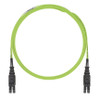
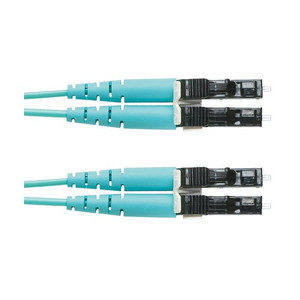
Panduit FW2ERQ1Q1NNF032 Duplex LC-LC Fiber Patch Cord
The Panduit FW2ERQ1Q1NNF032 is a 32-foot duplex LC-LC fiber optic patch cord engineered for high-density datacenter interconnects, structured cabling backbones, and enterprise network infrastructure where extended reach between distribution frames is required. Built on Panduit's OptiCam platform with precision-polished ceramic ferrules and 50/125µm multimode fiber, this cable delivers consistent insertion loss under 0.35dB and return loss exceeding 20dB across the installed length. The duplex LC terminations on both ends mate directly with SFP/SFP+ transceivers in switches, media converters, and fiber panels without requiring breakout adapters, making it the standard choice for 10GBASE-SR links up to 300 meters or 1000BASE-SX connections in campus and building backbones. The 32-foot length bridges typical floor-to-ceiling cable tray runs or crosses equipment rows in larger server rooms where pre-terminated 15-foot cords fall short and 50-foot assemblies create excess slack management burden.
Key Features
- Duplex LC-LC configuration with push-pull strain relief boots for tool-free insertion and extraction in dense patch panel environments
- 50/125µm laser-optimized multimode fiber (OM3 or OM4 grade) supporting 10 Gigabit Ethernet, 16G/32G Fibre Channel, and 40G/100G breakout applications
- Factory-terminated and tested assemblies with serialized test reports showing insertion loss, return loss, and length measurements per unit
- 2mm diameter round cordage with low-smoke zero-halogen (LSZH) or plenum-rated jacket meeting NEC Article 770 requirements for horizontal and riser installations
- Color-coded jacket (typically aqua for OM3/OM4 or orange for OM1/OM2) with printed sequential footage markers every meter for rapid fault isolation
- Ceramic ferrule LC connectors with zirconia inserts ground to 0.5µm endface geometry and UPC polish for minimal back-reflection in bidirectional links
The FW2ERQ1Q1NNF032's 32-foot working length addresses a persistent field issue in structured cabling: the gap between standard 15-foot equipment patch cords and 50-foot inter-building segments. In two-post relay racks with overhead cable management, a 15-foot cord barely reaches from a top-of-rack switch to a wall-mounted fiber enclosure four feet away and eight feet up. The resulting taut bundle stresses the LC connector's release tab and creates service loops that drape across adjacent equipment. A 50-foot cord solves the reach problem but leaves 18 feet of excess bundled behind the rack—tight enough to exceed the 1.5-inch minimum bend radius for multimode fiber and create micro-bending attenuation that erodes link budget. The 32-foot assembly provides 8–10 feet of working slack for proper dressing around vertical managers and horizontal pathways while avoiding the coil accumulation that triggers failed inspections under TIA-568 field-test criteria. Installers stock this length for core-to-distribution layer connections in IDFs, fiber-to-the-desk horizontal drops in open-plan offices with above-ceiling zone boxes, and switch-to-SAN fabric interconnects in storage arrays positioned in non-adjacent cabinets.
Panduit factory-terminates the LC connectors using adhesive-free mechanical splice technology that aligns the 50µm fiber core to the ceramic ferrule's central bore under automated vision inspection. Each cable ships with a serialized test report documenting insertion loss (typically 0.15–0.30dB at 850nm and 1300nm), return loss (≥20dB UPC, ≥35dB APC if specified), and cable length accurate to ±0.5 meters. This eliminates the field variability introduced by hand-polished connectors or adhesive-cured terminations, where endface contamination or ferrule misalignment can add 0.5–1.0dB loss and force re-termination during acceptance testing. The duplex LC footprint occupies half the panel density of SC or ST connectors—critical in 1U fiber cassettes supporting 24 or 48 ports per rack unit—and the push-pull boot design allows single-handed mating and de-mating without disturbing adjacent connections. Unlike snap-in SC connectors that require thumb pressure on both sides, the LC's RJ-45-style release tab operates in 6mm of clearance, making it viable in back-to-back patch panels or module stacks with less than one inch of working space.
The cable's 2mm round jacket uses a dual-layer construction: an inner 900µm tight buffer around each fiber strand, and an outer aramid yarn strength member embedded in the jacket compound to handle 100-pound pull tension during installation without transferring load to the glass core. This matters in plenum ceiling spaces where cables snake through J-hooks and transition from horizontal to vertical pathways with multiple 90-degree bends. A loose-tube outdoor cable with gel-filled buffer would exceed NEC flame and smoke limits for air-handling spaces, while a zipcord flat cable lacks the torsional rigidity needed to push through congested overhead trays without buckling. The 2mm round profile strikes the balance: plenum or riser ratings (depending on SKU suffix), enough stiffness to span 24-inch J-hook intervals without sagging, and a jacket durometer soft enough to coil into 4-inch loops for storage without cracking. The aqua jacket color (OM3 standard per TIA-598) or orange (OM1/OM2) remains visible under UV site lighting and differentiates multimode links from yellow singlemode cables in mixed-fiber environments. Sequential meter markings along the jacket let technicians measure installed length with a tape measure during troubleshooting, confirming cable identity without tracing both ends to their termination points.
In 10GBASE-SR deployments, the FW2ERQ1Q1NNF032's OM3 or OM4 fiber grade supports full 300-meter reach at 10 Gbps (OM3) or 550 meters (OM4) when used with 850nm VCSELs in SFP+ transceivers. This covers the 90-meter horizontal distance limit in TIA-568 structured cabling with 200+ meters of margin, allowing network architects to push 10G links to distant IDFs without upgrading to singlemode fiber and the corresponding singlemode SFP+ modules that cost three times more. For 40GBASE-SR4 and 100GBASE-SR10 applications, the duplex LC cable serves as one lane in a breakout configuration: a 12-fiber or 24-fiber MTP trunk de-multiplexes into six or twelve duplex LC patch cords at each end, connecting a spine switch's QSFP ports to leaf switches' SFP+ uplinks. The 32-foot length aligns with middle-of-row to end-of-row cabinet spacing in hyperscale datacenter pods, where structured 15-foot cords can't span the 25-foot aisle and custom-length assemblies add three-week lead times to deployment schedules. Legacy 1000BASE-SX Gigabit Ethernet links run over the same cable with 550-meter reach on OM3 fiber, making it backward-compatible with existing SFP modules during phased 1G-to-10G migrations.
Compliance with TIA-568.3-D, ISO/IEC 11801, and IEC 61754-20 ensures the cable meets international structured cabling standards for physical layer performance, endface geometry, and connector durability. The LC connectors survive 500 mating cycles per IEC 61754-20 without exceeding 0.2dB insertion loss degradation—relevant in test labs or reconfigurable patch fields where cables disconnect and reconnect weekly. UL listing under NEC Article 770 (OFNR riser or OFNP plenum, depending on jacket compound) allows the cable to run in vertical shafts and air-handling spaces without requiring metallic conduit, cutting installation labor by 60% compared to conduit-enclosed fiber. The factory test report with serialized data ties each cable to a manufacturing lot for traceability during warranty claims or post-installation audits, and Panduit's standard warranty covers material and workmanship defects for the life of the original installation when installed per manufacturer guidelines and TIA-568 best practices.